

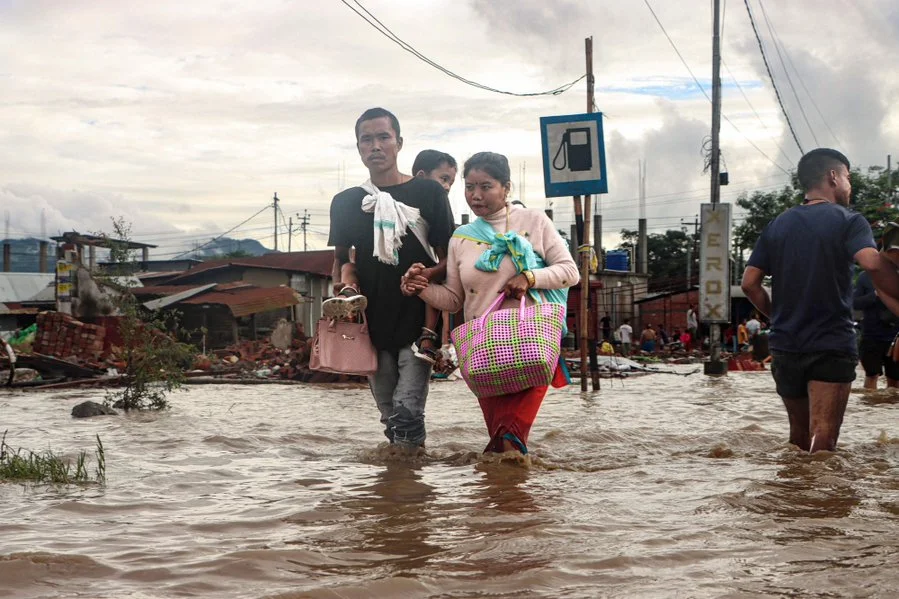
At least 41 people have died alongside properties of yet to be known value destroyed following a torrential monsoon rains triggered into devastating floods that submerged homes and displaced hundreds of thousands of residents across Indian community.
The flooding was said to have affected about 900,000 people in more than 1,800 villages, forcing nearly 30,000 residents into relief camps as rescue teams, supported by the Indian Air Force and national disaster agencies, continue search, rescue and relief operations.
Providing an update on the incident which happened in northeastern Assam, the area’s Chief Minister, Himanta Sarma, on Thursday, said that the death toll from the monsoon rains, which began in June, had risen to 41, with thousands of livestock also swept away by the floods.
“We have lost 41 precious lives till date and thousands of livestock have been washed away,” Sarma wrote, adding that the disaster was worsened by cloudbursts upstream and exceptionally heavy local rainfall, which was recorded at 436 per cent above normal levels.
He said the unprecedented rainfall had inundated villages that had never experienced flooding of such magnitude in recent history, leaving thousands of families homeless and in urgent need of humanitarian assistance.
According to the chief minister, all emergency agencies, including the Indian Air Force, the State Disaster Response Force (SDRF) and the National Disaster Response Force (NDRF), have been working around the clock to rescue stranded residents and deliver emergency relief to affected communities.
Authorities have established nearly 150 relief camps across the state, providing temporary shelter to close to 30,000 displaced people, while emergency responders continue to assess damage and evacuate residents from flooded areas.
In a separate statement issued late Wednesday, the Assam government said it had deployed payload drones to improve the last-mile delivery of food, medicines and other relief supplies to communities cut off by floodwaters.
The government also deployed more than 50 small boats to reach shallow-water areas inaccessible to larger rescue vessels, while the Indian Air Force and other armed forces air-dropped relief materials to isolated locations.
The monsoon season sustains the livelihoods of hundreds of millions of Indians by providing rainfall essential for farming and industry. However, it also brings deadly floods, landslides and other weather-related disasters each year.
Scientists and climate experts have warned that climate change, combined with rapid urbanisation and inadequate drainage infrastructure, is increasing both the frequency and intensity of extreme weather events across India, making monsoon-related disasters more severe and destructive.
Flooding is a recurring disaster in India during the annual monsoon season, which typically runs from June to August. While the rains are vital for agriculture and water supplies, they frequently cause widespread destruction, particularly in low-lying and riverine communities.