

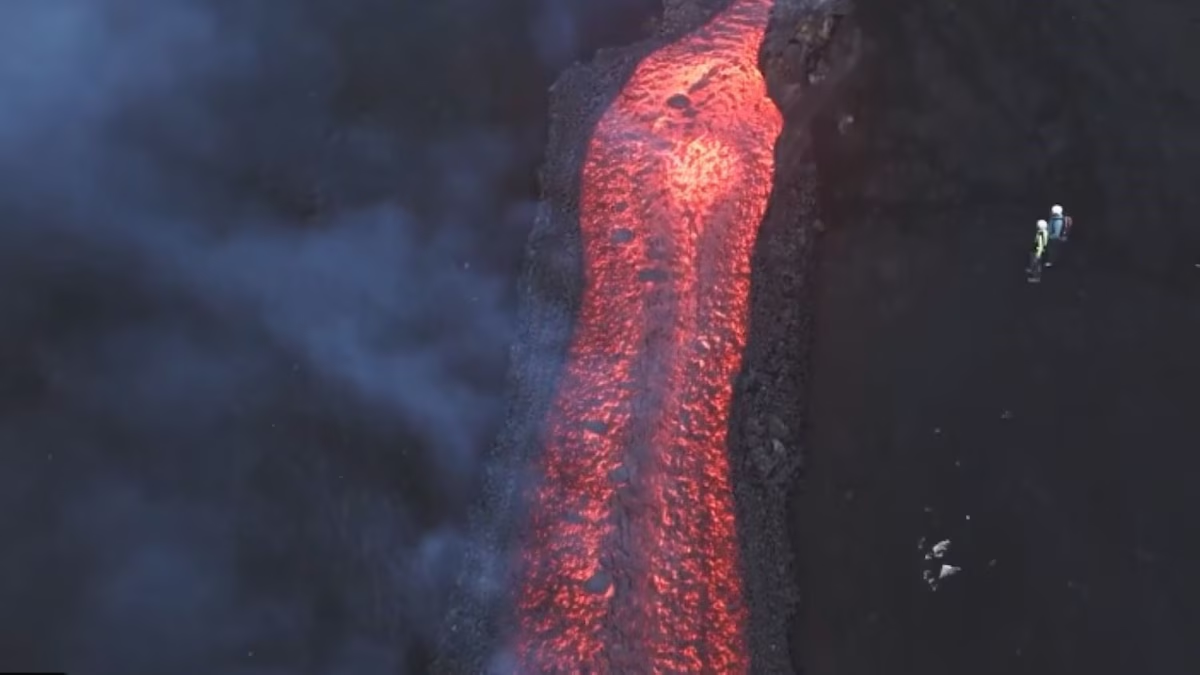
The latest volcanic activity is part of Mount Etna’s ongoing eruptive cycle and is being closely monitored by authorities and volcanologists.
The dramatic visuals captured molten lava slowly passing through the rugged terrain, illuminating the landscape against the dark sky.
WATCH: Rivers of glowing lava pour down the slopes of Mount Etna after Europe’s most active volcano roared back to life.
New drone footage captures a steady stream of molten rock flowing from a newly opened fracture near the summit, illuminating the mountainside.
Volcanologists… pic.twitter.com/8n2pPyedfg
— Fox News (@FoxNews) June 28, 2026
Authorities have not reported any immediate threat to nearby towns or villages. However, volcanic activity at Etna can occasionally disrupt air traffic, particularly at Catania Airport, when ash clouds drift into flight paths, reported AP.
Mount Etna, located on the eastern coast of the Italian island of Sicily, is one of the world’s most active volcanoes. It has experienced regular eruptions for thousands of years.
Standing at over 3,300 metres, the UNESCO World Heritage Site is known for producing both explosive ash emissions and slow-moving lava flows, depending on the nature of the eruption.
Despite its volatile nature, Mount Etna remains one of Italy’s leading tourist attractions.
People often gather at designated viewing points to witness eruptions from a safe distance.
As per UNESCO, “The volcano also supports important terrestrial ecosystems including endemic flora and fauna and its activity makes it a natural laboratory for the study of ecological and biological processes. The diverse and accessible range of volcanic features such as summit craters, cinder cones, lava flows and the Valle de Bove depression have made the site a prime destination for research and education.”
Meanwhile, a study by researchers from Cornell University has shed light on why Mount Etna can produce dramatically different types of eruptions despite being the same volcano.
The research revealed that Etna’s explosive eruption in 122 BC was driven by water-rich magma that rose slowly, stalled just a few kilometres below the surface and gradually lost gas before erupting.
In contrast, an eruption around 4,000 years ago was fuelled by carbon dioxide-rich magma that travelled rapidly from much deeper underground, triggering a more powerful explosion.
The findings were published in Geochemistry, Geophysics, Geosystems. The research was led by Esteban Gazel, the Charles N. Mellowes Professor in the Department of Earth and Atmospheric Sciences in the Cornell Duffield College of Engineering.
The latest eruption once again highlights the immense power of one of Europe’s most iconic landmarks.
While the glowing lava streams have created breathtaking visuals, officials continue to urge residents and visitors to follow safety advisories and avoid restricted areas near the summit as monitoring efforts remain underway.
(Edited by : Sudarsanan Mani)
First Published: Jul 1, 2026 9:58 AM IST