

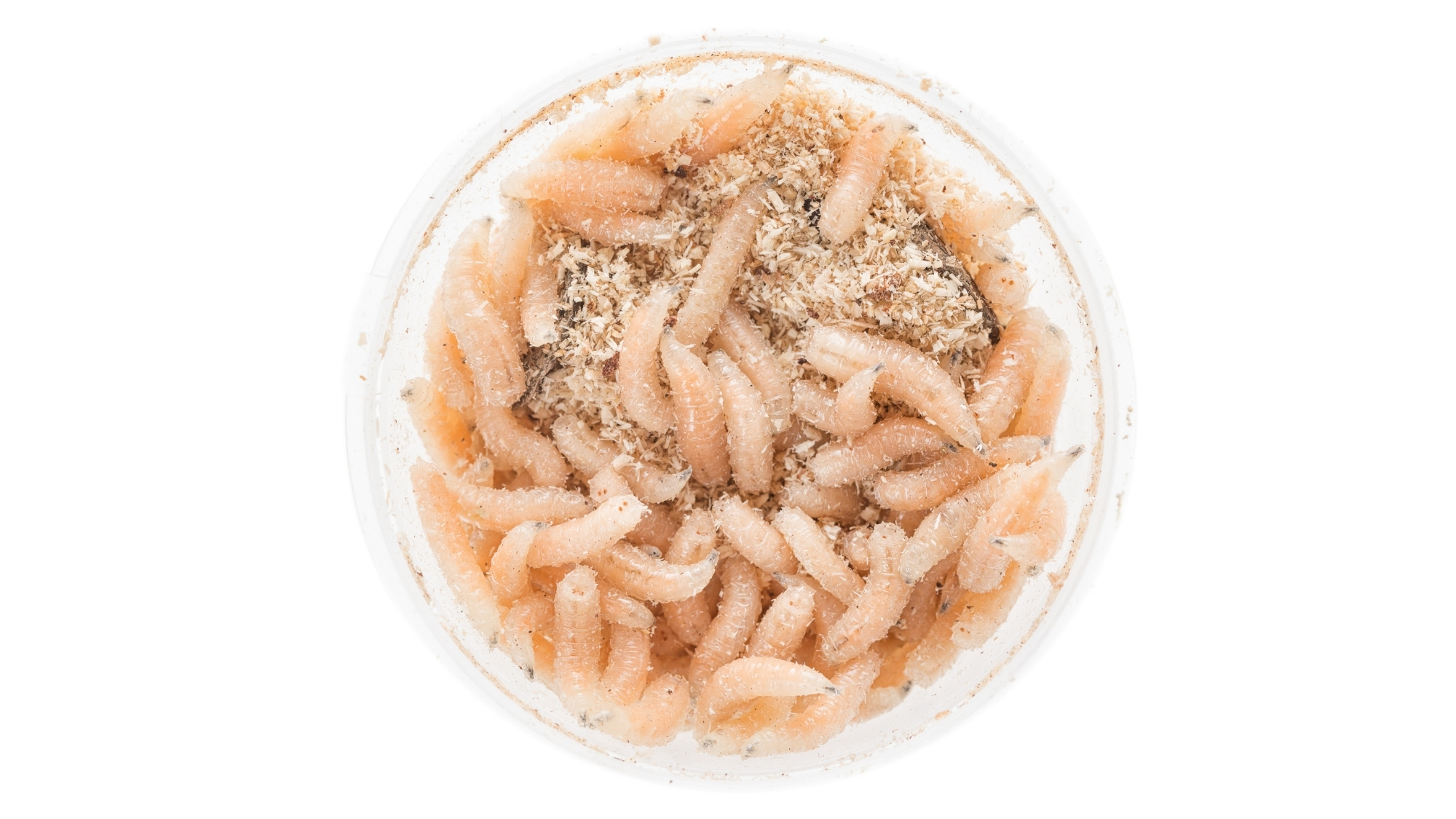
Using maggots to clean wounds sounds like the kind of survival trick you’d only need after crashing on a deserted island. Yet the FDA has just approved something even stranger: the Australian sheep blowfly as an all-natural way to clean up dead tissue surrounding particularly nasty wounds. According to the agency, tiny sterile maggots may be one of modern medicine’s oldest, best, and certainly grossest tools.
The FDA has cleared MEDIFLY Maggots, a treatment developed by Singapore-based Cuprina Holdings that uses the larvae of Lucilia cuprina, the Australian sheep blowfly, to chomp away at rotting flesh, according to a press release. It’s only the second fly species approved in the United States for maggot debridement therapy, along with its forerunner, the common green bottle fly, which has been used since 2004.
It’s a medical practice that sounds as antiquated as bloodletting and humor-balancing, but there’s a reason the practice never fell out of favor like so many quack medical treatments of the past: it worked. Historically, maggots have been used to treat wounds by civilizations all over the world for centuries, from the ancient Maya to Australian aborigines to the battlefields of the American Civil War. Once antibiotics were invented, their use as a wound-cleaning system began to wane, but rising antibiotic resistance has brought them back into the spotlight.
FDA Clears Medical Maggots From Australian Sheep Blowfly for Wound Care
These aren’t your everyday, run-of-the-mill maggots you’d find on a dead animal in the woods. These are sterile, medical-grade larvae raised in controlled laboratory conditions. These are the fancy, highfalutin maggots wild maggots aspire to be. These are medical school maggots. Put them on a wound, and they release enzymes that liquefy dead and infected tissue, softening it up so they can slurp it up while mostly leaving healthy tissue alone. They also gobble up bacteria and other pathogens that can lead to infection.
It’s a treatment intended for wounds that would be tricky to heal, like diabetic foot ulcers and surgical wounds that seem to defy the clasping of traditional sutures and surgical staples. On the surface, it sounds like a no-brainer medical treatment, but there is one major hurdle that the treatment may never overcome: it’s really, really gross. Most patients recoil at the thought of having their wound treated by maggots.
The FDA has approved it, but whether people will actually opt in to having a bunch of gross, creepy crawlies eating their decaying flesh is another matter entirely.