

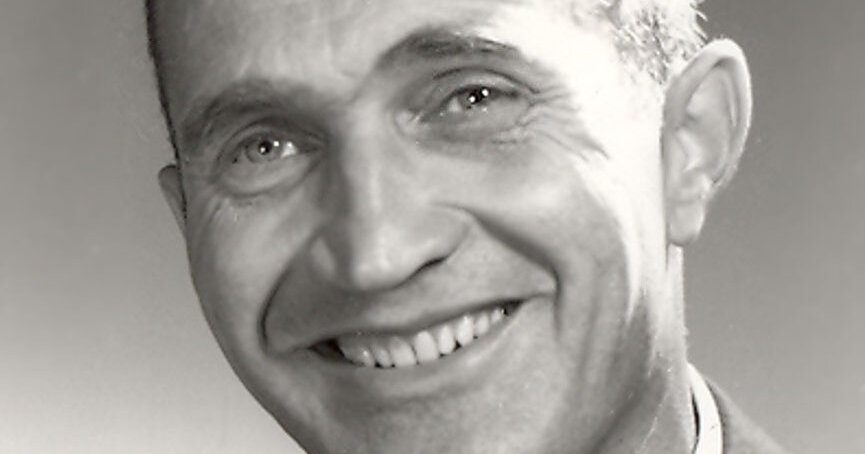
Stanley M. Gartler, a molecular biologist and geneticist who helped provide the first convincing evidence that cancerous tumors develop from a single mutated cell, and uncovered shocking research errors involving the first collection of human cells to permanently thrive in a laboratory, died on May 25 at his home in Seattle. He was 102.
His death, which was not widely reported at the time, was confirmed by Dr. Richard Weiner, his nephew.
In the early 1960s, Dr. Gartler began exploring the genetic origins of cancer at the University of Washington, where he joined the genetics department faculty in 1957 and maintained an active lab until 2007.
At the turn of the 20th century, Theodor Boveri, a German zoologist, had proposed a hypothesis that a tumor begins as a single cell that divides uncontrollably. But he lacked proof.
Working with the pathologist David Linder, Dr. Gartler began studying benign uterine tumors — commonly known as fibroid tumors — that had been removed during hysterectomies in Black women.
Females typically have two X chromosomes in each cell, while males have an X and a Y. Because of a random process called X inactivation, most genes in one of the two X chromosomes in women are silenced early in embryonic development. Dr. Gartler realized that the silencing of one gene found on the X chromosome, called G6PD, gave crucial information about that cell’s fate.
In a study published in 1965 in the journal Science, Dr. Gartler and Dr. Linder reported that normal uterine tissue showed a mosaic of two gene variants — A and B — present in roughly equal amounts. In tissue from tumors, however, only one variant was present — either A or B — which implied that a tumor originates from a single cell.
“We really had to understand the biology of cancer to have any possibility of treating it,” Dr. Gail Jarvik, who leads the division of medical genetics at the University of Washington, said in an interview. “All of these chemotherapies and now very targeted therapies are based on clearly understanding that the biology is this mutation.”
Also in 1965, while studying genetic markers that vary in human cells, Dr. Gartler collected permanent human cell lines — cultures used in laboratory research that are easily cloned and are valuable in studying diseases and developing drugs and vaccines.
He found something highly improbable. In 18 supposedly independent cultures, the genetic markers were identical, containing the rare A variant of the G6PD gene, which was found almost exclusively in Black people.
It became clear to him that these purportedly unique cell cultures had been contaminated and overgrown by the first permanent human cell line, established in 1951 at Johns Hopkins Hospital in Baltimore, called the HeLa (pronounced hee-lah) line.
HeLa is an abbreviation of the first and last names of Henrietta Lacks, a Black woman who died of cervical cancer in 1951. Her genetic information, harvested from a tissue biopsy at that hospital shortly before her death, had been shipped and studied in laboratories around the world without her consent or her family’s knowledge.
The HeLa line would help with vital advancements in the polio vaccine, cancer research, cell biology, in vitro fertilization, cloning and chemotherapy. But Dr. Gartler observed an alarming problem involving the line’s cells, which, as it turned out, could easily contaminate other cultures by traveling on dust particles, lab coats or unwashed hands.
Researchers who thought they were studying cancer cells of, say, the kidney, liver or breast were, he proposed, likely studying cervical cancer cells of the HeLa line that had overtaken the original cultures. He would later blame “sloppy techniques” in laboratories for the contamination.
At a 1966 conference in Pennsylvania on cell tissue and organ culture, Dr. Gartler presented his findings. He told a stunned and skeptical audience of 700 scientists that their work on what they believed to be original cell lines was now “open to serious question” and he suggested that work “best be discarded.”
Rebecca Skloot included an account of the conference in her 2010 best seller, “The Immortal Life of Henrietta Lacks.” Michael Gold, whose 1985 book, “A Conspiracy of Cells: One Woman’s Immortal Legacy and the Medical Scandal It Caused,” said in an interview that the scientific impact of Dr. Gartler’s findings was enormous.
He “really raised the red flag,” Mr. Gold said, on a large-scale problem that “wasted countless hours and untold millions of dollars” on invalid science.
Many researchers, Mr. Gold added, “didn’t particularly want to hear that news,” but “a critical mass” reluctantly accepted Dr. Gartler’s findings.
Dr. Gartler’s discovery has been credited as a catalyst for improved quality control in labs and enhanced authentication of cell lines. The story of the HeLa line became one of the defining lessons of 20th-century medicine and raised important ethical questions about informed consent of patients, privacy and the rights of families to receive compensation for research on a relative’s cells.
In a 2012 lecture, Dr. Gartler spoke about the need for anonymity and privacy in research, a sense of dignity that had not been given to Henrietta Lacks.
“I personally wouldn’t want to be remembered for a cancer cell,” he said.
Stanley Michael Gartler was born on June 9, 1923, in Los Angeles to parents who emigrated from Romania. His father, George Gartler, owned a dry cleaning plant. His mother, Delvira (Kupferberg) Gartler, ran the household.
He entered the University of California, Los Angeles, in 1941 with an early interest in agriculture, but left the next year to enlist in the military. He served in the Army Air Forces during World War II as a radio operator and machine-gunner aboard a B-26 bomber on missions in Europe.
He returned to U.C.L.A. to complete his bachelor’s degree, then received his Ph.D. in genetics in 1952 from the University of California, Berkeley, where he studied plant breeding and developed an interest in human genetics, which he fostered during a postdoctoral fellowship at Columbia University. He joined the University of Washington as the first faculty member in the newly formed division of medical genetics.
His wife, Marion Mitchelson Gartler, a writer and editor who also developed a vest to thwart pickpockets, died in 2016. He has no immediate survivors.
In 1962, Dr. Gartler and two colleagues published an influential paper about a girl with two different-colored eyes and atypical genitalia. It was, Dr. Jarvik of the University of Washington said, the first demonstration of mixed XX and XY cells in a human, likely from an early fusion of twin fetuses.
“It really does say sex determination is much more complex than XX and XY,” Dr. Jarvik said, “and that the human body tolerates a significant amount of variability.”