

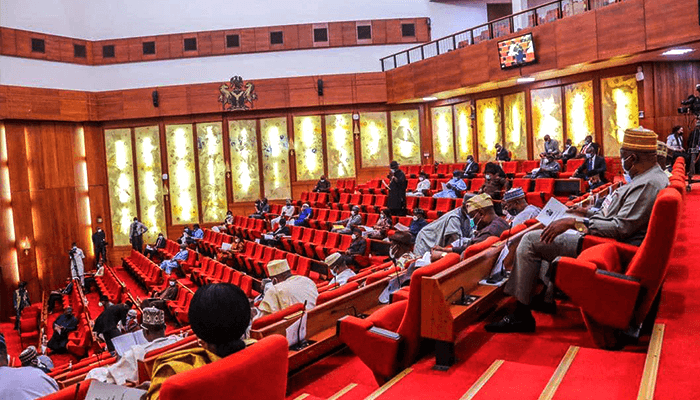
The Senate has passed the Federal Road Safety Corps (FRSC) (Amendment) Bill, 2026, introducing tougher penalties for a wide range of traffic offences, including a proposed ₦50,000 fine for anyone convicted of preaching, hawking or trading inside commercial vehicles.
The amendment, which was approved during plenary on Thursday, is designed to strengthen road safety enforcement and promote greater compliance with traffic regulations across the country. The bill has now been transmitted for presidential assent, and if signed into law, the new penalties will replace several existing sanctions under the current FRSC Act.
Lawmakers said the review became necessary to address emerging road safety challenges and ensure that penalties serve as an effective deterrent against dangerous road practices that contribute to accidents and fatalities.
Bus preaching, hawking to attract ₦50,000 fine
One of the most notable provisions of the bill is the proposed punishment for activities commonly seen in commercial buses across Nigeria.
Under the amendment, any person found guilty of preaching, hawking or trading inside a commercial vehicle will be liable to a ₦50,000 fine upon conviction.
According to the Senate, these activities often distract drivers, obstruct passengers and create unnecessary safety risks, particularly in busy urban centres where commercial buses make frequent stops.
Religious preaching and informal trading have long been a familiar part of public transportation in cities including Lagos, Ibadan, Abuja, Kano and Port Harcourt. Vendors regularly board buses to sell food, books, phone accessories and household items, while religious evangelists often use the opportunity to preach to passengers.
Lawmakers believe limiting such activities inside moving vehicles will help improve concentration among drivers and provide a safer and more comfortable commuting environment.
Drunk driving penalties increased
The amendment also introduces significantly stiffer punishment for motorists who drive under the influence of alcohol or intoxicating substances.
Under the proposed law, the existing ₦5,000 fine for drunk driving will increase to ₦100,000. Convicted offenders may also face up to two years’ imprisonment or both imprisonment and a fine.
The Senate said the increase reflects the serious danger posed by impaired driving, which remains one of the major causes of fatal road crashes in Nigeria.
Lawmakers noted that stronger sanctions are expected to discourage motorists from getting behind the wheel while under the influence of alcohol or drugs.
Refusing breath tests now an offence
The bill also gives greater legal backing to the FRSC in carrying out roadside enforcement.
Motorists who refuse to cooperate with FRSC officials during preliminary roadside breath tests conducted on reasonable suspicion will be liable to a ₦50,000 fine, six months’ imprisonment or both upon conviction.
The Senate explained that the provision is intended to prevent motorists from frustrating lawful enforcement procedures and ensure that suspected cases of impaired driving are properly investigated.
Officials believe the measure will strengthen compliance with road safety checks and improve enforcement nationwide.
Higher fines for speeding and traffic violations
Several other traffic offences have also attracted much higher penalties under the amendment.
Motorists who exceed approved speed limits will now face a ₦100,000 fine instead of the previous ₦5,000 penalty.
Similarly, drivers who ignore traffic lights, road signs, pavement markings and other traffic control devices will be liable to pay ₦100,000 upon conviction.
Reckless driving has equally attracted stiffer punishment. Offenders could face a ₦100,000 fine, up to two years’ imprisonment or both, depending on the severity of the offence and the outcome of prosecution.
The Senate maintained that the tougher sanctions are necessary to reduce reckless behaviour on Nigerian roads and encourage motorists to obey traffic regulations.
52 traffic offences reviewed
According to the amended schedule attached to the bill, a total of 52 traffic offences and their corresponding penalties have been reviewed.
Lawmakers said the comprehensive overhaul is aimed at modernising the country’s road safety laws, strengthening the enforcement powers of the Federal Road Safety Corps and improving compliance with traffic rules.
The Senate expressed confidence that the new penalties would contribute to safer highways, reduce road crashes and promote greater discipline among road users across the country.
The bill now awaits presidential assent. If approved by the President, the revised sanctions will become enforceable nationwide, marking one of the most significant updates to Nigeria’s road safety laws in recent years.