


President Donald Trump’s civil nuclear deal with Saudi Arabia has sparked debate among not only Democratic lawmakers, but also within the GOP.
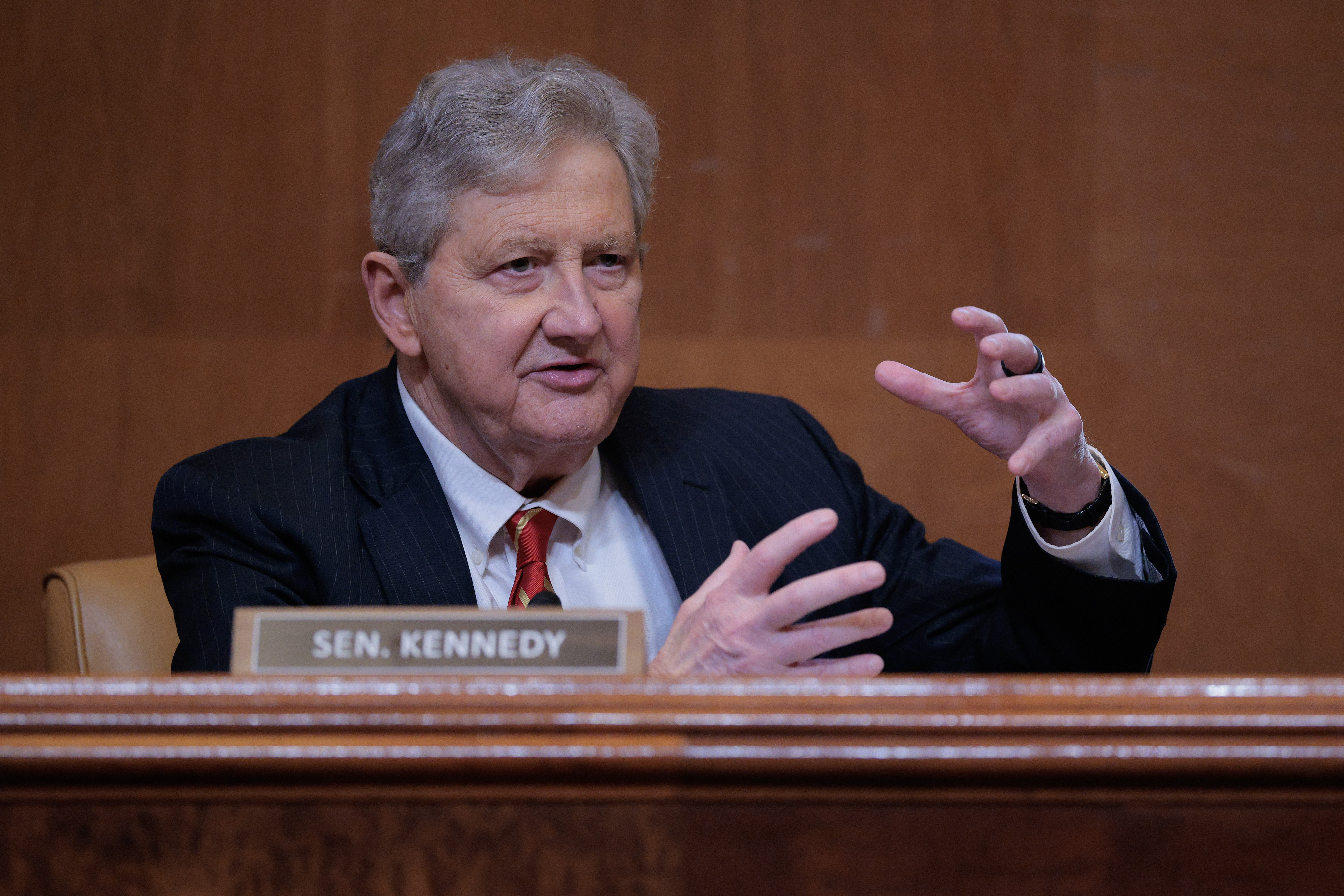
Republican Sen. John Kennedy of Louisiana raised issue with Trump’s proposed arrangement, firmly answering “no” when asked if he was comfortable with it, insisting it’s “just not good timing.”
“Maybe someday, but not right now,” Kennedy told Face the Nation on Sunday, pointing to the resumed Iran war as a key point of his opposition.
“We’re bombing a country to keep them from getting a nuclear weapon, but we’re signing a deal with another country,” he said. “I know it’s a commercial agreement, but that the world perceives, as possibly, someday, leading to a nuclear weapon.”
Kennedy referred to the moment as a “hair trigger,” pointing to the conflicts in Ukraine, the Middle East, and America’s strained relationship with Europeas examples of the tense political climate that has left people “scared.”
The U.S. and Saudi Arabia announced they had reached a civil nuclear agreement on Wednesday, in addition to signing an accompanying bilateral safeguards agreement.
The U.S. Department of Energy described the deal as “a peaceful nuclear cooperation agreement” that “provides great access for American companies in the Saudi nuclear energy program, benefiting American industry, workers, and supply chains while helping to meet Saudi energy needs.”
However, the day after the agreement was signed, Trump added a condition—stating the deal is dependent on Riyadh recognizing Israel under the Abraham Accords.
“The civil nuclear deal (there will be no enrichment of material) being made between the United States Department of Energy and Saudi Arabia, which pertains only to non-military use such as the ones that Iran and UAE (and others) already have, will be approved, but is totally subject to Saudi Arabia joining the very respected and successful Abraham Accords,” Trump declared via Truth Social.
In the Oval Office on Friday, Trump reaffirmed his stance and told reporters that he had not spoken about the accords with U.S. Secretary of Energy Chris Wright before the cabinet member signed the deal with Saudi Minister of Energy His Royal Highness (HRH) Prince Abdulaziz bin Salman.
“We didn’t talk about it, but it was always understood, and Chris knew and Saudi Arabia knew, that if they didn’t join the Abraham Accords… I’m not going to do the deal,” Trump said.
Israeli Prime Minister Benjamin Netanyahu showed support for the idea, saying “Saudi Arabia’s joining of the Abraham Accords would be an historic leap forward for peace in the Middle East.”
Trump’s demand for Saudi Arabia to recognize Israel placed further doubt on the deal for some, including Sen. Kennedy.
“I don’t think it’s going to happen, anyway, because the President’s conditioned it on Saudi Arabia recognizing Israel, and they’re not, they’re not going to do that,” he said.
Saudi Arabia did not immediately comment on the add-on condition to the deal, but Riyadh officials have long maintained they would not recognize Israel without a clear pathway toward a Palestinian state.
“The Saudis have been very clear that they will normalize relations with Israel when we’re on a clear path toward developing a Palestinian state, living side-by-side—security for both Palestinians and Israelis,” Van Hollen told This Week. “That has been the Saudi position. And so, what the Trump Administration did was a bait-and-switch scheme.”
What happens now?
The U.S.-Saudi Arabia civil nuclear deal—commonly known as a 123 agreement—needs to be transmitted to Congress for approval.
Congress has 90 days to review and, if desired, raise votes to object to the deal. If Congress does not pass a resolution to block the deal, it goes into force.
There would need to be a two-thirds majority to override a presidential veto. As lawmakers across party aisles have raised concerns and questions about the deal, the road ahead is uncertain.