

Opinion
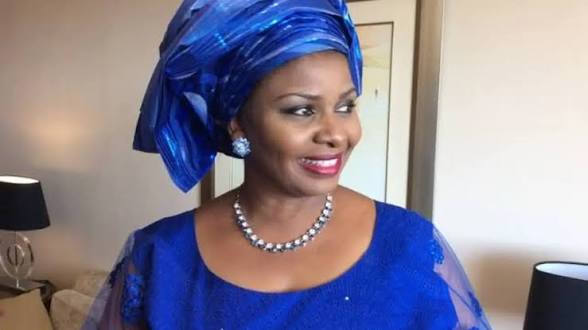
By Ambassador Lilian Onoh
AS I read Ikechukwu Amaechi’s piece, “Nigeria as Federal Republic of Asiwaju? Why not!”, which captured the total absurdity of pretending we have democracic leadership, my mind was drawn back to the mid 1980s to early 1990s when Ibrahim Badamasi Babangida (IBB), the last Miltary leader to rule for the same eight years Civilian Presidents get, held sway.
At that time, almost everything in Abuja, including NEPA, worked. No cows roamed the streets, running water reached the top floor of all buildings without a pump and leaders naming edifices after themselves was abnormal.
It was during IBB’s tenure that most of the Military Base Camps in Abuja were built yet he did not name a single one after himself and that seemed perfectly normal then. He actually chose the names of the camps based on Military history. I remember Camp WU Bassey was among the first built and not knowing who WU Bassey was, I was forced to research and discovered that he was the first indigenous commissioned officer in the Nigerian Army. IBB even named one of these base camps after Aguiyi Ironsi, who was killed in a coup in which IBB had participated. The essence was Military history not personal vanity or grudges. Nothing – not a single one of the incredible roads in Abuja or any structure built across Nigeria during his time in office – was named after himself.
When he built phase II of the Third Mainland Bridge in Lagos, making it the longest bridge in Africa at the time, he didn’t name it after himself – it remained the Third Mainland Bridge. The National Theatre remained the National Theatre.
Nigeria House, the impressive Chancery in New York and one of the best positioned diplomatic buildings in the city, was IBB’s achievement through and through but Ibrahim Gambari, the Permanent Representative appointed by the same Babangida, deceptively gave the honour to Ernest Shonekan when the winds of change blew and erased IBB totally from the building’s history.
When I was appointed High Commissioner to Namibia, I discovered that our office was located on a street renamed after General Murtala Mohammed. I was therefore shocked when Sam Nujoma, Namibia’s first President and anti-apartheid icon, personally informed me that without IBB, Namibia would have failed on its first day of Independence. He said that when Namibia got its independence in 1990, the Apartheid regime left him without a dime and even went so far as to strip all offices of the most basic furniture and appliances. According to him, IBB gave him the $3Million that enabled him to take off as President, without which Namibia would have collapsed on its first day.
Yet, when it came to choosing a name for Namibia to honour, IBB ceded it to General Murtala Mohammed, a decision I personally disagree with but that is not the point. The picture of IBB and Sam Nujoma’s historic meeting was discarded by our officers with no sense of history and when I found it with some items to be thrown out of the building, I personally cleaned it up and hung it up in the Chancery’s Conference Room. History should not be erased to please new leaders.
The International Conference Centre in Abuja was built under IBB. He did not name it after himself.
It was General Abacha who named a Base Camp Fort IBB (which later reverted to Niger Barracks); and named a road in Maitama Ibrahim Babangida Blvd, in recognition of the fact that despite having been responsible for converting Abuja to the modern city we now enjoy, nothing had his name on it.
At the time he left office, the only thing I remember being named after him was the IBB Eastern Gateway, NITEL’s flagship satellite location, which NITEL had built on my father’s land in Enugu without permission and which my father sued them over.
When it comes to Maryam Babangida Centre, now called the Women’s Development Centre, history will condemn those who took the honour from Maryam Babangida whose brainchild and personal achievement it was. Whatever grouse anyone may have had with her, it is on record that that edifice was her concept and every single private financial contributor has their name etched on a huge plaque inside the entrance of the building. It was not a government project but a result of her Better Life for Rural Women pet project. Without her, there would be no Ministry for Women Affairs. She was the first First Lady to have an agenda, carry it out and leave a lasting legacy from which we are still benefitting today.
Compare her legacy with what we have today: Akara Economics of N50,000.00 for Rural Women and brand new vehicles costing billions for APC Vuvuzela women leaders. The Maryam Babangida Centre is still here and her vision to uplift women is still with us over thirty years since she built it. No other First Lady has come close.
Anyone with a shred of conscience should ensure that the Women’s Development Centre is reverted to Maryam Babangda Centre. It’s the least she deserves.
IBB, a military Head of State, was more aware of the fact that infrastructure and institutions built with public funds were not his own personal property and that he could not name them after himself. How totally ironic that a military Head of State had more knowledge of the separation of self and government than our civilian leaders who are more totalitarian than the Military by any objective measure.
It was during Abacha’s time that the sycophantic renaming pattern became noticeable. Conversely, the sycophants didn’t name their structures after General Abacha himself but tried to curry favour by renaming places after Ibrahim Abacha, his first son who tragically died in plane crash. I remember my friends and I questioning why Abacha was permitting it when IBB hadn’t allowed it. It was clearly out of the norm we grew up with.
Between Abdulsallam and Obasanjo, all the edifices named after Ibrahim Abacha were quietly renamed after Abacha’s death. But it was under OBJ, the first Civilian President of the 3rd Republic, that the renaming craze really took off.
In 2000, the first arterial way in Abuja, originally called Festival Road, was quickly renamed after MKO Abiola for no cogent reason. Abiola had nothing to do with Abuja’s construction and did not deserve the honour of having the first and best known Road in Abuja named after him. That honour belonged to Shehu Shagari who laid the foundation for Abuja’s construction; or to IBB who actually built it and named it Festival Road in celebration of opening up Abuja.
OBJ, as a Military ruler, had previously opened the gateway to the renaming craze when he renamed Ikeja International Airport after Murtala Mohammed because Murtala, who gunned down every male 12 years and above in Asaba during the Civil War, met his end the same way when Dimka gunned him down less than a decade later.
OBJ then named a new Conference Centre after his friend, Shehu Yar’Adua and named the so called “Space Centre” after himself. Infamously, the only thing we can accredit to our Space programme is that Nigeria spent $340million on a satellite that allegedly lost power shortly after it was launched and the Minister, Alhassan Zaku, told the world that it was “parked in space, like you would park a car.” And that was how the loss of $340 Million from our budget was explained away.
So began the entitlement to use our common patrimony for personal vainglorious projects and even handing over the Presidency to Umaru Yar’Adua as a favour to his dead brother.
Ikechukwu Amaechi’s analysis that Nigeria could get to the stage of being renamed after our current President is therefore not far of the mark at all.
We had a renaming interlude during the Goodluck Jonathan years.
Under Buhari, there was a steroid fuelled sycophantic renaming of Institutions and structures after this demagogue Dear Leader, including the 2nd Niger Bridge between Onitsha and Asaba, Maiduguri Airport, University of Maiduguri and too many others to recall.
However under this Tinubu Administration, this sycophantic craze has become totally unbearable.
From the National Assembly Library to the International Conference Centre; from the Federal Airport in Minna – IBB’s hometown (!), to the Lagos-Calabar Coastal Highway to the Immigration Service tech complex, Abuja Southern Parkway, Military Barracks and Gwarimpa Polytechnic – Tinubu’s name is plastered everywhere to remind the already traumatised psyche of Nigerians of the person responsible for the current woes.
But history shows that this is an extremely dangerous thing to do.
Naming too many things after oneself breeds resentment. It breeds anger. It becomes a whirlwind of fury. It enables the angry citizens to have a focal point for their anger and when it boils over, those edifices are the very first things to go up in flames or be torn down. Nobody can forget the images of Saddam Hussein’s statues being torn down. Every leader who wants to immortalise himself should watch that video every night to reset their vanity and put the fear of the people’s wrath in their heads since the fear of God left them long ago.
Even if Tinubu returns in 2027, the longest those names will remain on these structures is 2031 and like the many structures in Nigeria that were ill-named by egotistical or sycophantic officials, his name will be erased faster than the speed with which the original National Anthem (which I personally prefer) was restored.
In the eight years he was in office, IBB left a legacy of structures that are still standing and which the civilians that reviled him have not matched but rather seek to usurp.
Is it not ironic that IBB, called a Military dictator because he was not elected, had more respect for the separation of powers, and of self from State than the elected civilians that succeeded him?
He had infinitely more prescience and restraint than his successors, who call themselves civilian democrats but who in reality operate under the “Dear Leader” mentality without achieving an ounce of what the North Korean leader has achieved for his isolated country.
So, to our Dear Leaders who want to repackage Nigeria in your image and names, it’s not too late to watch the Saddam video and get an instant brain reset free of charge.
Tags: Ambassador Lilian Onoh
