

Politics
…says IPCR, NHRC, NYSC should lead process of transforming Kaduna experience into national peacebuilding framework
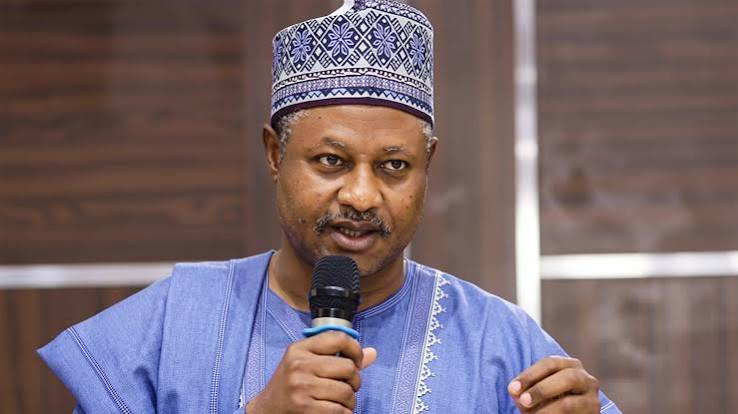
THE Human Rights Writers Association of Nigeria (HURIWA) has called on the Federal Government to urgently study and adopt the peacebuilding model being implemented by the Kaduna State Government under Governor Uba Sani as part of a comprehensive national strategy for addressing insecurity, rebuilding public trust and strengthening peaceful coexistence across Nigeria.
HURIWA made the call following Governor Sani’s disclosure that his administration’s approach to peace in Kaduna was anchored on rebuilding trust between government and citizens, promoting justice, equity and fairness, encouraging community ownership and pursuing inclusive development.
The organisation believes that this approach deserves serious national attention because Nigeria’s persistent security crisis cannot be solved through military and policing measures alone.
HURIWA therefore calls on the Institute for Peace and Conflict Resolution (IPCR), the National Human Rights Commission (NHRC) and the National Youth Service Corps (NYSC) to immediately commence structured consultations with the Kaduna State Government with the objective of documenting, evaluating and transforming the Kaduna peace experience into a national peacebuilding framework.
The organisation insists that such a framework must not be a rigid, one-size-fits-all prescription. Rather, it should establish national principles and standards which individual states and communities can adapt to their peculiar security, social, ethnic, religious and economic circumstances.
HURIWA particularly agrees with Governor Sani that states seeking to replicate Kaduna’s experience must first identify the symptoms, root causes and drivers of their own security challenges.
The organisation therefore proposes that every state should undertake a comprehensive State Conflict and Peace Audit to identify the underlying causes of insecurity, including communal disputes, political grievances, poverty, youth unemployment, land disputes, farmers-herders tensions, religious intolerance, criminal networks, marginalisation and other local factors capable of triggering violence.
KADUNA MODEL SHOULD BE INDEPENDENTLY DOCUMENTED
HURIWA calls on the Institute for Peace and Conflict Resolution to lead a comprehensive documentation and independent assessment of the Kaduna peace model.
Such an assessment should examine the role played by government institutions, traditional rulers, religious leaders, community leaders, women, youth, civil society organisations and security agencies.
It should also measure the impact of the model on communal peace, kidnapping, banditry, displacement, access to education, healthcare, agriculture, livelihoods and citizens’ confidence in government.
HURIWA believes that the objective should be to determine what works, why it works and how it can be adapted elsewhere, rather than merely presenting Kaduna as a political success story.
NYSC SHOULD BECOME A NATIONAL PEACEBUILDING INSTRUMENT
HURIWA further urges the Federal Government to expand the role of the National Youth Service Corps in national peacebuilding and social cohesion.
The organisation proposes the creation of a Peace and National Cohesion Community Development Service programme through which corps members would receive basic intellectual and practical training in conflict prevention, mediation, human rights, civic responsibility, interfaith dialogue, peaceful dispute resolution, early-warning mechanisms and community engagement.
Trained corps members can then use their Community Development Service activities to educate citizens in their host communities on peaceful coexistence, national unity, tolerance, constitutional rights and responsibilities.
HURIWA stresses that corps members should not be converted into security personnel. Their role should be that of peace educators, civic ambassadors and bridges between communities and government institutions.
With thousands of young Nigerians deployed annually across the country, the NYSC represents one of Nigeria’s most extensive grassroots platforms for promoting national integration.
NHRC SHOULD PUT HUMAN RIGHTS AT THE HEART OF THE PEACE MODEL
HURIWA also calls on the National Human Rights Commission to ensure that human rights, justice and accountability constitute central pillars of the proposed national peacebuilding framework.
The organisation maintains that peace cannot be sustainable where citizens feel discriminated against, excluded from government programmes or denied justice.
The NHRC should therefore develop human-rights benchmarks for state peacebuilding initiatives and monitor compliance with constitutional and international human-rights standards.
FG SHOULD ESTABLISH NATIONAL EARLY-WARNING AND EARLY-RESPONSE SYSTEM
HURIWA further urges the Federal Government to establish a national early-warning and early-response mechanism capable of identifying emerging conflicts before they degenerate into violent crises.
Traditional rulers, religious leaders, women and youth organisations, community associations, civil society groups and local government structures should be incorporated into the system.
The Federal Government must move away from the culture of waiting for communities to be attacked before intervention.
Nigeria needs a system capable of identifying grievances, hate campaigns, threats, communal tensions and other early indicators of violence and deploying dialogue and mediation before the situation becomes uncontrollable.
PEACE MUST BE LINKED TO DEVELOPMENT
HURIWA believes that one of the most important lessons from Kaduna is that peacebuilding cannot be separated from development.
A community cannot be said to have achieved peace when its schools remain closed, farmers cannot access their land, healthcare facilities are abandoned and citizens are unable to pursue legitimate livelihoods.
The organisation therefore urges the Federal Government and state governments to incorporate education, healthcare, agriculture, employment, infrastructure and social protection into their peacebuilding strategies.
HURIWA particularly welcomes the reported reopening of schools and healthcare facilities in communities previously affected by insecurity and the return of farmers to previously abandoned agricultural lands in Kaduna.
Peace is not simply the absence of gunfire. Peace is the presence of justice, security, opportunity, education, healthcare, livelihoods and confidence in government.
HURIWA PROPOSES NATIONAL PEACE AND COMMUNITY RESILIENCE COUNCIL
HURIWA calls on President Bola Ahmed Tinubu to consider the establishment of a National Peace and Community Resilience Council comprising the IPCR, NHRC, NYSC, state governments, traditional institutions, religious bodies, civil society organisations, women and youth representatives and relevant security agencies.
The proposed council should:
Develop a National Peace and Community Resilience Framework based on lessons from Kaduna and other successful initiatives;
Conduct nationwide conflict mapping and identify communities vulnerable to violence;
Establish national early-warning and early-response mechanisms;
Support state governments in developing locally appropriate peacebuilding strategies;
Promote interfaith and inter-ethnic dialogue;
Develop national peace education programmes for schools and communities;
Train NYSC corps members as community peace and civic education ambassadors;
Establish measurable indicators for evaluating peacebuilding initiatives;
Publish an annual National Peace and Social Cohesion Report; and
Convene an annual National Peace Summit where states can share successful experiences and develop common strategies.
HURIWA: LET KADUNA BECOME A NATIONAL LABORATORY FOR PEACE
HURIWA stresses that the Kaduna model must not be politicised or treated as the exclusive property of any political party.
If an approach is producing measurable improvement in peace, security, public trust and community development, Nigeria should study it regardless of the political party controlling the government that developed it.
We therefore call on the Federal Government to engage Governor Uba Sani and the Kaduna State Government in a structured national conversation on the model.
We also encourage other governors to open their successful peacebuilding initiatives to independent evaluation so that Nigeria can build a national repository of practical solutions to insecurity.
The time has come for Nigeria to move from a reactionary security culture to a preventive peacebuilding culture.
We cannot continue to wait until communities are attacked before deploying security personnel, or until conflicts become full-blown before searching for solutions.
The Federal Government must invest in preventing conflicts, rebuilding trust, addressing injustice, promoting inclusion and restoring livelihoods.
HURIWA therefore urges President Bola Ahmed Tinubu to direct the relevant federal institutions to commence the process of developing a National Peace and Community Resilience Model, drawing lessons from Kaduna while allowing every state to adapt the framework to its peculiar circumstances.
The Kaduna experience should not merely be applauded. It should be studied, independently evaluated, documented and, where successful, strategically adapted for the benefit of the entire federation.
Nigeria needs a peace model that belongs to Nigerians—not one imposed from Abuja, but one built around justice, inclusion, community ownership, human rights and development.
A.I
July 27, 2026
Tags: Governor Uba Sani HURIWA IPCR NHRC NYSC should