

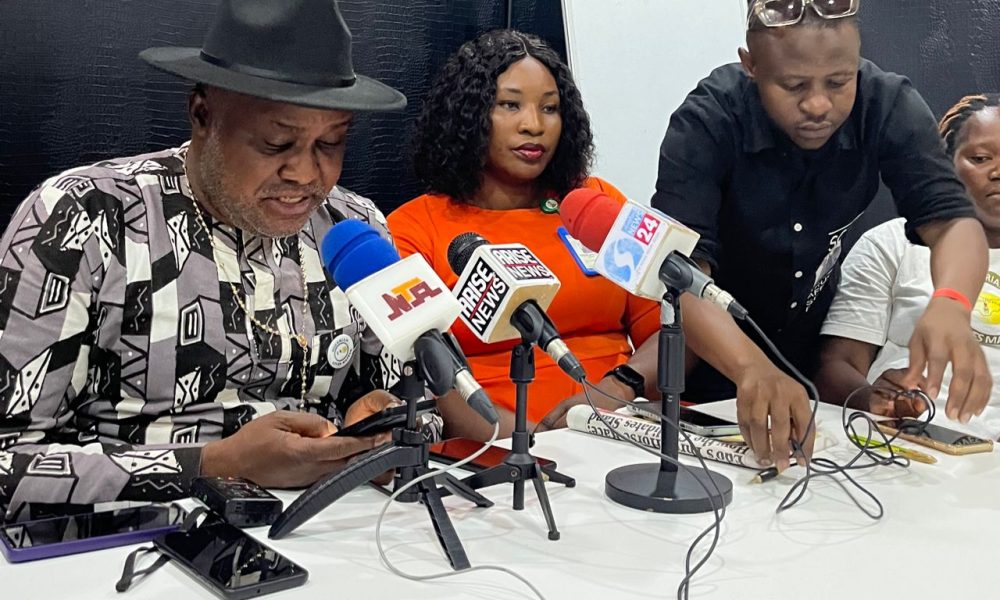
The Human Rights Writers Association of Nigeria (HURIWA) has condemned the Federal High Court’s decision to impose N140 million in costs against members of the Board of Trustees (BoT) of the Peoples Democratic Party (PDP), led by former Senate President Adolphus Wabara, and an additional N10 million personally against their counsel, Chief Chris Uche (SAN), describing the ruling as a dangerous precedent capable of undermining access to justice.
In a statement issued on Tuesday by its National Coordinator, Comrade Emmanuel Onwubiko, the rights group expressed concern that while courts have the constitutional authority to award costs in deserving cases, such powers should not be exercised in a manner that discourages Nigerians from seeking judicial redress.
HURIWA argued that the magnitude of the financial penalties raises fundamental constitutional questions about whether access to justice is gradually becoming the preserve of only the wealthy and politically influential.
The association clarified that it was not challenging the court’s authority to determine issues of jurisdiction or the merit of the suit, but rather what it described as the use of punitive financial sanctions that could intimidate litigants and discourage citizens, civil society organisations, political parties and public interest advocates from approaching the courts.
According to the group, Section 6 of the Nigerian Constitution vests judicial powers in the courts to ensure disputes are resolved through legal processes rather than political confrontation or self-help.
READ ALSO: HURIWA raises alarm over alleged detention of Journalist, defends press freedom
“If litigants must now fear that an unsuccessful action could expose them to crippling financial liabilities running into hundreds of millions of naira, then the constitutional guarantee of access to justice stands gravely imperilled,” HURIWA stated.
The organisation further noted that the PDP BoT members did not institute the suit frivolously, but sought judicial intervention over what they believed to be threats to the identity and institutional independence of the country’s leading opposition party.
HURIWA said the plaintiffs alleged that the PDP was facing external political interference allegedly orchestrated by the ruling All Progressives Congress (APC) through influential political figures, including the Minister of the Federal Capital Territory, Nyesom Wike, and his loyalists.
It maintained that whether such claims were ultimately upheld or dismissed remained a matter for judicial determination, but insisted that litigants must be free to ventilate their grievances before competent courts without fear of financial ruin.
The rights group warned that the increasing trend of imposing what it described as astronomical costs in politically sensitive cases could have a chilling effect on Nigeria’s democratic process.
According to HURIWA, opposition parties, activists, journalists, whistleblowers, election petitioners and ordinary citizens may begin to view litigation as an excessively expensive risk, thereby weakening confidence in the judiciary and constitutional democracy.
It stressed that democratic societies thrive when citizens are confident that courts remain open and accessible forums where even unpopular cases can be heard fairly without intimidation.
“The courtroom must never become a place where litigants fear economic devastation merely because their legal arguments fail,” the statement added.
HURIWA also expressed concern that such financial sanctions could create the impression that judicial processes are being used, deliberately or otherwise, to shield political institutions from legal scrutiny by imposing prohibitive financial barriers on challengers.
The association called on appellate courts to carefully review what it described as the emerging trend in the award of costs to ensure judicial discretion remains guided by the principles of fairness, proportionality, equity and access to justice.
It also urged the National Judicial Council (NJC), the Nigerian Bar Association (NBA), constitutional scholars and civil society organisations to initiate a national conversation on the increasing use of punitive costs in politically significant litigation.
According to HURIWA, an independent judiciary becomes stronger when citizens are encouraged to pursue lawful remedies rather than resort to political violence, self-help or public disorder.
The group reaffirmed that the judiciary should continue to inspire confidence as the last hope of the common man and warned that justice must never become so expensive that it discourages Nigerians from exercising their constitutional right to seek redress in court.