
How the Dodgers contributed to Bobby Bonilla Day and triggered the rise of deferred salaries and Adrian Beltre

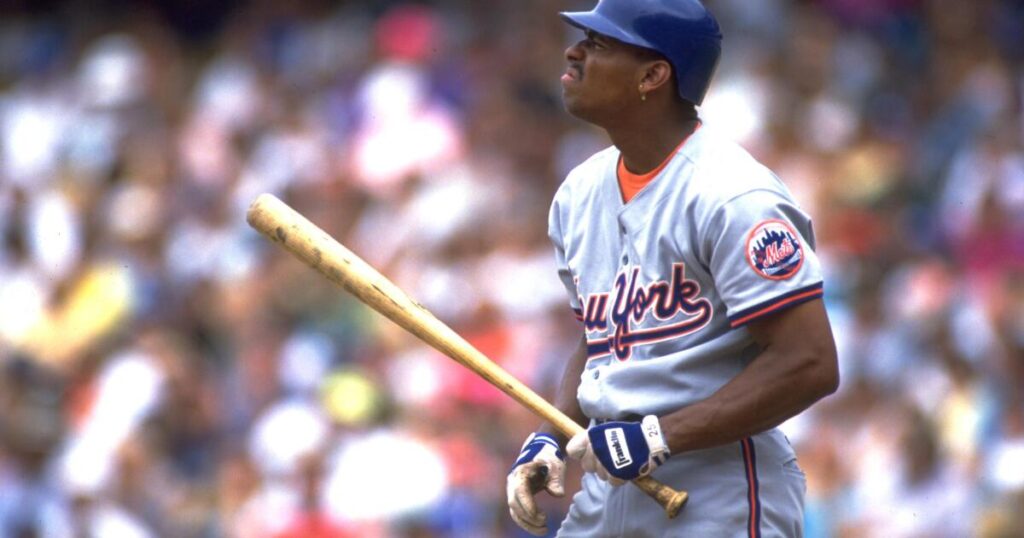
Most fans of baseball, delayed gratification and compounding interest know about Bobby Bonilla Day, an annual acknowledgment of the dawn of deferred contracts.
BBD is also a cautionary reminder to Major League general managers not to overpay players whose best years are behind them. And Bonilla evokes memories among Dodgers fans of the veteran third baseman’s failed 1998 stint with the team, which accelerated the promotion of future Hall of Famer Adrian Beltre at age 19.
The Dodgers promptly traded Bonilla to the New York Mets, who pay him $1,193,248.20 on July 1 each year. The payments are the result of the Mets in 2000 deferring the last $5.9 million of his four-year contract after releasing him on the heels of a .160 batting average.
Bonilla’s agent, Dennis Gilbert, leveraged the Mets’ eagerness to cut ties with his client, getting them to agree to defer payments for 10 years at 8% interest, then spread them over 25 years.
Result? Bonilla will have collected $29.8 million — nearly five times the original salary — by the time the arrangement expires in 2035, when he is 72 years old.
The Mets agreed to the novel arrangement so they could use the $5.9 million to pay Mike Hampton, a left-handed starting pitcher who helped the team reach the 2000 World Series.
The glow of a World Series appearance — also known as recency bias — enhances value. Hampton soon secured an eight-year, $121 million deal with the Colorado Rockies, widely considered one of the worst free-agent signings of all time. The left-hander went 21-28 with a 5.75 earned-run average in two seasons, and (sound familiar?) the Rockies paid him $1.9 million in deferred salary every year from 2001 to 2018.
Bonilla became attractive to the Mets after he helped the then-Florida Marlins to the 1997 World Series title. But first came a detour on May 14, 1998, one of the most shocking days in Dodgers history: They acquired Bonilla along with Gary Sheffield and three other players for franchise icon Mike Piazza and Todd Zeile.
Bonilla batted only .237 with seven home runs and 30 runs batted in for the Dodgers while sparring with Tom Lasorda, who succeeded Fred Claire as general manager on June 22 of that year.
The Dodgers traded Bonilla to the Mets and The Times reached him at a charity event in Puerto Rico after the season.
“I guess I was the reason for all of the problems [the Dodgers] had, so everything should be great now that they got me out of there,” Bonilla said sarcastically. “Tommy didn’t want me around because he knew I wouldn’t listen to all of his [talk].
“I saw right through all of that, and he knew he better turn around when he saw me [in the clubhouse]. He didn’t like that, he wants everyone to just sit there and listen to him, and we all know what I’m talking about.”
Bonilla had shared time at third base with Beltre, who struggled as a rookie but exhibited the potential that resulted in a 21-year career and first-ballot Hall of Fame induction in 2024.
Bonilla had excelled with the Mets earlier in his career, and they gambled that he could recapture the production of his youth by taking on the last two years and $11.65 million of his contract. They soon regretted it. Though he had made six All-Star teams and also starred with the Pittsburgh Pirates and Baltimore Orioles, Bonilla played poorly and clashed with the front office, setting the table for the deferred payments and BBD.
Bonilla and his agent weren’t finished with deferred payments, however. They negotiated a separate deal with the Orioles that began in 2004 and pays Bonilla $500,000 every July 1 through 2029, boosting his yearly income from deferred salary to $1,693,248.20.
Deferred salary is commonplace these days. Dodgers superstar Shohei Ohtani’s 10-year, $700-million contract defers all but $2 million of his annual salary until after the contract expires. He will receive annual payments of $68 million from 2034 to 2043, without interest.
The unusual structure was Ohtani’s idea, encouraged by a plan to attract more star players to join him in Los Angeles. The plan has been executed well, with the Dodgers winning the World Series in two of Ohtani’s first three seasons while constantly bolstering the roster.
Consider these current contracts: Mookie Betts ($365 million, $115 million deferred); Blake Snell ($182 million, $60 million deferred); Freddie Freeman ($162 million, $57 million deferred); Will Smith ($140 million, $50 million deferred); Tommy Edman ($74 million, $25 million deferred); Tanner Scott ($72 million, $21 million deferred); Edwin Diaz ($69 million, $13.5 million deferred); and Teoscar Hernández ($89.5 million guaranteed in two contracts, $31.5 million deferred).
“I think everybody’s making deferred-money jokes now,” Dodgers general manager Brandon Gomes told The Times.
Or celebrating Bobby Bonilla Day.