

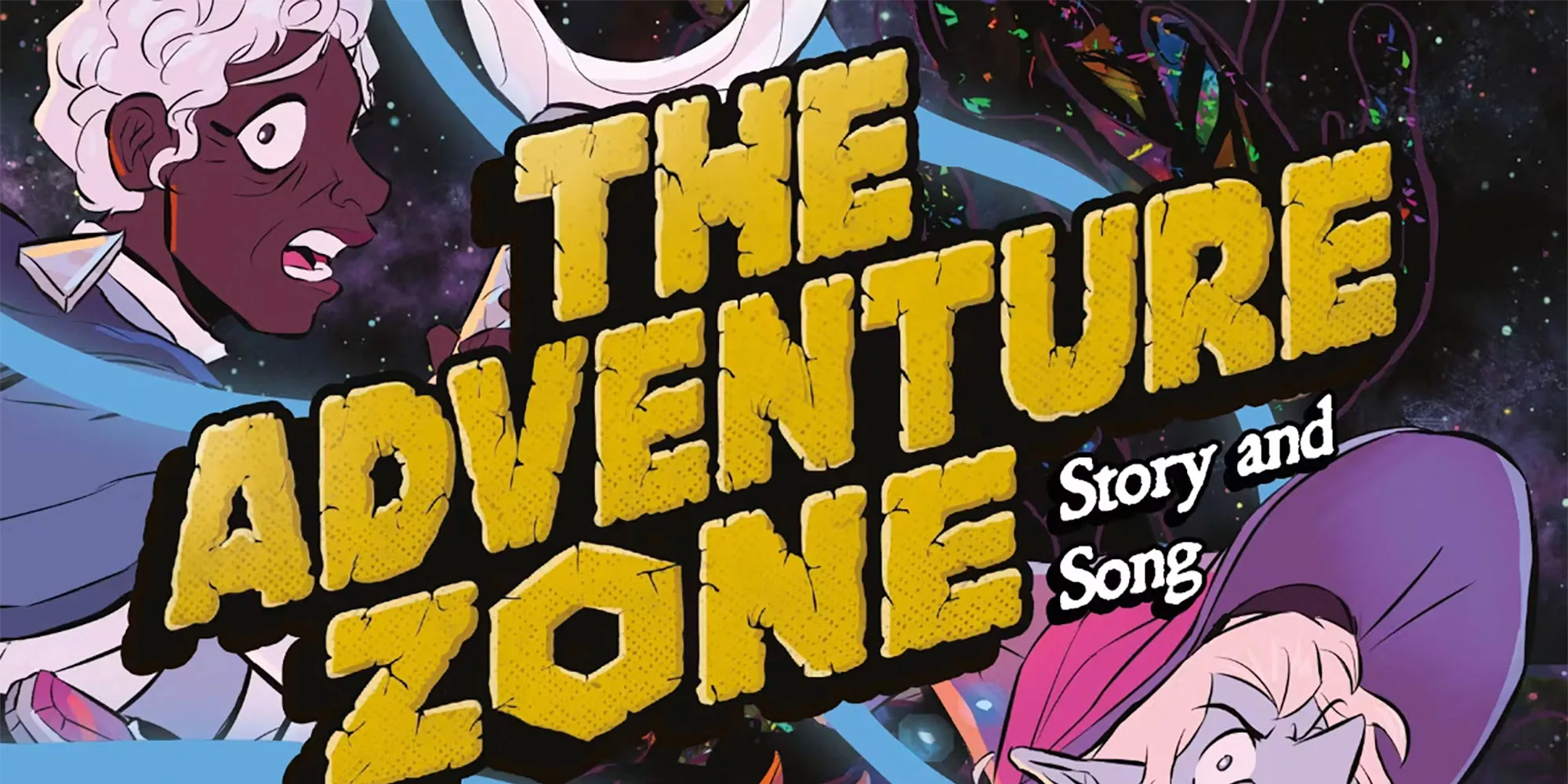
When The Adventure Zone originally premiered more than a decade ago in 2014, it was impossible to predict that it would become a pop culture phenomenon that eventually would span hundreds of episodes and spawn its own graphic novel adaptations.
Twelve years later, The Adventure Zone: Story and Song graphic novel is preparing to wrap up the story and bring the final moments of the epic Balance campaign to readers.
Clint, Travis, Justin, and Griffin MCElroy Chat With VICE About BRinging The Final Moments of the Balance Campaign to the Page
The Adventure Zone podcast pulls in 2.5 million downloads a month and has become one of the most popular pillars of the McElroy family entertainment empire. This week will see the debut of the seventh, and final, installment in the graphic novel adaptation of the gang’s Balance campaign.
Before the major milestone arrives, VICE had a chance to chat with the McElroys about how their relationships with D&D evolved over the years and what it was like to try and translate their chaotic table presence to graphic novel format.
VICE: In the original Balance campaign, you all treated the D&D 5e ruleset as a polite suggestion in favor of “the rule of cool” and emotional payoff. When you were scripting Story and Song with Carey Pietsch, how did you balance preserving the messy, hilarious chaos of a real D&D table with the structural needs of a graphic novel epic?
CLINT: If you charted our adherence to the “rules” on graph paper, I think the arc all through the…well, arc… would be somewhere around the 5% mark, with a gentle upslope through Rockport (13%), Petals (24%), Crystal (29%), Eleventh (32%), levelling off during Suffering (34%). Story and Song was such an epic endeavor that the battles and personal encounters became bigger. I think we held to that 32% through S&S.
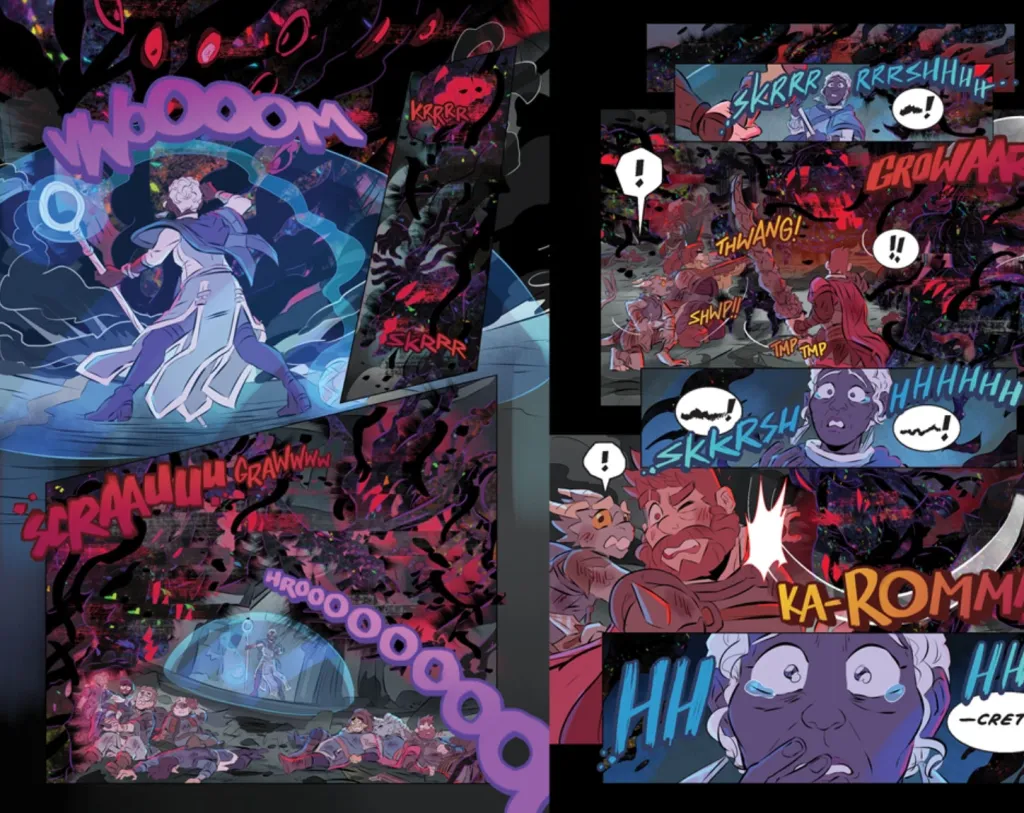
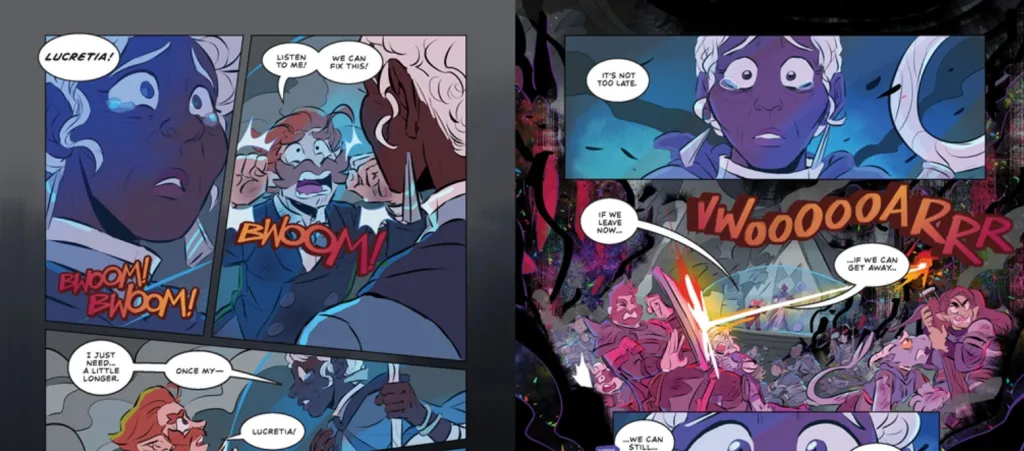
TRAVIS: Denny, this is a really polite way of saying that when we started we had no idea what we were doing! Carey has a truly magical knack for giving the characters the facial reactions and body language that we as the players would have had during the wildest moments. It truly makes the energy jump off the page and reads just like it felt while recording.
VICE: There’s a distinct vulnerability to sitting at a table with your family and playing a tabletop roleplaying game, but you did it in front of millions of strangers. Story and Song is the culmination of that entire shared history. Looking back at where Taako, Magnus, and Merle started, how much did the looming presence of a massive gaming audience change the way you played the game back then compared to how you look at the characters now on the page?
The Magnus line “It’s not perfect, but it’s the best I could do” was directly born from my anxiety during the process of working on the first graphic novel while finishing the Balance arc.
Travis McElroy
TRAVIS: I think you would normally be correct, but we learned very early on to focus on entertaining each other and trust that the audience would enjoy it if we did. There was definitely the ever looming worry of if people would like it or not, but I think that ended up being channeled into the vulnerability the characters themselves display. The Magnus line “It’s not perfect, but it’s the best I could do” was directly born from my anxiety during the process of working on the first graphic novel while finishing the Balance arc.
VICE: For some of our readers, the most fascinating part of The Adventure Zone graphic novels is how they visually represent TTRPG concepts. What was the collaborative process like to ensure the art feels like real D&D? How did you approach visually presenting things like spell slots, inventory management, or the looming, abstract presence of the Dungeon Master in this final volume?
TRAVIS: Oh boy! The development process for the first graphic novel was an absolute beast and a big chunk of that time was spent chewing on topics just like this. A ton of thought went into it and there were a lot of different approaches we tried. Once we had found an approach we thought would work, Carey took a pass at some examples and it pulled the whole thing together.
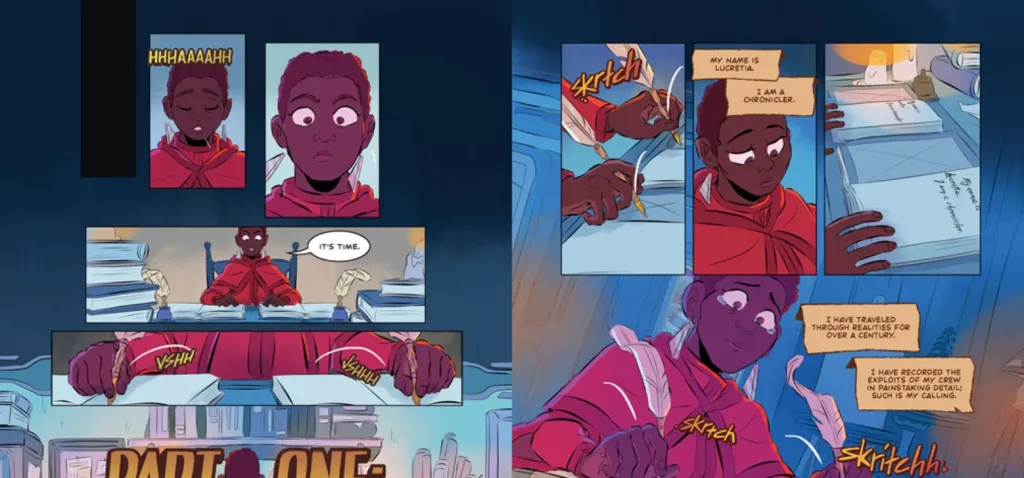
VICE: Story and Song covers The Stolen Century and the grand finale, which are packed with deep lore. Can you tease any specific visual or textual easter eggs in this volume that directly nod to classic D&D modules or rulebooks, real-world gaming tropes, or inside jokes from your time sitting around the table?
CLINT: I’ll say this: There are so many that I want people have to reread this book over and over again so they wear it out and have to buy multiple copies.
VICE: Magnus is famous for rushing in. How did Carey visually capture the energy of a Fighter who refuses to think things through?
TRAVIS: Carey’s ability to capture Magnus’ “golden retriever” energy has always cracked me up. He is a big beefy boy and can be very intimidating and then BOOM he’s just a big kid, excited to do something stupid. She draws him with such a sweet, stupid gentleness. I love it!
VICE: Looking at the final artwork for this volume, what was it like to see your growth as a player (going from accidentally casting Zone of Truth to wielding god-tier magic) fully realized as a badass fantasy graphic novel hero?
CLINT: I wanted to play MERLE as a flawed person: Deadbeat Dad, Doubtful Devotee, Crummy Cleric. His growth started with his decision to try to make things better with Mavis and Mookie. His relationship with Pan came about organically, which is the best way to have that relationship develop, in my humble opinion. As for the god-tier magic, I think he was able to do that because of the love between him, Magnus, Taako, and the rest of the Seven Birds.
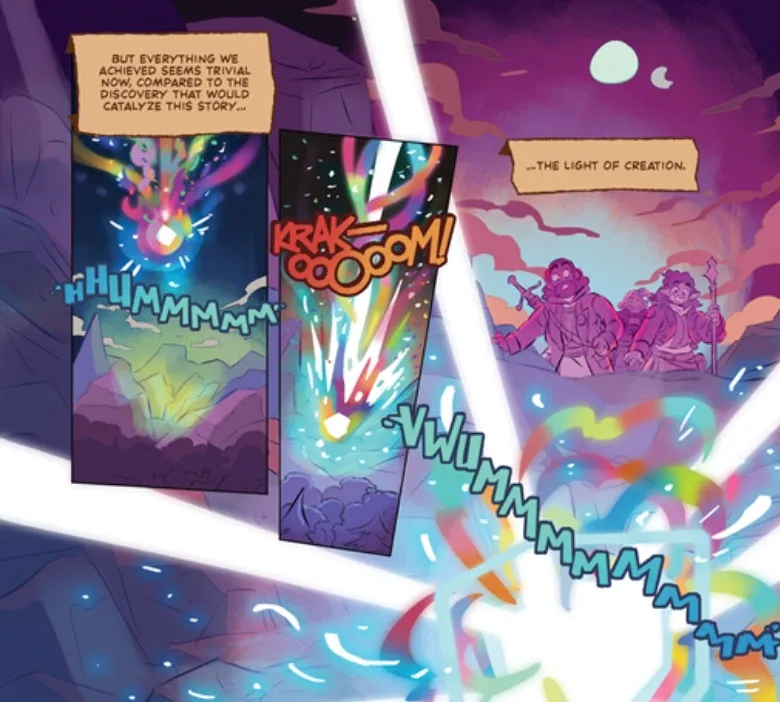
VICE: If you had to pick one panel or page in Story and Song that perfectly captures Taako’s unique approach to wizardry and the arcane, what would it be?
JUSTIN: I think when you read about Lup’s best day ever, you really understand the other half of Taako. I think to this point, you haven’t really understood why he is so powerful and neither has he. This relationship with Lup, that’s really the source of his power as much as anything else I think. Seeing the scene on the page really helped me to realize that in a way I’m not sure I clocked when we were first recording.
EMBRACE COLLABORATION! Let those playing help steer the ship. There is Joy in collaboration.
Clint McElroy
VICE: As the DM, what was the hardest narrative shortcut you had to make to turn an open-world TTRPG session into a linear comic book script?
GRIFFIN: Aside from the countless ways we changed and recombined the plot to make it more coherent, by far the most useful shortcut was the introduction of, well, me, as an in-world character. I bristled at the thought of including one of the more explicit self-inserts in the history of the medium, but dang, we used the GM character for everything — reminders for events from past books, shorthand explainers for spells and items, quick-and-dirty character development; the list goes on and on.
VICE: Every Dungeon Master and player knows the anxiety and triumph of trying to stick the landing on a years-long D&D campaign. Now that the Balance arc is officially completely bound and finished on paper, what is the biggest piece of advice you would give to DMs out there who are currently trying to script or map out a satisfying final session for their own home games?
CLINT: EMBRACE COLLABORATION! Let those playing help steer the ship. There is Joy in collaboration.
TRAVIS: Do not over plan! Balance was really built as we went and that kind of spontaneity contributed to the fun and wild turns the story took.
The Adventure Zone podcast and the first six installments in the graphic novel series are available now.
The Adventure Zone: Story and Song is available to pre-order now and releases on July 14, 2026.