

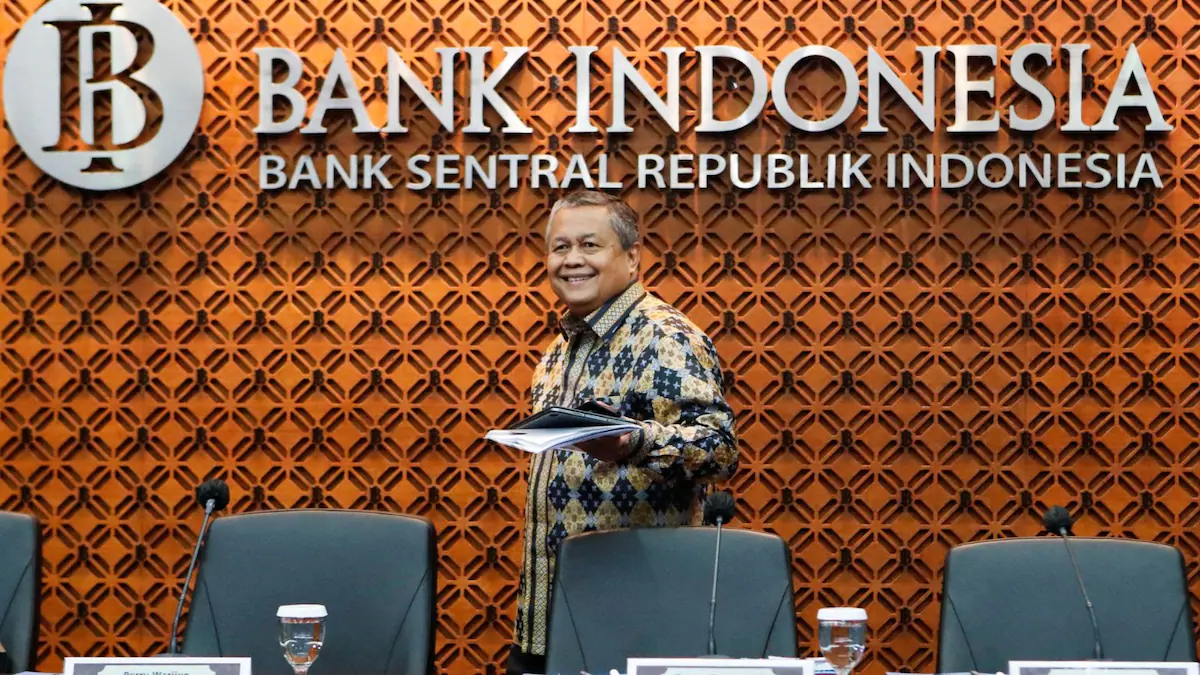
Indonesia’s State Secretary Prasetyo Hadi announced the resignation at a briefing in Jakarta on Monday, July 27, where Warjiyo was not present. President Prabowo Subianto had accepted the resignation, the minister said. Destry, who had been appointed as the interim governor, said Warjiyo had stepped down for personal reasons.
Also Read: RBI, Bank Indonesia sign MoU for use of local currency in bilateral transactions
Warjiyo, 67, was first appointed governor in 2018 by former President Joko Widodo and was reappointed for a second five-year term in 2023.
He oversaw the country’s central bank’s response to the pandemic and was widely regarded as a steady hand, with more than four decades of experience as a central banker.
His departure came after months of pressure on the central bank to align policy more closely with the government under President Prabowo, who was elected in 2024 and had pushed to lift annual growth from around 5% to 8%.
Prabowo had also appointed his nephew as a deputy governor earlier this year, fuelling concerns about the bank’s independence. In June, the country’s parliament passed a law expanding the central bank’s objectives to include real sector growth and job creation, while also giving lawmakers the power to evaluate its performance.
Despite these pressures, Warjiyo had publicly backed Prabowo’s policies, saying last year that monetary policy would be “all-out, pro-growth.”
Also Read: PM’s Indonesia visit and the strategic partnership between two major Asian economies
His resignation followed sustained scrutiny over the rupiah’s performance. In May, lawmakers on the House of Representatives’ Commission XI had questioned him over the currency’s weakness after it fell past 17,600 per US dollar.
The rupiah went on to hit a record low of 18,171 on June 8, extending its 2026 losses to more than 7% and making it Asia’s worst-performing currency, pressured by rising oil prices and dollar strength tied to US tariff concerns.
It has since recovered to around 17,909, roughly 1.4% stronger than its June low, though year-to-date losses remained in the 6–7% range.
Also Read: Indonesian Rupiah falls to lowest since Asian financial crisis
Bank Indonesia had held its benchmark rate at 5.75% at its July meeting, after three rate hikes totalling 100 basis points between May and June.
Warjiyo’s exit marks the end of an eight-year tenure and leaves Destry to steer the central bank through continued currency pressure and concerns over its independence from the government.