

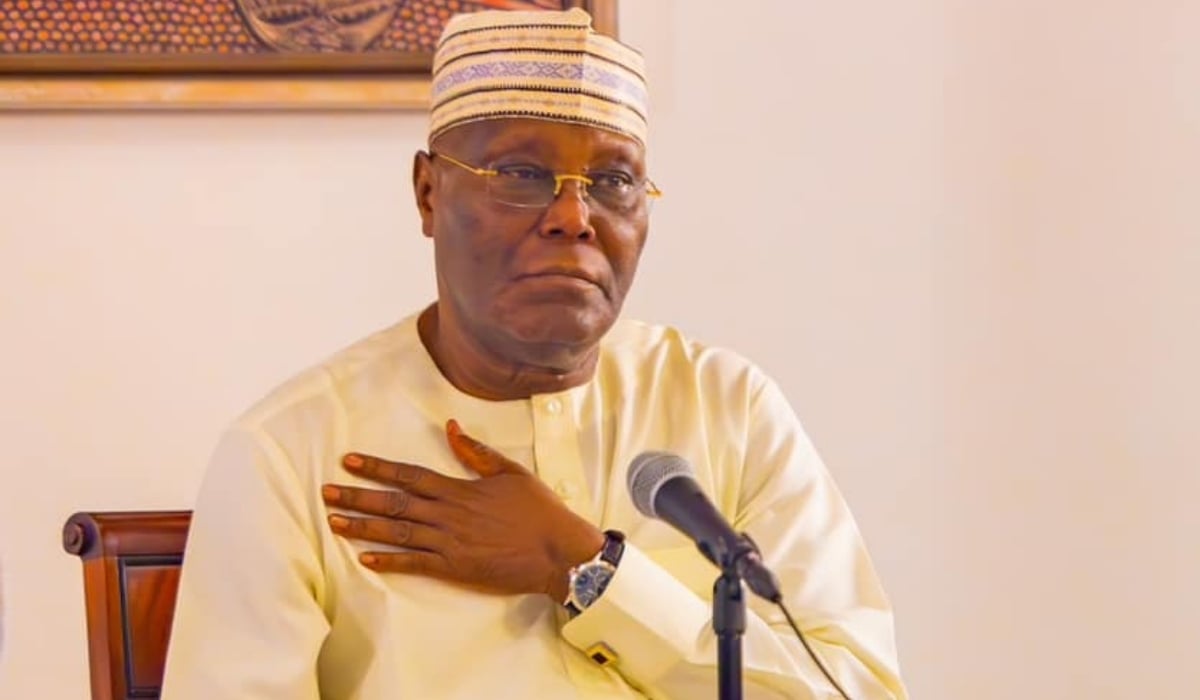
• Says leadership demands accountability, self-reflection
A former House of Representatives Committee Chairman on Capital Market and Institutions, Hon. Teejay Yusuf, has challenged former Vice President Atiku Abubakar’s criticism of the Independent National Electoral Commission (INEC), describing the allegations against the electoral body as an attempt to divert attention from the internal challenges facing opposition politics ahead of the 2027 general elections.
Yusuf, in a strongly worded reaction Tuesday in Abuja, argued that political leaders must first address weaknesses within their own organisations before accusing external institutions of causing their difficulties.
His response followed allegations by Atiku that INEC Chairman Prof. Joash Amupitan was appointed to weaken opposition parties by allegedly creating divisions within their ranks.
But Yusuf rejected the claim, insisting that political parties must accept responsibility for their internal processes and disagreements.
“One of Atiku’s greatest leadership shortcomings is his inability to recognize the obvious challenges confronting the ADC; rather than confronting these realities with honesty and taking responsibility, he consistently looks for others to blame.
But true leadership demands self-reflection, accountability, and the courage to address internal weaknesses before pointing fingers elsewhere; a leader who refuses to acknowledge evident problems in his immediate environment risks deepening the very crisis he assumes that he is seeking to overcome.”
The lawmaker said Nigeria’s democracy depends on strong institutions and responsible political behaviour, warning that repeated attacks on electoral bodies without compelling evidence could create unnecessary distrust among citizens.
According to Yusuf, INEC’s role is to provide a regulatory framework for elections, while political parties remain responsible for managing their leadership structures through their constitutions and lawful internal mechanisms.
“Political disputes do not begin at INEC. They begin within political organisations when there are disagreements over leadership, structures, and decision-making. The solution is not to blame institutions but to resolve those disputes through democratic means,” he said.
Yusuf maintained that every democratic actor has the right to demand transparency from public institutions, but such demands must not become a strategy for avoiding difficult conversations about internal failures.
He said Nigeria has moved beyond an era where political challenges are solved through accusations and propaganda, adding that citizens expect leaders to demonstrate maturity and accountability.
“The Nigerian people deserve leaders who can identify problems, accept responsibility, and provide solutions. Leadership is not about finding someone else to blame whenever challenges arise; leadership is about having the courage to confront reality.”
Yusuf urged political actors preparing for the 2027 elections to prioritise issue-based campaigns, institutional respect, and democratic stability.
He concluded that the strength of Nigeria’s democracy would depend on the ability of political leaders to build confidence in institutions rather than weaken them for short-term political gains.