

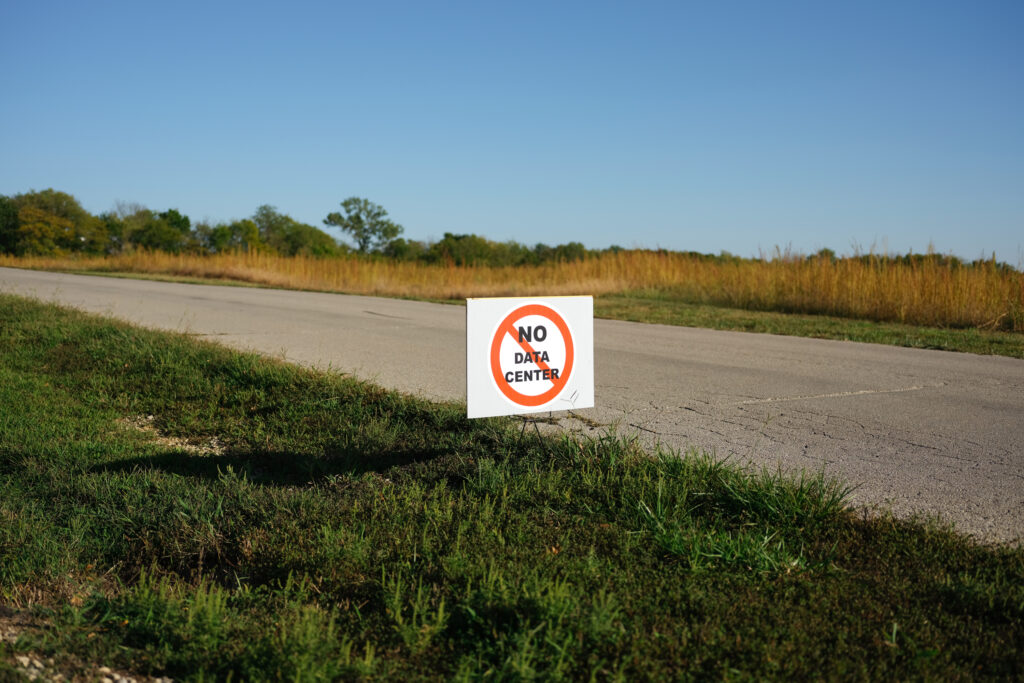
SPARTANBURG, S.C. — Elon Musk’s idea to send data centers into space might prompt smirks in some quarters but probably not in Spartanburg, where a mega data center slipped into town, catching residents by surprise and spawning a revolt.
Across the country, the explosion of data centers — driven by a surge in artificial intelligence demand — has created controversy because of environmental concerns, utility issues and a lack of transparency mixed with misunderstandings among residents, corporate investors and local leaders. There are about 3,000 data centers in the United States, with roughly 1,500 more under development.
The Spartanburg data center, which is under construction and slated to begin operations in the third quarter of this year, arrived with hardly anyone’s notice until trees along South Pine Street were mowed down and heavy equipment started rolling in. The lack of awareness was no accident. Local officials who lured the project to Spartanburg County publicly referred to it as “Project MOC-1” and characterized it as a “high-performance computing center.”
This subterfuge is a classic example of good ol’ boy dodging that has come back to bite local officials where they sit. MOC-1 was the work of NorthMark Strategies, a New York investment firm that is developing the data center through its subsidiary, Valara Holdings. Thanks to the Spartanburg County Council’s complicity in protecting the project until it was finalized, it took a while for people to figure things out.
The February 2025 agreement between NorthMark and the county included a 40-year fee-in-lieu-of-tax agreement that lowered the property assessment ratio for Valara Holdings to 4 percent. The deal also included other tax credits. Even when NorthMark announced the $2.8 billion center in a press release on April 22, 2025, it continued to use misleading language, saying it was redeveloping the now-defunct Kohler manufacturing plant into a “high-performance computing center.” For all anyone knew, this could have meant anything from a shared workspace complex with hundreds of computer stations to, well, a giant data center with all its attendant problems.
The real kicker: the small number of jobs it will create. When fully operational, the largely automated center will provide “at least 27” jobs, according to the governor’s office, though this number seems to vary.
The secretive nature of the negotiations, though not illegal, has fueled growing anger among residents, who say they feel misled by their elected officials. In an unhelpful explanation, county spokeswoman Scottie Kay Blackwell told a Post and Courier reporter that the council had a nondisclosure agreement with the company and wasn’t at liberty to “share any information about this matter beyond what is already included in the County Council agenda packet.”
Not at liberty to share? What about transparency? What about public input? What about telling residents they’ll soon lose their starlit nights among old-growth trees and sacrifice the cicada’s summer serenade to the drone of nonstop generators and turbines?
Two meetings have been held recently to deal with public outcry. On June 24, NorthMark hosted a virtual town hall. The following day, the state Department of Environmental Services convened a meeting at the Spartanburg Memorial Auditorium to accommodate hundreds of outraged residents eager to discuss a proposed power plant expansion, from an approximately 50-megawatt facility to one that’s roughly 450 megawatts, to support the data center.
If approved, the facility would emit hundreds of tons of pollutants into the air annually through 35 exhaust stacks ranging in height from 31 to 80 feet. This includes more than nine tons of carcinogenic formaldehyde and 158 tons of fine particulate matter, which is linked to asthma, birth defects and lung cancer risk.
The request for an increase in power also seemed to take residents by surprise, even though a county official confirmed that NorthMark made clear in its original “project profile” that it would scale up to 450 megawatts. “Maybe the message didn’t get out properly,” Mike Dobeck, vice president of real estate development for NorthMark, told the Greenville News. Maybe? Emily Wyche of the Southern Environmental Law Center, which is fighting the permit request, was blunt in her remarks at the public hearing: “The lack of transparency is stunning.”
Accordingly, the state has extended the public comment period for the permit until July 31. Meanwhile, Spartanburg County has joined several other counties in passing temporary moratoriums on new plans for data centers.
Spartanburg County officials clearly wanted to keep their discussions under wraps while NorthMark considered locations in other areas. And, charitably, an investment of this scale would be hard for any community to resist.
But politicians seem never to learn that they work for the people and not for corporations or private-equity firms looking for a deal at the expense of residents and the environment — especially not in exchange for the quality of life that makes South Carolina a desirable place to call home.
All things considered, space seems a proper place for data centers — and maybe for a few politicians, if Mr. Musk can make room on his rocket.