
36 Years Ago, Bugs Bunny, Garfield, and the Ninja Turtles Teamed Up for a Chaotic Anti-Drug PSA

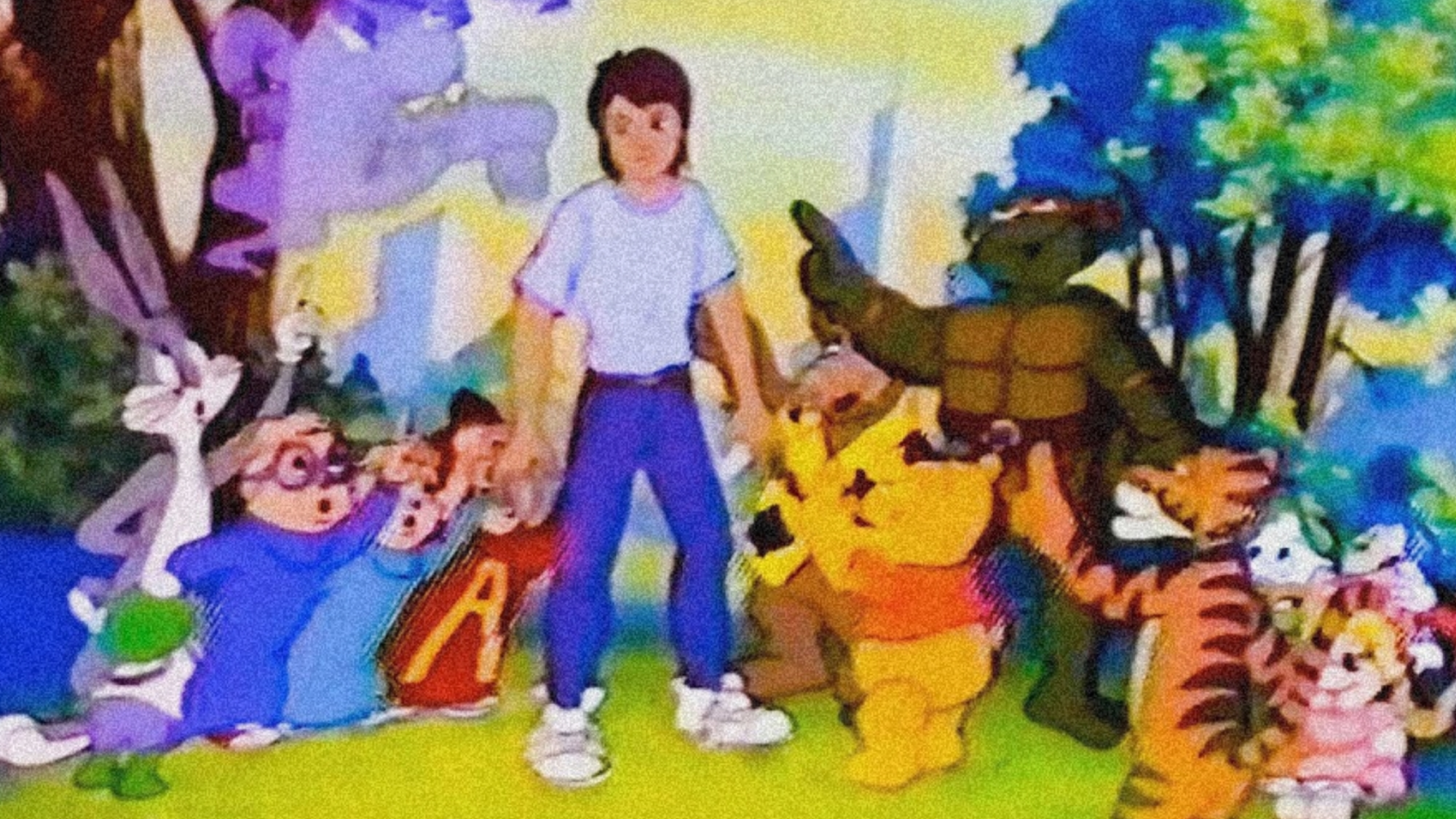
Anti-drug public service announcements have been around forever, but they haven’t always been effective. At best, they raised awareness about drugs and the harms that they can cause, especially to young, impressionable minds.
That’s why, in the 90s, an anti-drug campaign featuring everyone’s favorite cartoon characters that puts Marvel’s Avengers to shame—Bugs Bunny, ALF, Garfield, the Ninja Turtles, Winnie the Pooh. What transpires is a 27-minute propaganda video full of absolute chaos.
The Weirdest Anti-Drug PSA of the ’90s Featured Bugs Bunny, ALF, Garfield, and the Ninja Turtles
Essentially, the protagonist, Michael, is a bit of a wayward and heading down the path to drugs. He smokes marijuana, which concerns his little sister Corey, who enlists the help of the aforementioned characters to see the error in his ways. It’s very strange to see someone like Simon from Alvin and the Chipmunks being able to identify marijuana and tell its effects, but hey, it was the 90s.
They show him what his future could be like and that marijuana is just his “gateway” into harder drugs like heroin and crack. While at first they use coercion, they soon go into scarier tactics, threatening his life with various weapons. At one point, he enters a psychedelic acid trip trapped inside his own brain (thanks to Michelangelo). The scare tactics surely left an impression on the audience, like many of the scary children’s shows of the time period.
In the end, it freaks him out enough to apologize to his sister and divulge his addiction to his parents, whom he asks for help.
The ineffectiveness of anti-drug campaigns
As a kid, I remember the mid-2000s push to try to influence Gen Z not to give in to peer pressure (the Above the Influence campaign). Clearly it didn’t work because much of this gen has a nicotine addiction thanks to vapes and pods.
Between 1998 and 2008, the government spent nearly $1 billion on these campaigns. A 2008 follow-up study funded by the National Institutes of Health found that they had “no favorable effects on youths’ behaviors.” Instead, it may have promoted some to use drugs.
In 2026, drugs are far from being normalized, but there’s a greater push to decriminalize them. Marijuana is legal for adult recreational use in 24 states. In 41 states, it is legal for medical use. In 2020, Oregon set a precedent as the first state to decriminalize small amounts of controlled substances, eliminating harsh penalties. Due to public backlash, the state reversed its decision. Now it’s classified as a misdemeanor.
Since then, Oklahoma, Tennessee, Washington, D.C., and seven other states have followed suit.