
₦1.3bn PFIPC Scandal: Court trial, budget controversy deepen mystery over alleged fake presidential agency

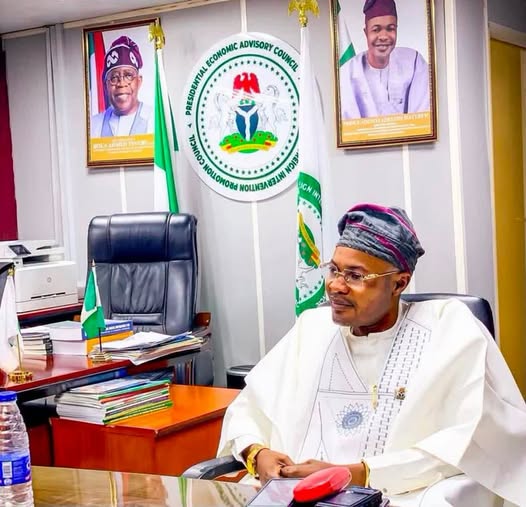
The controversy surrounding the alleged Presidential Foreign Investment Promotion Council (PFIPC) has grown into one of Nigeria’s most contentious public sector scandals, with fresh questions emerging over the agency’s appearance in the 2026 federal budget, allegations of forgery, bribery claims, and the mysterious death of a key figure linked to the case.
The matter gained renewed attention after the Federal High Court in Abuja ordered the arrest of Prince Adeniyi Adeyemi, who describes himself as the Director-General of the PFIPC, following his failure to appear for arraignment on charges of conspiracy, forgery and impersonation. He has since been arrested by the Nigeria Police.
The Federal Government maintains that the PFIPC is not a legally established government agency and has accused Adeyemi of forging official presidential documents, including an appointment letter allegedly bearing the signature of the Chief of Staff to the President, Femi Gbajabiamila.
According to the police, Adeyemi is facing an eight-count charge bordering on conspiracy, forgery and impersonation.
Adeyemi, however, has consistently denied the allegations, insisting that his appointment and activities were legitimate.
One of the major issues fueling public debate is the inclusion of the PFIPC in the 2026 Appropriation Act.
Despite government claims that the agency has no legal existence, documents from the approved budget reportedly allocated about ₦1.3 billion to the council under the Presidency.
The development has prompted scrutiny of Nigeria’s budget process, with lawmakers in the House of Representatives launching an investigation into how funds were appropriated for an agency the Presidency says does not exist.
Analysts say the outcome of the probe could determine whether the inclusion resulted from administrative lapses, budget irregularities or other systemic failures.
Before his arrest, Adeyemi made a series of allegations against senior government officials.
He claimed he borrowed ₦400 million to secure his appointment and alleged that additional payments were demanded before he could fully assume office.
He also alleged that disagreements arose after he rejected requests to surrender a significant portion of the agency’s proposed take-off funds.
The Presidency has denied the allegations, describing them as baseless and an attempt by a criminal suspect to divert attention from the charges against him.
No court has made any findings on the bribery claims.
The case has also been linked to the death of Dolapo Babatunde Tanimola, whom Adeyemi identified as a key intermediary in the appointment process.
Tanimola sustained severe burns following a fire at a hotel in Abuja in October 2025 and later died while receiving treatment at the National Hospital.
The circumstances surrounding the incident attracted further attention after reports emerged that the hotel where the fire occurred was demolished shortly afterwards.
Authorities have not officially linked the demolition to the PFIPC investigation, and no agency has publicly announced the outcome of any investigation into the fire.
With Adeyemi now in police custody and expected to face trial at the Federal High Court, attention is shifting to the judicial process.
Among the questions expected to feature prominently are how the PFIPC appeared in the federal budget despite being described as a non-existent agency, the authenticity of the documents allegedly used by Adeyemi, and whether evidence supports the various allegations made by both the prosecution and the defendant.
The trial is also expected to examine the circumstances surrounding the alleged forgery of presidential documents and determine whether the accusations amount to an isolated case of impersonation or expose broader weaknesses in government administrative processes.
As proceedings continue, the PFIPC controversy remains under close public scrutiny, with many observers awaiting answers to questions that have fueled one of the country’s most unusual governance scandals in recent years.