

Environment
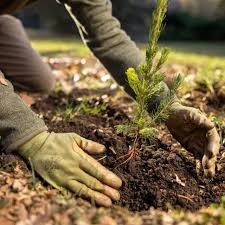
THE United Nations Children’s Fund (UNICEF) and Civil Society Organizations (CSOs), have urged for timely provision of sufficient seedlings ahead of 2026 tree-planting campaign in Sokoto state.
UNICEF’s Water, Sanitation and Hygiene (WASH) Specialist, Dr Eteng Ebri-Ibor, made the call during stakeholders meeting on Thursday in Sokoto.
Ebri-Ibor expressed concern over late and inadequate preparations by the State Ministry of Environment for the annual tree-planting campaign.
He harps on adequate provisions of seedlings in recognition of rising challenges of climate change, desertification, and deforestation facing the state.
He urged the government to strengthen penalties against indiscriminate tree felling, describing the current sanctions as insufficient to deter offenders.
According to him, stricter enforcement measures would encourage residents to replace trees that were cut down and promote environmental sustainability.
He stressed the need for collective action, noting that climate change affects the environment, people and animals, leading to a decline in economic and social activities.
He called for increased advocacy and sensitisation to encourage individuals to contribute to reducing the impact of climate change in their communities.
He appealed to civil society organizations to actively engage the media in their environmental sustainability campaigns to raise public awareness about the dangers of deforestation and its impact on climate change.
He revealed that UNICEF and its partners plan to launch a large-scale tree-planting initiative this year involving approximately 60,000 seedlings across the state.
“Our plan this year is to roll out a massive tree-planting campaign with about 60,000 seedlings.
“We are involving secondary school students in the exercise, while media organisations will help us amplify the message and create wider public awareness.
“We are targeting 75 schools across the state,” he said.
According to him, the initiative is expected to encourage environmental stewardship among young people while contributing to efforts aimed at mitigating the effects of climate change.
Mr Edayi Edison of the Young and Useful Generation Initiative (YUGI), said the organisation initiated to establish 1,000 secondary school climate change associations that would plant and nurture at least 5,000 trees.
Edison highlighted the dangers of climate change driven by human activity and shifting weather patterns, including reduced agricultural output, drying water sources and deforestation.
He said the platform was designed to advance climate action through evidence-based advocacy, capacity building and innovative solutions.
He called for stronger collaboration among individuals and groups to raise climate awareness and build resilience across Sokoto communities.
He called for increased advocacy and sensitisation to encourage individuals to contribute to reducing the impact of climate change in their communities.
According to him, climate change results in rising emissions that require adaptation strategies, water security, WASH resilience, as well as climate governance and financing policies.
Speaking also, the Executive Lead, Meema Initiative for Gender Development, Ms Shafa’atu Suleiman, said her organisation was using culturally sensitive approaches to address the issues of climate change, conflict and GBV using women in the society.
Suleiman said no fewer than 200 households were engaged on tree planting at Tamaje and Sabaru communities in Sokoto state. (NAN)
F.O
Tags: Sokoto Tree planting UNICEF