
Nigeria Busts Ivory Trafficking Ring, Seizes 130kg Of Elephant Tusks In Major Wildlife Crackdown

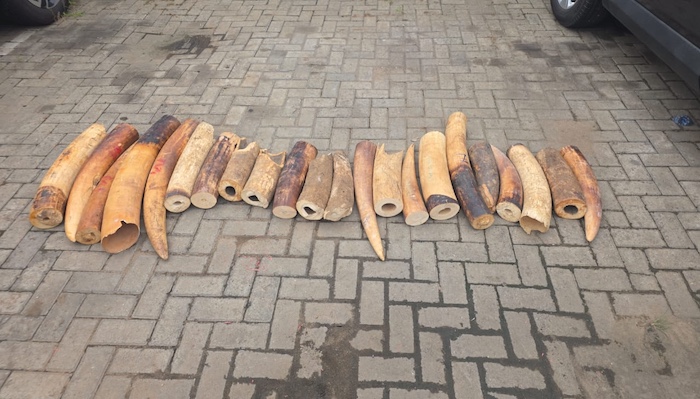
Nigeria has recorded another significant breakthrough in its intensifying war against wildlife trafficking, with security and environmental enforcement agencies arresting four suspected members of an ivory trafficking network and recovering elephant tusks weighing more than 130 kilogrammes in a coordinated operation spanning Lagos and Ogun states.
A statement on Monday by the spokesperson of the National Environmental Standards and Regulations Enforcement Agency (NESREA), Nwamaka Ejiofor, noted that the operation, which was driven by intelligence gathering and surveillance, was carried out jointly by NESREA, the Nigeria Customs Service and the Wildlife Justice Commission (WJC), and led to a major disruption of an illegal wildlife trafficking syndicate.
Ejiofor said the suspects were apprehended on Saturday following days of covert monitoring in Ofada, Mowe and parts of Lagos, areas believed to have been used by the network to facilitate the movement and trade of prohibited wildlife products.
She said the enforcement team also intercepted 22 pieces of elephant tusks with a combined weight of 130.84 kilogrammes and impounded a vehicle allegedly linked to the operation.
The latest seizure comes amid growing international concern over the illegal wildlife trade, a multibillion-dollar criminal enterprise that has continued to threaten endangered species across Africa while funding organised transnational criminal networks.
Elephants remain among the most targeted animals by poachers because of the high value of ivory in illegal international markets, particularly in parts of Asia. Conservation groups have repeatedly warned that continued poaching poses a serious threat to the survival of African elephant populations despite global efforts to curb the trade.
Reacting to the operation, Director-General of NESREA, Prof. Innocent Barikor, described the arrests and seizure as a clear demonstration of Nigeria’s determination to combat wildlife crime and prevent the country from being used as a transit point for illicit wildlife products.
According to him, the success of the operation reinforces Nigeria’s commitment to enforcing national and international laws protecting endangered species.
“This is further proof of Nigeria’s zero-tolerance stance on wildlife crimes. Nigeria will not be used as a hub for wildlife trafficking. NESREA and our partners are resolute on this,” he said.
Barikor noted that investigations were continuing to identify and apprehend other members of the criminal network, stressing that authorities were determined to dismantle the entire syndicate and ensure that everyone connected to the illegal trade faces prosecution.
The seizure is particularly significant because elephants are classified under Appendix I of the Convention on International Trade in Endangered Species of Wild Fauna and Flora (CITES), the highest level of international protection accorded to endangered species threatened with extinction.
Under Nigeria’s Endangered Species legislation and the National Environmental (Protection of Endangered Species in Domestic and International Trade) Regulations 2024, the possession, trafficking, sale or export of elephant ivory constitutes a serious criminal offence.
Nigeria has in recent years faced intense scrutiny from conservation bodies and international partners over its role as a transit route for illegal wildlife products moving from Central and West Africa to overseas markets.
However, sustained collaboration between Nigerian authorities and international partners has resulted in a series of high-profile interceptions, arrests and prosecutions aimed at dismantling trafficking networks operating across the region.
Wildlife experts say the latest operation represents another important step in strengthening Nigeria’s reputation as a country increasingly committed to combating environmental crimes and fulfilling its international obligations in the protection of endangered species.
With investigations still underway, officials say more arrests may follow as law enforcement agencies intensify efforts to track the source and intended destination of the seized ivory.
The latest bust is expected to send a strong warning to wildlife traffickers that Nigeria’s enforcement agencies are tightening the net around criminal networks profiting from the destruction of some of the world’s most endangered species.
Michael Olugbode
Follow us on: