

By Omoyeni Ojeifo
In a move to strengthen leadership in Nigeria’s tertiary education sector,
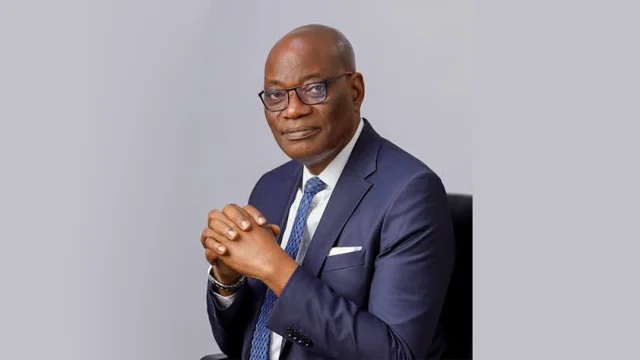
Prof. Oluwatoyin Temitayo Ogundipe, former Vice-Chancellor of the University of Lagos, has been appointed Chairman of the Governing Board of the National Universities Commission (NUC).
The appointment was announced in a State House press statement issued by the Special Adviser to the President on Information and Strategy, Bayo Onanuga on Monday and obtained by Persecondnews.
According to the Presidency, Ogundipe’s appointment is expected to reinforce regulatory oversight and improve standards within Nigeria’s university system.
“The President expects Ogundipe to provide visionary leadership at the NUC and sustain the credibility of the Nigerian university system, in line with the Renewed Hope Agenda, by advancing quality, access, and integrity in the education sector,” the statement said.
Ogundipe, a distinguished botanist and academic administrator, served as Vice-Chancellor of the University of Lagos between 2017 and 2022. He is currently Pro-Chancellor of Redeemer’s University, Ede, Osun State.
He holds a Ph.D in Botany from Obafemi Awolowo University and an MBA from the University of Lagos, with research expertise spanning molecular plant taxonomy, biosystematics, ethnobotany, cytogenetics, forensic botany, and ecological conservation.
The new NUC chairman is also a fellow of the Nigerian Academy of Science, the Linnean Society of London, and the Royal Society of Biology.
He has also served as President of the Botanical Society of Nigeria and Chairman of the Lagos State Science, Research and Innovation Council (LASRIC).
President Bola Tinubu had earlier appointed Prof. Olufemi Aina in July 2025, while the governing board was inaugurated in November the same year.
The appointment follows the resignation of Emeritus Professor Aina, who stepped down after less than one year in office.
Industry observers believe his background in university administration will help tackle funding shortages, stabilize the academic calendar, and boost the global standing of Nigerian universities.