

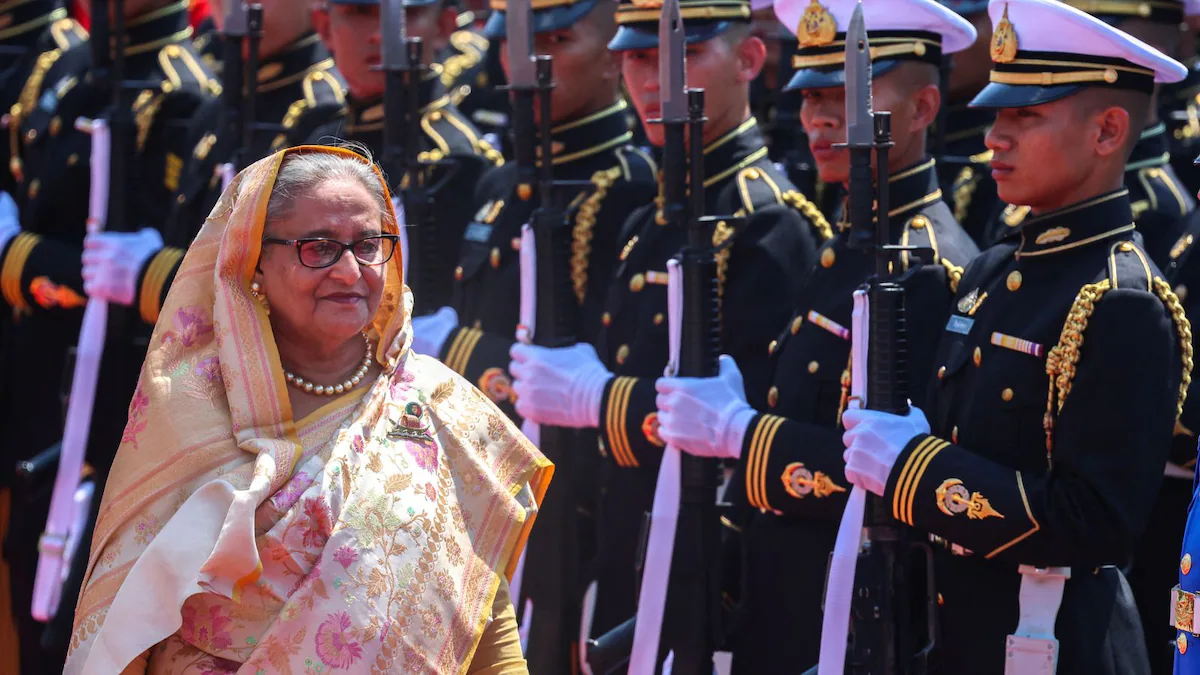
The leader, who had since sought refuge in India for the past two years, said her return is not “a question of personal ambition” but a matter of restoring democratic values in Bangladesh.
“Overcoming every obstacle and every conspiracy, I will return to my country this year,” she told NDTV.
However, her return may not be without legal hurdles with multiple criminal cases including murder accusations over 2024 youth protests and a death penalty she rejected and described as “politically motivated”.
“The verdict against me is not justice. It is part of an illegal, unconstitutional, and politically motivated process. The judiciary has been turned into an instrument of political revenge to make the Awami League leaderless,” Hasina said, adding that similar attempts had failed in the past and would fail again.
Even as Hasina spent two years in exile in India, Hasina said the welfare of Bangladesh remained her foremost priority despite the personal sacrifices of living away from home.
“My heart remains in Bangladesh,” she said, adding that she continued to closely follow developments in the country and remained confident the Awami League would return to power.
Hasina said the party remained “a political force rooted in the soil of Bengal” and drew its strength from the people rather than from being in government.
She said the party had survived repeated bans and attacks throughout its 77-year history and expressed confidence it would recover politically despite the arrests of many of its leaders and workers.
On Bangladesh’s political direction since her ouster, Hasina reiterated that the country was becoming increasingly similar to Pakistan. She said Bangladesh was founded on the principles of secularism, democracy and the spirit of the Liberation War, which she claimed had been undermined since she left office. While stressing the importance of maintaining friendly relations with all countries, she alleged that minority communities, cultural institutions and the ideals of the Liberation War had come under attack, adding that efforts were being made to turn Bangladesh into a “failed state.”
Hasina dismissed reports of secret negotiations with the Bangladesh Nationalist Party (BNP), describing them as propaganda. She said any political solution should be transparent and based on the will of the people, rather than on “secret deals” or back-channel discussions.
Asked about reports of attacks on minority communities, Hasina said Hindus, Buddhists, Christians and Ahmadis were increasingly facing insecurity. “Any attack on the minorities is an attack on the independence of Bangladesh,” she said, adding that those responsible were “enemies of the spirit of Bangladesh’s independence.” She called for religious equality, justice and freedom.