

General News
THE Anti Sexual Violence Lead (ASVIOL) Support Initiative has intensified efforts to improve access to education for adolescent mothers and married girls in Kaduna State through a targeted school re-entry programme.
The News Agency of Nigeria (NAN) reports that the intervention, known as the Aminiya Initiative and supported by the Malala Fund, is aimed at supporting girls who dropped out of school due to pregnancy, early marriage and related social challenges to return and complete their education.
The initiative seeks to strengthen support systems within schools and address barriers that continue to limit educational opportunities for vulnerable girls.
Available education data from development agencies indicated that Nigeria continues to record one of the world’s highest numbers of out-of-school children, with girls in northern states disproportionately affected by poverty, insecurity, early marriage and social norms.
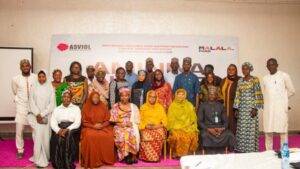
Speaking at a two-day stakeholder engagement and validation workshop in Kaduna, the Founder and Executive Director of ASVIOL Support Initiative, Hassana Maina, said many girls remained out of school because of gaps in institutional support rather than lack of interest in education.
“Too often, what is missing is not the willingness of girls to return to school, but the support systems that make return possible.
“If a girl leaves school because of life circumstances, the education system must provide pathways for her return without discrimination,” she said.
Maina explained that the initiative aligned with broader efforts to translate policy commitments on girls’ education into practical interventions at school level.
She added that the programme would be implemented in selected schools across Kaduna State to strengthen safeguarding systems and improve retention of vulnerable learners.
According to ASVIOL, the intervention will also establish referral pathways linking schools with support services to address psychosocial and protection concerns affecting girls’ continuity in education.
She expressed optimism that effective implementation of re-entry policies at school and community levels would improve educational outcomes for adolescent girls in the state.
ASVIOL also identified adolescent pregnancy and child marriage as major contributors to school dropout among girls, alongside limited reintegration mechanisms and inadequate psychosocial support.
“To address these challenges, the Aminiya Initiative introduced a school-based mentorship structure involving the training of selected teachers as ‘Aminiya Mentors’.
“The mentors are expected to provide psychosocial support, safeguarding guidance, classroom inclusion support and referral services for girls returning to school,” ASVIOL said.
According to ASVIOL, the approach is designed to strengthen school-level mechanisms that support adolescent mothers and other vulnerable learners to reintegrate into formal education without discrimination.
The News Agency of Nigeria (NAN) reports that participants at the meeting including education officials, school administrators, teachers, civil society organisations, development partners and community representatives discussed challenges affecting implementation of school re-entry policies and strategies to improve outcomes for affected girls.
They identified weak enforcement of re-entry guidelines, inadequate counselling services, limited teacher capacity and persistent social stigma as key obstacles to successful reintegration.
They also noted that although policy frameworks supporting school re-entry exist in several states, implementation often varies across schools, resulting in uneven outcomes.
The participants further stressed the need for stronger collaboration between education authorities and communities to address social norms that discourage girls from returning to school after pregnancy or marriage. (NAN)
W.U
June 24, 2026
Tags: Hassana Maina