

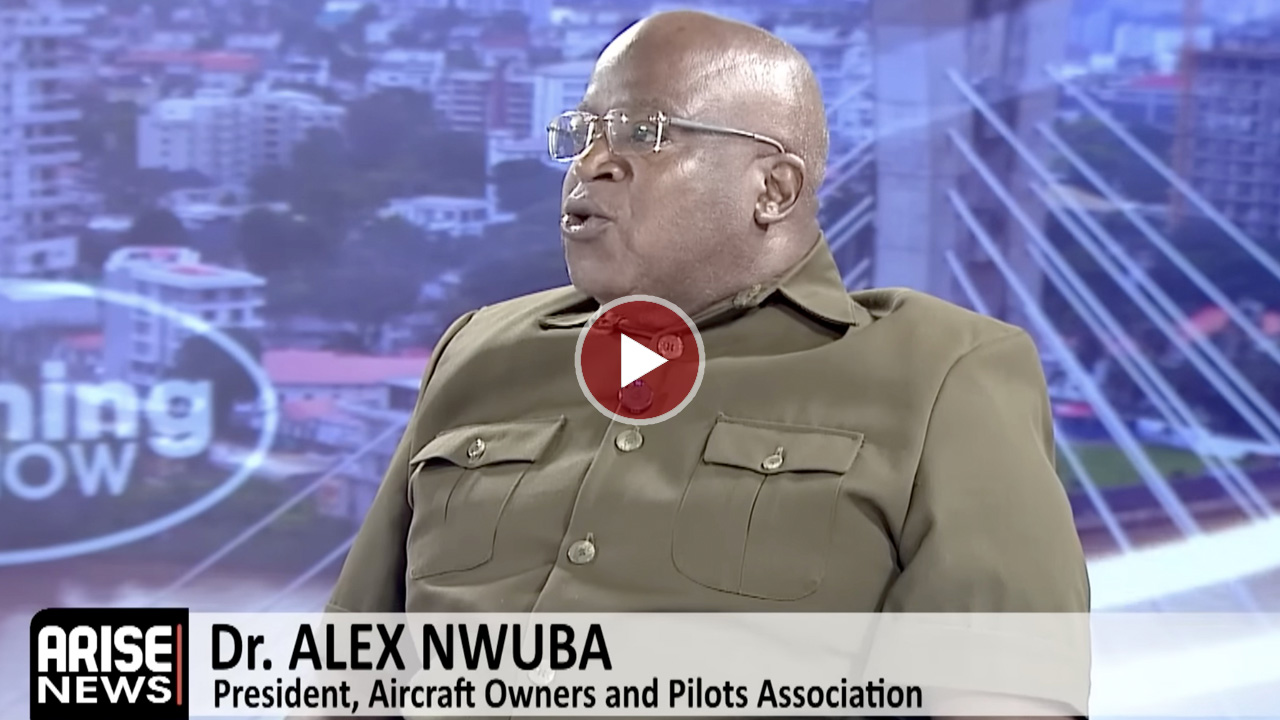
The President of the Plane Homeowners and Pilots Affiliation, Dr. Alex Nwuba, says Nigeria’s aviation trade isn’t affected by a gas provide drawback however from a deepening pricing disaster pushed by international market forces, insisting that home production has not translated into affordability for airways.
Talking in an interview with ARISE NEWS on Saturday concerning the rising value of aviation operations and the specter of industrial motion by airline operators, Nwuba stated the warning of a strike was primarily supposed to attract authorities consideration to worsening {economic} pressures within the sector.
“The state of Hormuz isn’t our problem. It’s the international pricing nature of jet gas that’s our problem, which has taken the associated fee approach out of the realm of means of airways to pay inside the home market, So the state of Hormuz isn’t our problem. That’s a lot of the world’s problem. The problem is value. And value is hitting the underside line financially for airways, our problem isn’t provide. Our problem is value.”
He defined that the core of the disaster lies in aviation gas prices. “The airways have been dealing with value will increase which have tripled gas as a significant element of the operations, already 40 % of the associated fee previous to this enhance.”
In response to him, the affect of the value surge has been compounded by the lack of airways to go prices to passengers. “And on the identical time, airways can’t enhance fares as a result of, , we’ve basically maxed out on what the capability of customers are to pay these costs.”
Nwuba careworn that Nigeria’s aviation disaster shouldn’t be misdiagnosed as a provide scarcity drawback. “The state of Hormuz isn’t our problem. It’s the international pricing nature of jet gas that’s our problem, which has taken the associated fee approach out of the realm of means of airways to pay inside the home market.”
He additional clarified that whereas international disruptions together with geopolitical tensions affecting oil routes. “So the state of Hormuz isn’t our problem. That’s a lot of the world’s problem. Our problem is the best way to take care of a world value disaster with out the flexibility to boost fares.”
He famous that the standard airline pricing mannequin. “As a result of historically, when costs or prices go up for airways, they enhance the fares. However I believe we’ve hit the purpose the place extra individuals shall be on the street if we elevate costs.”
Nwuba stated the aviation trade is now caught in a fragile steadiness the place operators are pressured to take care of companies. “They might select to cut back among the capability routes on the routes that aren’t as worthwhile. The great routes will proceed to see visitors, perhaps not as excessive.”
He additionally addressed considerations that airways would possibly shut down operations. “Airways is not going to cease working.”
On authorities intervention, Nwuba stated there are a number of coverage choices accessible. “There are taxes, all types of logistics prices which might be constructed into that value that the federal authorities, as a primary step, can, throughout this era of disaster, eradicate.”
He acknowledged public sensitivity round subsidy insurance policies. “It could possibly be the supply of subsidy, which many individuals object to. It is also the supply of low-interest loans to beat them via the conflict.”
He additional argued {that a} structured and clear subsidy framework may assist decrease home aviatiom prices. “If we take a look at what India has performed, it’s a subsidy regime.”
Nwuba additionally stated the broader {economic} implication of rising aviation prices extends past the trade. “If we stopped flying, meals is not going to get delivered, medicines is not going to get delivered, individuals won’t be able to attend essential enterprise conferences.”
He careworn that aviation stays an important service. “Solely a really low share, below two % of Nigerians fly by air, and the first cause is value.”
Nwuba argued that enhancing affordability would considerably develop the aviation market. “Should you look within the US, there’s lots of headroom. We’re simply not delivering the options that allow extra individuals to fly.”
He additionally addressed considerations about security amid {financial} stress. “Security is the primary precedence of the airline trade. An accident isn’t one thing you may stroll away from.”
He stated airways would moderately cut back operations than compromise security requirements. “That’s the reason the choice all the time sits on the desk to close down sure elements of the operation.”
On gas provide stability, Nwuba dismissed fears of shortage, citing official reserve estimates that point out enough availability within the nation.
“The Nigerian Petroleum Regulatory Fee has instructed us that we now have 74 days reserves based mostly on our planning.”
He reiterated that Nigeria’s problem isn’t availability of jet gas however volatility in pricing tied to international oil market dynamics and currency-related value transmission. “Our problem is value. And value is hitting the underside line financially for airways.”
Nwuba additionally rejected the concept gas pricing must be seen in isolation, explaining that, “There’s so many components that go into the airline economics.”
He gave examples of route pricing inconsistencies. “Distance isn’t a think about pricing. There’s so many different components that go into it.”
On structural reforms, he stated Nigeria should transfer past momentary interventions. “We’ve taxes that aren’t presupposed to be there within the first place.”
He argued that a number of businesses inside the aviation worth chain extract revenues. “In order quickly as this cash, 50%, is taken, that cash goes to the federal authorities and the airport is left with solely 50% to fulfill its obligations.”
Nwuba stated sustained session between authorities, airways, and regulators is important. “There hasn’t been wider session with stakeholders when it comes to discovering a long-lasting answer to lots of our issues.”
He concluded that Nigeria’s aviation disaster is not going to be resolved by short-term negotiations alone however by addressing structural distortions in pricing, taxation, and regulatory coverage. “We have to see extra motion.”
Erizia Rubyjeana
Times Nigeria