

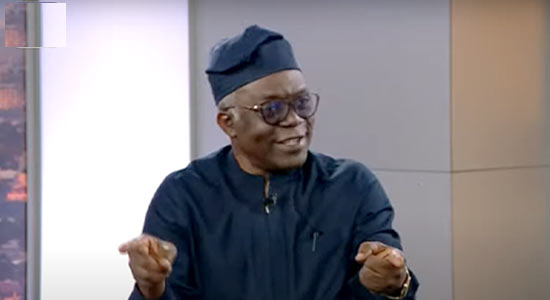
Human rights lawyer Femi Falana warned that Nigeria dangers having just one presidential candidate within the 2027 election if judicial interference in political occasion affairs persists.
He made this identified on the fifth Comrade Yinka Odumakin Memorial Lecture held on the Airport Lodge.
The occasion was attended by outstanding figures together with Joe Ajaero, activist Omoyele Sowore, and Senior Advocate of Nigeria, Olumide Fusika. It was hosted by the President of the Oluyinka Odumakin Basis, Joe Odumakin, alongside different activists equivalent to Agba Jalingo and Richard Akinola.
Whereas delivering the memorial lecture, Falana argued that conflicting courtroom orders and rulings are being deployed to destabilise political events, warning that such actions might end in a state of affairs the place just one occasion fields a presidential candidate in 2027.
His remarks adopted a current place by the Unbiased Nationwide Electoral Fee, which acknowledged that it could not recognise factions of the African Democratic Congress led by David Mark or Rafiu Bala.
The fee stated its determination was primarily based on a Court docket of Attraction ruling directing it to keep up the established order pending the decision of a swimsuit difficult the occasion’s management.
Falana criticised the judiciary for interfering within the inside workings of political events, regardless of provisions within the Electoral Act that discourage such actions.
He warned that continued manipulation of the courts by political actors and authorized practitioners might undermine democracy.
Falana stated, “By the manipulation of Nigerian courts and senior legal professionals, you could have just one candidate contesting the presidential election on this nation.
If that occurs, Nigeria might not even have to spend cash on a presidential election.”
In accordance with him, if the development persists, Nigeria would possibly witness a presidential election with just one candidate, making the train pointless.
Falana additional cautioned that actions able to eroding public confidence within the electoral course of might set off unrest if residents really feel disadvantaged of real selections.
He urged civil society organisations, labour unions, and political activists to mobilise in defence of democratic values, stressing the necessity for coordinated motion somewhat than disorganised protests.
“We should cease agonising and begin organising within the curiosity of our individuals and democracy,” he stated.