

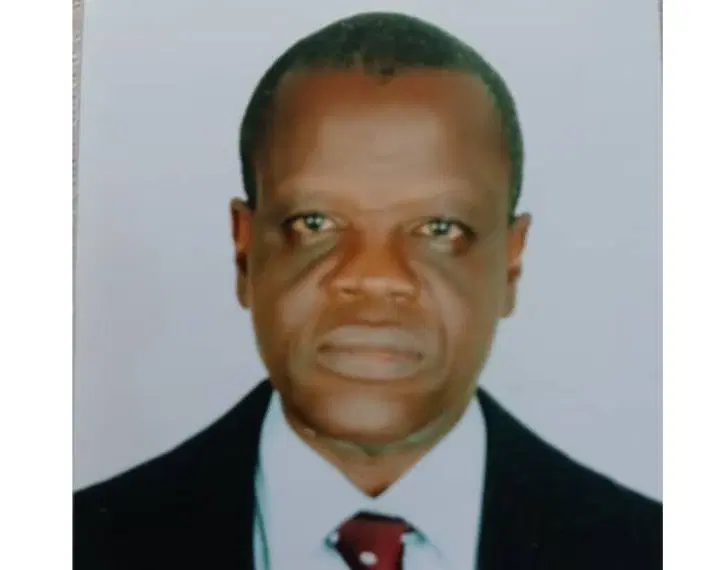
Senate President Godswill Akpabio has again stepped into the eye of the storm, not so much for what he said as for what his words now represent in a country increasingly impatient with the language of power. His latest assertion he is praying that insurgency in Nigeria will end in 2026 has reopened a familiar debate: the uneasy balance between faith and governance, rhetoric and responsibility.
This is not the first time the Senate President’s comments on insecurity have drawn public ire. Only days ago, he suggested that the persistence of violence across the country was politically contrived, linked to forces opposed to President Bola Ahmed Tinubu ahead of the 2027 elections. That claim, coming at a time of mounting casualties, was received as an attempt to politicise pain.
Now, the shift from a political explanation to a spiritual solution has raised even deeper questions about consistency, clarity, and credibility in leadership communication.
In fairness, Nigeria is a deeply religious country. Faith is not merely a private matter; it is a public language, a cultural anchor, and, for many, a coping mechanism in times of distress. Leaders invoking God are not out of place in such a context. Indeed, appeals to divine intervention have historically accompanied national crises, from civil conflict to economic downturns. But there is a fine line between invoking faith as a source of collective strength and presenting it as a substitute for policy.
That line is where the controversy around Akpabio now rests.
His prayer—”that God should end insurgency… and that we should defeat insurgency”—would have passed as a routine expression of hope if it were not set against the stark realities on the ground. Across the country, communities continue to grapple with attacks from insurgents, bandits, and criminal gangs. The scale and coordination of recent violence, including the mass killings reported in parts of the North Central, have only deepened the sense of urgency.
It is in this context that many Nigerians hear not faith, but fatigue.
The criticism that has trailed the Senate President’s remarks is therefore not simply about religion. It is about expectations. Citizens expect those entrusted with power to speak with the authority of solutions, not the ambiguity of hope. They expect clarity of strategy, coherence of messaging, and above all, a demonstration that the state remains firmly in control of its primary responsibility: the protection of lives and property.
What complicates matters further is Akpabio’s own recent history of public communication. His now-infamous quip about “sending prayers to senators’ email boxes,” widely interpreted as a metaphor for allowances, has lingered in public memory as a symbol of elite disconnect. Against that backdrop, his renewed emphasis on prayer risks being interpreted less as piety and more as pattern.
And in politics, perception is often reality.
Yet, it would be simplistic to dismiss the role of faith entirely. Even the most advanced societies acknowledge the psychological and moral support that belief systems provide in times of crisis. The issue, therefore, is not whether leaders should pray, but whether prayer is being projected as policy.
Nigeria’s insecurity challenge is neither new nor mysterious. It is a complex web of factors including but not limited to weak intelligence coordination, porous borders, socio-economic disparities, arms proliferation, and in some cases, local grievances that have been allowed to fester. Addressing it requires a multi-layered response: military efficiency, police reform, community engagement, economic inclusion, and political will enforced by the legislature.
Sponsored
None of these can be outsourced to the heavens.
When a high-ranking official such as the Senate President speaks, his words carry institutional weight as representing the might of the legislative branch of government. They shape narratives, influence public mood, and, importantly, signal the direction of government thinking. To suggest, even implicitly, that the end of insurgency is tied to a timeline of divine intervention risks sending the wrong message, not just to citizens, but to those charged with executing security policy.
It raises an uncomfortable question: if leaders are waiting for divine timelines, what then becomes of human agencies?
There is also a political dimension to consider. With the 2027 elections already casting a long shadow, every statement by key actors is interpreted through the prism of political strategy. Akpabio’s earlier claim linking insecurity to electoral politics had already set that tone. His latest remarks, though couched in faith, do little to dispel the perception that political considerations continue to colour the discourse on security.
This is where leadership must rise above the fray.
Nigeria does not lack capable security personnel, nor does it lack the institutional framework to address its challenges. What it often lacks is coherence, that is clear, consistent messaging that reassures citizens that there is a plan, and that the plan is being executed with urgency and accountability.
Words matter in this regard. They can inspire confidence or deepen cynicism.
The backlash against Akpabio’s comments should therefore be read not as a rejection of faith, but as a demand for focus and responsibility. Nigerians are not asking their leaders to abandon prayer; they are asking them to prioritise action. They are asking for fewer declarations and more delivery.
In the final analysis, the Senate President’s remarks may well have been intended as a message of hope. But hope, untethered from strategy, can quickly become hollow. In a nation where too many lives have been lost to violence, the language of leadership must reflect not just belief, but resolve.
Faith can steady the spirit. But it is good governance that must secure the nation.
SPONSORED