

Women
By Anthony Isibor
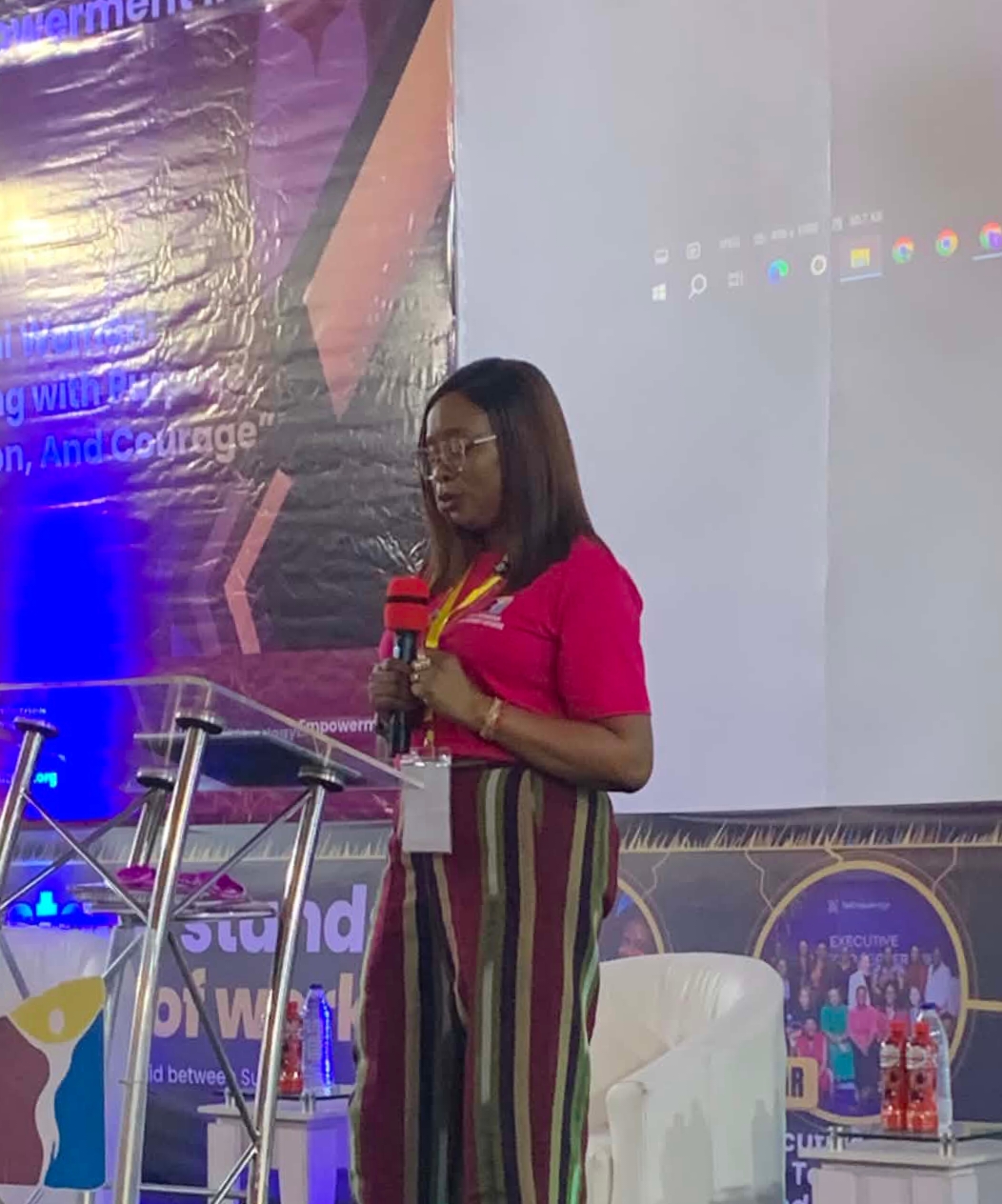
OLATOMIWA Williams, Chief Growth and AI Officer for Microsoft’s Middle East and Africa, MEA, Growth Markets, has urged African women to take active role in shaping the continent’s artificial intelligence, AI, future, stressing that technological advancement must be guided by character, responsibility and inclusion.
Williams, who is also the convener of the Uzemi Technology Initiative, said that Africa’s AI future should not be left in the hands of technology alone, but must be shaped by people who understand the responsibilities that come with its growing influence.
She spoke at the Uzemi Leadership Summit 4.0, held under the theme, Stewarding Africa’s AI Future, where she challenged the participants to move beyond discussions about AI adoption and take practical steps to acquire relevant skills, develop solutions and create opportunities for other women and girls.
Explaining the concept of stewardship, Williams said a steward was not an owner but someone entrusted with something valuable and accountable for the condition in which it would be handed over to the next generation.
“A steward is not an owner. A steward is someone entrusted with something valuable that they did not create or will not keep forever, and who is accountable for the condition in which they hand it over when the owner asks,” she said.
She said the responsibility before Africans was not merely to consume or exploit AI, but to ensure that the technology was developed and deployed in ways that benefited society.
“To steward it means we guard it from being misused. We make sure it serves everyone and not just a few, and we answer to the next generation that comes behind us when we have done what we are meant to do,” she said.
Williams maintained that while AI could make people faster and more capable, it could not replace human judgment or provide the character needed to make responsible decisions.
She said character was particularly important when technology offered shortcuts, noting that users must be willing to verify information, protect people’s data and consider the possible consequences of their actions.
“AI can expand what we are able to do, but character must guide what we choose to do with that power that AI has given to us,” she said.
She stressed that women and girls must have a place in conversations about AI, urging young girls to remain curious, ask questions and experiment with technology.
According to her, young people’s ideas are needed now and should not be postponed until they attain certain positions or qualifications.
She also encouraged graduates not to allow uncertainty about the future to discourage them from acquiring new skills. Rather, they should continue learning and demonstrate their abilities by developing practical projects.
For entrepreneurs, she advised identifying repetitive tasks in their businesses and exploring how technology could help automate them and free up time for more productive activities.
Williams urged leaders to recognise that their responsibility extended beyond adopting new technologies to preparing people to make ethical decisions and ensuring that vulnerable groups were not excluded from the benefits of technological progress.
She challenged the participants at the summit to translate the knowledge gained into measurable actions within seven, 30 and 90 days.
Within seven days, she urged them to take a step towards deepening their knowledge of AI or acquiring a new skill.
Within 30 days, they were expected to apply what they had learnt to solve a practical problem, whether in their personal lives, businesses or communities.
She said that the participants should also commit to helping at least one other woman or girl advance within 90 days through teaching, mentoring, encouragement or connecting her to an opportunity.
“Our success should be measured not only by how far we rise, but by how many rise because we choose not to climb alone,” she said.
To sustain the commitments beyond the summit, Williams invited participants to scan a QR code to join a community accountability group where their progress would be monitored over the following 90 days.
She said the summit’s programme, which included a keynote address, two fireside chats and a panel discussion, was designed to expose the participants to different perspectives on AI and leadership.
However, she cautioned against treating the gathering merely as an opportunity to network, take photographs and share experiences on social media.
“Don’t live here merely inspired. Live ready to act. Take your place. Build with purpose, and whatever you do, don’t build that future alone. Please bring someone with you,” she told the participants.
Looking ahead, Williams asked the participants to imagine a young girl or graduate who, 10 years from now, would be building a business or developing solutions to problems in healthcare, education, finance, agriculture or technology.
According to her, such a person’s success should be traceable, at least in part, to someone who encouraged her, opened a door or helped her recognise what was possible.
She urged the participants to become those people who create opportunities for others, particularly women and girls who might otherwise lack access to the knowledge, support and networks needed to participate in the digital economy.
Williams said Africa’s future would ultimately depend on the courage, choices and character of its people, as well as their willingness to create opportunities for others.
“The future of Africa will not be shaped by technology alone. We all have to shape it. It will be shaped by our courage, our choices, our character, and our willingness to create opportunities for others,” she said.
A.I
Nov. 21, 2026
Tags: Olatomiwa Williams Uzemi Leadership Summit 4.0 Uzemi Technology Initiative