

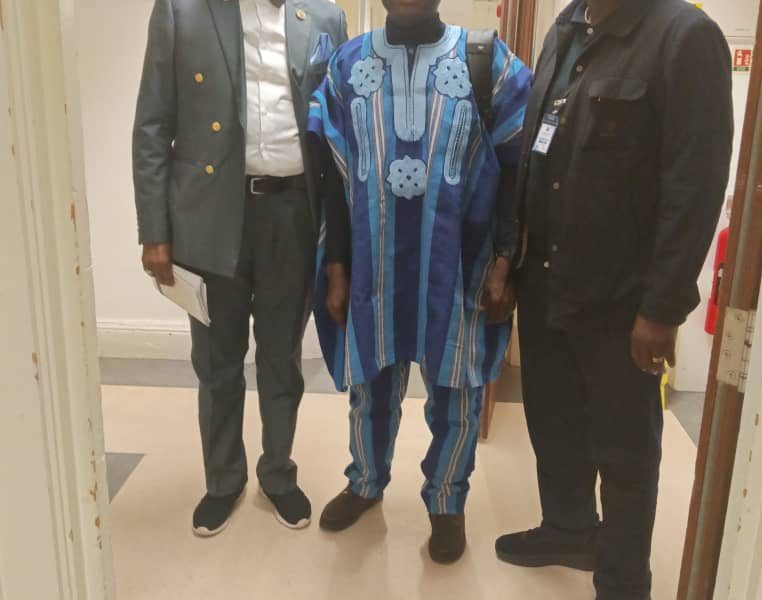
…As Lagada-Abayomi makes case for preservation of indigenous culture
Some scholars and experts have called on African governments to consider cultural heritage and human cost in the quest for urbanisation and city renewal.
The call was made during a three-day academic conference entitled “Coastal Urbanism in West Africa and Beyond” held at the Liverpool School of Architecture, University of Liverpool, United Kingdom, between November 2 and 4, 2026.
The conference brought together scholars and professionals who highlighted and addressed various crises associated with coastal urban areas in West Africa through paper presentations and roundtable discussions.
According to the organisers, challenges facing coastal cities include heritage loss, climate change, biodiversity loss, social inequalities, fragility, geographic and economic constraints.
Delivering his keynote lecture entitled; “Navigating Polycrisis in Coastal Cities in Time of Uncertainty,” Professor Shuaib Kwasa noted that although cities across the globe experience multiple crises, coastal cities bear the brunt.
“Though cities across the globe experience multiple crises, cities around the coastal areas suffer more of the crises,” Prof. Kwasa said.
He explained that the conference would interrogate polycrisis in the histories of coastal urbanism and urban governance, and explore emerging innovations.
“The lectures will examine the polycrisis in the histories of coastal urbanism, their economic and more recently geographic dimensions.
“The conference will provide solutions to the crisis that are home-developed and nurtured and how these can re-align with multi-lateralism and international development,” he said.
The conference featured diverse concepts and topics bordering on problems in coastal cities across Africa and beyond, including ecological and political issues, cultural heritage, food security, climate change, infrastructure, artificial intelligence, colonial legacy, land management, migration, mass displacement, transportation, economy, finance, gentrification, social justice, environment, leadership, resilience, conservation and urban management.
In her inaugural lecture entitled; “Curating African Urban Futures: Heritage, Sustainability and Phantoms of Utopia,” Prof. Taibat Lawanson examined the tension between modern development visions and the realities of African urban communities.
Lawanson, a former senior lecturer at the University of Lagos, Nigeria, and currently a lecturer at the Liverpool School of Architecture and leader of the Urbanism and Coastal Heritage Lab, University of Liverpool, UK, suggested a new vision for African cities.
“We need a vision for African urban futures that will be grounded in heritage, shared space, and community solidarity,” she said, noting that development that erases identity cannot be sustainable.
In his presentation, early career researcher, Olanrewaju Lagada-Abayomi established the complex relationship between rapid urbanisation and the preservation of indigenous cultural practices in the coastal city of Lagos, Nigeria.
In a paper entitled; “Traditional Palace Sacred Days (Ọ̀sẹ̀ Ìgà) in Urban Lagos Island: Historical Evolution, Communal Values, and Contemporary Relevance in Yorùbá Traditional Religion,” Lagada-Abayomi focused on how the traditional religious heritage of Lagos Island (Ìsàlẹ̀-Èkó) has adapted under intense urban pressure.
“How has the traditional religious heritage of Traditional Palace Sacred Day (Ọ̀sẹ̀ Ìgà) in the urban coastal area of Lagos Island adapted, resisted, or transformed under intense urban pressures?” he queried.
Lagada-Abayomi, a senior journalist with Voice of Nigeria (VON), prolific writer in Yoruba language and doctorate candidate at the Institute of African and Diaspora Studies, said that his work bridges cultural understanding by preserving endangered African heritage.
“We are losing sacred knowledge systems that hold communal values, social cohesion and indigenous wisdom. Preserving and transforming this endangered African cultural and spiritual heritage for the younger generation is critical to who we are as a people,” he said.
He explored the historical evolution, socio-cultural benefits and African indigenous knowledge associated with the sacred day in Isale-Eko and its contemporary resilience within the urbanised island context.
Amenaghawon Idawu from the same Institute of African and Diaspora Studies, University of Lagos, also appealed for inclusive efforts for preservation of cultural heritage in cities. She highlighted this in her presentation, entitled, “Beyond Defence: The Benin Moat, Cultural Heritage Displacement, and the Erasure of Cultural Memory in Coastal Urbanism.
Loise Nduku Kitulu, another earlier career researcher from the Centre For Housing and Sustainable Development, University of Lagos, provided comparative analysis regarding management of water waste between Lagos. She stressed the contexts in her presentation, entitled, “Towards Circular Urban Water System: A Comparative SEEIT Assessment of Waterwaste Reuse Barriers in Lagos and Nairobi”.
Contributing, the Lagos State Commissioner for Physical Planning and Urban Development, Dr. Oluyinka Abiodun Olumide, highlighted government’s efforts to provide affordable housing in line with sustainable development goals.
In his lecture titled “A Journey through Lagos: Planning, Living and Building in a Coastal City,” Olumide said that the state has put in place legislation and policies to deliver standard housing.
“We are committed to providing standard housing units for residents while promoting environmental sustainability through robust legislation and policies,” the commissioner said.
Also speaking, the Permanent Secretary, Ministry of Physical Planning and Urban Development, Lagos State, Tpl Olayinka Adebayo Wasiu, advocated the use of local building materials to reduce construction costs.
“Using local materials will reduce the cost of building, as most of these materials are also durable and reliable,” Wasiu said.
He urged building materials merchants to shun the sale of inferior materials and called on builders to embrace standard materials.
“We must ensure that building materials merchants shun selling inferior materials, and builders must embrace standard materials for building. That is the only way to ensure safety and sustainability,” he added.
The early career research conference provided a platform for doctoral and post-doctoral candidates from various universities across the world to contribute to discussions on socio-ecological transformation, adaptation, and urbanisation challenges in Africa.