
The Battle for Alausa: Candidates, Godfathers and the Future of Lagos By Adebisi Adams Oyeshakin

The Battle for Alausa: Candidates, Godfathers and the Future of Lagos
By Adebisi Adams Oyeshakin
The 2027 Lagos governorship election will test the strength of the ruling establishment, the opposition’s capacity to challenge it and the interests shaping the succession to Governor Babajide Sanwo-Olu. With the All Progressives Congress (APC) seeking to retain power and opposition parties attempting to build a credible alternative, the contest is already exposing the alliances, grievances and calculations that will shape the state’s political future.
For the APC, Dr. Kadri Obafemi Hamzat’s emergence as its governorship candidate reflects years of experience within the Lagos government. He has served as deputy governor and held commissioner positions under previous administrations. He contested the party’s governorship primary in 2015 but lost to Akinwunmi Ambode. In 2018, he stepped aside for Sanwo-Olu.
His eventual emergence carries the weight of loyalty, patience and long-standing relationships within the party. The Governance Advisory Council (GAC), President Bola Tinubu and influential party leaders played important roles in shaping the succession process. There is a strong sense within the establishment that Hamzat deserves his turn after years of loyalty and accommodation. Yet, governing Lagos should not become a reward for waiting patiently. His experience is an advantage, but it also places responsibility on him to demonstrate a clear vision, independent capacity and a record of delivery. After serving as deputy governor for eight years, voters have every reason to demand answers about the administration’s achievements and shortcomings.
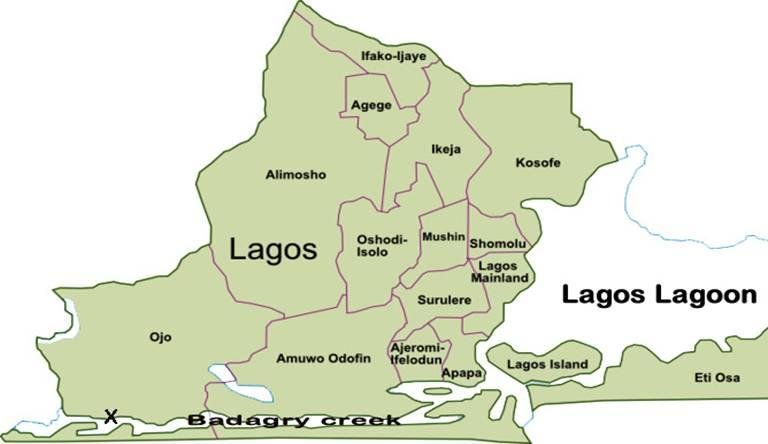
The treatment of Samuel Ajose, popularly known as SMA Gold, also exposes the importance of regional interests in the APC’s succession arrangement. The Badagry-born aspirant built a visible campaign and attracted support within his district before stepping down as the party leadership consolidated its preference for Hamzat. His withdrawal agitated many people in Badagry, where there has long been a feeling of exclusion from the state’s core government positions since 1967. The district’s grievance goes beyond the governorship ticket. It concerns access to strategic appointments and meaningful representation in the state’s power structure.
The nomination of Princess Damilola Sonayon-James, a core Badagry indigene, as Hamzat’s running mate was therefore a deliberate move to appease the district and calm the resentment created by SMA Gold’s withdrawal. It gave Badagry a visible stake in the APC ticket and addressed an important regional concern. Yet, the question remains whether the deputy governorship will translate into meaningful influence, development and stronger representation for the district. Representation on a ticket must lead to more than symbolic inclusion.
On the opposition side, Gbadebo Rhodes-Vivour (GRV) remains one of the most recognisable figures from the 2023 governorship election. His performance under the Labour Party was driven by urban dissatisfaction, youth mobilisation and the Obidient movement, which was closely connected to Peter Obi’s presidential campaign. His subsequent movement to the African Democratic Congress (ADC), while Obi has moved to the Nigeria Democratic Congress (NDC), introduces a new dimension to the opposition contest.
Will Obidient supporters follow Obi and support Funso Doherty in the NDC? Will they remain with GRV in the ADC? Or will they separate their choices, supporting Obi for president and GRV for governor? A divided opposition vote is a real possibility. The movement’s loyalty will be tested by the distinction between personal allegiance to Obi, support for the candidates who emerged in 2023 and commitment to the political ideals associated with the movement.
GRV also faces questions beyond party alignment. His Yoruba father and Igbo mother became subjects of controversy during the 2023 campaign, exposing how identity politics can influence electoral conversations in Lagos. Some voices questioned his belonging because of his maternal ancestry. His inability to speak Yoruba, the dominant language among many Lagosians, also presents a communication and cultural connection challenge, particularly in grassroots engagement. These issues do not diminish his right to contest or his legitimacy as a Lagosian. They do, however, form part of the political environment he must navigate. Lagos has a diverse population, including a significant Igbo community whose political participation should not be reduced to ethnic loyalty or treated as a single voting bloc. The contest should be about competence, inclusion and the ability to govern a diverse state.
Funso Doherty brings a different profile to the race. His background in finance and pension administration informs his emphasis on public spending, accountability, social investment and the management of public resources. Yet, professional competence alone does not win elections or guarantee effective governance. His movement across political platforms, from ADC to PDP, back to ADC and now NDC, raises questions about political consistency and the strength of the structure behind his ambition. He must demonstrate that the NDC has the grassroots organisation, institutional capacity and policy direction required to compete in Lagos.
Adedeji Doherty’s continued presence in the PDP also deserves attention. A former Lagos PDP chairman with years of party experience and repeated governorship ambition, he represents a familiar opposition structure. However, the party’s internal divisions and organisational difficulties have weakened its ability to present a united and convincing challenge. His experience gives him political familiarity, but he must contend with the broader question of whether the PDP has regained the strength and cohesion required to remain a serious force in Lagos.
Another concern is the growing competition among candidates to present the biggest numbers in their manifestos. Proposals involving thousands of buses, hundreds of thousands of housing units, jobs, schools and other projects are increasingly becoming campaign talking points. Numbers create headlines, but they do not amount to a strategic plan. Voters need to know how these promises will be funded, which institutions will deliver them, what timelines will guide implementation and how performance will be measured. A credible manifesto must explain the route from promise to delivery.
The APC enters the contest with incumbency, an established political network and a strong party structure. The opposition has the advantage of public dissatisfaction and the possibility of broader alliances, but it must overcome internal divisions, shifting loyalties and questions about its capacity to govern. The battle for Alausa is therefore about more than the candidates. It is about succession, regional representation, identity, party loyalty, political realignments and the credibility of competing visions for Lagos. No party should mistake its structure for an automatic mandate, and no opposition movement should mistake public enthusiasm for an organised electoral victory. The outcome will depend on how these forces interact and, ultimately, on what Lagos voters choose to reward.
Adebisi Adams Oyeshakin writes for Politics Digest [email protected]