
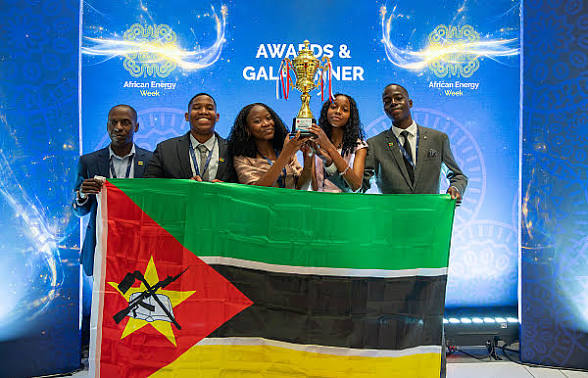
Mentes Brilhantes wins year 3 ExxonMobil Foundation science, technology, engineering, and mathematics (STEM) Africa regional finals

The evaluation recorded a 51.2% increase in interest in STEM studies among female students, compared with 32.8% among male students. Female participants also recorded a 64.5% increase in STEM career interest.
The findings point to an important shift in what motivates young Africans to consider STEM careers. Before participating, students’ motivations were more closely associated with personal curiosity, perceived job opportunities, and inspirational role models.
Afterward, hands-on projects, real-world applications, mentorship, confidence-building, and teamwork became key drivers of their interest in STEM careers.
This movement from abstract interest to applied confidence is at the heart of the STEM Africa approach.
By combining experiential learning with competition, mentorship, and opportunities to solve relevant problems, the initiative is helping young people develop the skillset and mindset to see themselves not simply as learners of science and technology, but as potential innovators and problem-solvers.
“This program shows what is possible when young Africans are given sustained opportunities to explore STEM, apply their learning, and solve real-world challenges with confidence,” said Simi Nwogugu, President & CEO of JA Africa.
“Through this partnership, we are helping students move from curiosity to capability, building a pipeline of innovators and problem-solvers who can meaningfully contribute to Africa’s future.”“The ExxonMobil Foundation is dedicated to expanding access to high-quality STEM learning experiences that equip young people with the technical knowledge, problem-solving mindset, and confidence to thrive,” said Alvin Abraham, President of the ExxonMobil Foundation.
“By supporting this initiative, we are investing in capabilities that help students pursue meaningful opportunities and contribute to long-term economic development across their communities and the continent.”
The Regional Finals brought together 16 finalists from the four participating countries, representing the culmination of a learning journey that began with broad-based digital engagement and progressed through zonal quizzes and Innovation Camps.
For the winning students, the Regional Finals represented the culmination of months of learning, experimentation, and collaboration.
“When the school introduced me to this competition, I started to note that STEM is not distant; STEM is close to us, and we can reach it,” said Nicole Mangue, a member of Mentes Brilhantes.
Evidence from the previous year suggests that the learning model is translating participation into stronger educational outcomes.
The proportion of participating schools reporting that more than half of their students performed above average increased from 5% at baseline to 40% after the learning experience. Across the four countries, the proportion of students performing above their class or school average increased by approximately 9 to 11 percentage points, representing a 35% relative improvement.
Teachers also reported improvements across several STEM competencies. Reported struggles related to confidence in STEM assessments declined by 36.7%, challenges with mathematical calculations and reasoning declined by 31.3%, and difficulties applying STEM concepts to real-world problems declined by 23.1%.
These outcomes reinforce the significance of sustained, hands-on approaches that connect classroom concepts to practical challenges.
Through its community partnership with the ExxonMobil Foundation, JA Africa is helping young people across participating countries build the confidence, curiosity, problem-solving abilities, and career awareness needed to participate in Africa’s evolving STEM economy.
With Year 3 culminating in the Regional Finals, JA Africa and the ExxonMobil Foundation will continue to build on the lessons and impact generated across participating countries, strengthening opportunities for more young Africans to explore STEM, develop durable skills, and apply their ideas to challenges in their communities.