

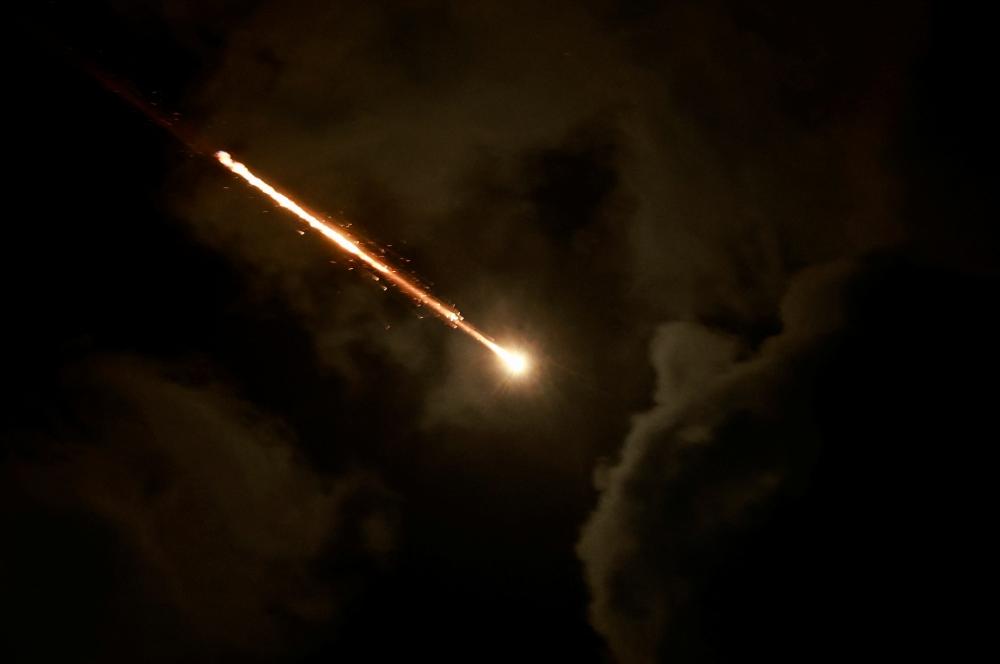
Iran said it targeted US drone and missile installations in Kuwait overnight following an American strike on Qeshm Island in the Strait of Hormuz, marking its first attack on the US-allied country since September.
The developments come amid renewed hostilities across the Gulf, with Bahrain also reporting Iranian aerial attacks and diplomatic efforts continuing to find a way to end the conflict.
The escalating confrontation has disrupted shipping, pushed up global energy prices and raised concerns about a broader regional war involving several Middle Eastern countries.
Iran targets US installations in Kuwait
The Iranian army said it attacked US drone and missile facilities at Kuwait’s Ali Al Salem air base after Kuwaiti authorities reported that their air defences were responding to hostile drone attacks.
The attacks followed US airstrikes on Tuesday evening targeting a missile launch site on Qeshm Island. A US military official told Reuters that the operation was carried out in response to Iranian attacks against American personnel and assets.
.
advertisement
Iranian media, citing an Iranian official, reported that the American strike did not damage infrastructure on the island.
The US military said on Wednesday that no American personnel had been injured in attempted Iranian attacks during the week and that all service members were safe and accounted for.
Kuwait said it reserved the right to take all necessary measures to protect its sovereignty, territory and critical facilities against aggression or threats.
Iran warns of stronger retaliation
Iranian Army Commander-in-Chief Amir Hatami issued a fresh warning to the United States in videos released by Iranian state media on Wednesday.
“If the enemy repeats its mistake… we have the readiness and the plans to confront it and its supporters in a stronger, more crushing way and without geographic limitations,” Hatami said.
Hasan Al Hasan, a senior fellow for Middle East Policy at the International Institute for Strategic Studies, described Iran’s actions as a cautious escalation.
However, he warned that further escalation could not be ruled out, particularly if Washington expanded its military operations to target more than Iranian coastal military infrastructure.
He said deeper strikes inside Iran could increase the risk of a wider confrontation.
Bahrain reports Iranian attacks as regional tensions rise
Bahrain said it intercepted Iranian aerial attacks on Wednesday for the third time in a week, accusing Tehran of pursuing a systematic hostile approach towards the Gulf kingdom.
The country hosts the headquarters of the US Navy’s Fifth Fleet, making it a strategic location amid the ongoing conflict.
The renewed attacks have further complicated diplomatic efforts to end the war, which has spread across several parts of the Middle East since the United States and Israel launched attacks on Iran on February 28.
Tehran subsequently retaliated with strikes on Israel and Gulf countries hosting American military bases.
The conflict also extended to Lebanon, where fighting broke out between Israel and Iran-backed Hezbollah. The Iran-aligned Houthis in Yemen have also launched attacks on Saudi energy facilities, airports and other targets, while Iran has targeted US forces in Jordan.
The conflict has disrupted commercial shipping through the Strait of Hormuz, a critical global energy route, after Iran declared the waterway closed. The United States has also imposed a naval blockade on Iran, putting further pressure on the country’s economy.
Qatar pushes diplomatic efforts
Qatar is continuing diplomatic efforts aimed at reducing tensions between the parties.
Qatari and Iranian officials held talks on Tuesday to explore ways of bridging differences and narrowing the gap between proposals presented to resolve the conflict, according to Qatari spokesperson Majed Al Ansari.
Meanwhile, a Saudi-led coalition said on Wednesday that it intercepted a cruise missile launched by the Houthis towards Riyadh. The Houthis had not immediately confirmed the reported attack.
In recent weeks, attacks on commercial shipping have intensified, raising concerns about global energy supplies and maritime security.
On Tuesday, the crew of a liquefied petroleum gas tanker abandoned the vessel off Khasab in Oman.
The United Arab Emirates’ ADNOC Logistics & Services also said on Wednesday that one crew member was missing and 11 others were injured after one of its vessels was attacked in the Strait of Hormuz on Tuesday.
Saudi Arabia condemned Iran’s latest attacks, calling for an end to hostilities and respect for international law.
The Saudi Foreign Ministry said the kingdom was renewing its demand for an end to acts of aggression and urged parties to pursue diplomatic efforts aimed at resolving the crisis through negotiations.
Rubio says Washington faces no imminent threat
US President Donald Trump said on Tuesday that Washington was taking seriously the possibility of an Iranian attack on the US capital.
His remarks followed a CNN report citing US intelligence assessments about a potential Iranian plot involving a so-called dirty bomb.
However, US Secretary of State Marco Rubio said on Wednesday that he did not believe there was an imminent threat to Washington.
Iran dismissed the allegations as baseless.
The latest developments underline the growing risks of further escalation as military exchanges continue across the region while diplomatic efforts seek to prevent the conflict from spreading further.