

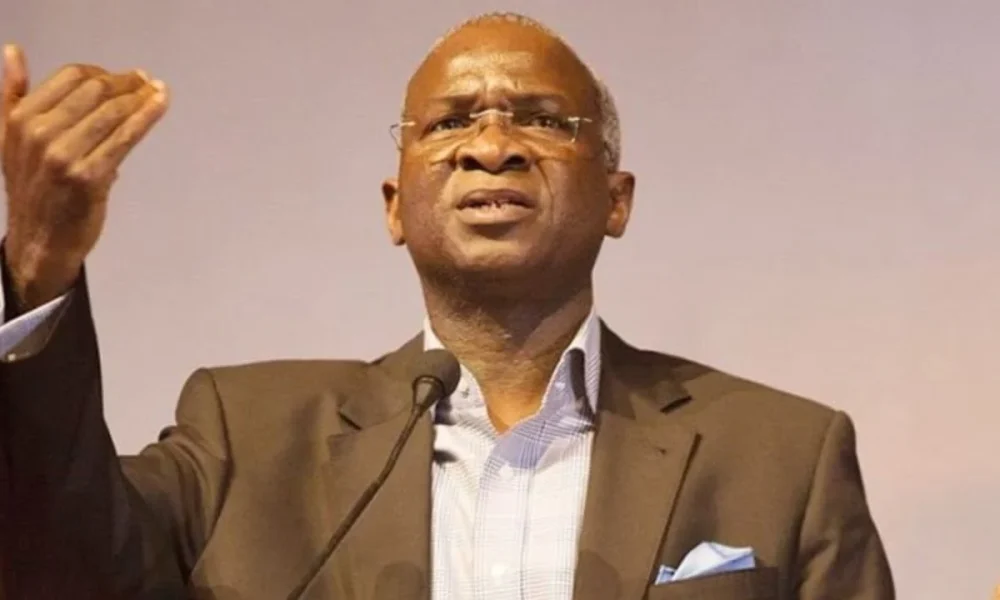
Former Minister of Works and Housing, Babatunde Fashola, has defended President Bola Tinubu’s 2023 electricity campaign pledge, insisting that the President did not specifically promise Nigerians 24-hour electricity supply.
Fashola, who spoke during an interview on Channels Television’s Politics Today, said a video clip of Tinubu’s campaign speech played during the programme was incomplete because it omitted the concluding qualification in which the President promised to provide adequate reasons if he failed to fulfil his commitment.
According to him, Tinubu made the pledge in December 2022 while addressing members of the Organised Private Sector in Lagos, promising electricity supply and an end to estimated billing.
The President had said Nigerians should not vote for him for a second term if he failed to deliver on the promise, unless he provided adequate reasons for his inability to do so.
“First of all, I think you should have let the tape run completely. Because he then said, ‘Unless I give you adequate reasons,’ and you shut it down,” Fashola told the interviewer.
When the presenter suggested that Tinubu had promised 24-hour electricity, the former governor of Lagos State disagreed.
“He said adequate. We can replay it again. Replay it. I didn’t hear 24,” he said.
READ ALSO; ‘Subsidy restoration would return Nigeria to ‘Doom Days’–Fashola
Fashola argued that the President’s original statement should be considered in its entirety rather than through shortened recordings that could leave out important parts of the message.
He, however, acknowledged that Nigerians continued to face different electricity supply experiences and should assess the administration based on what they receive in their homes and businesses.
“I don’t live in other people’s houses, so their experiences may be different from mine. And people should vote from their experience,” he said.
Fashola also disclosed that he had contacted Eko Electricity Distribution Company to commend an improvement in power supply to his residence over several months.
The debate comes amid continuing public frustration over unreliable electricity supply, with households and businesses facing outages and the high cost of alternative power sources.
The Tinubu administration has pointed to several interventions in the sector, including the Electricity Act 2023, which opened the electricity market to greater participation by state governments.
The Federal Government has also approved a N3.3 trillion settlement plan for verified legacy debts owed to power generation companies, accumulated between February 2015 and March 2025.
Other initiatives include the Presidential Metering Initiative and investments in transmission infrastructure, although the extent to which these measures have translated into improved electricity supply remains a major concern for consumers.
Fashola’s comments have also attracted criticism from political opponents, including allies of Oyo State Governor Seyi Makinde, who argue that the debate over the wording of Tinubu’s campaign promise should not distract from the country’s persistent power challenges.
While the former minister maintains that Tinubu did not expressly promise 24-hour electricity, the wider debate continues to centre on whether the administration’s reforms are delivering the reliable and affordable power Nigerians expect.