

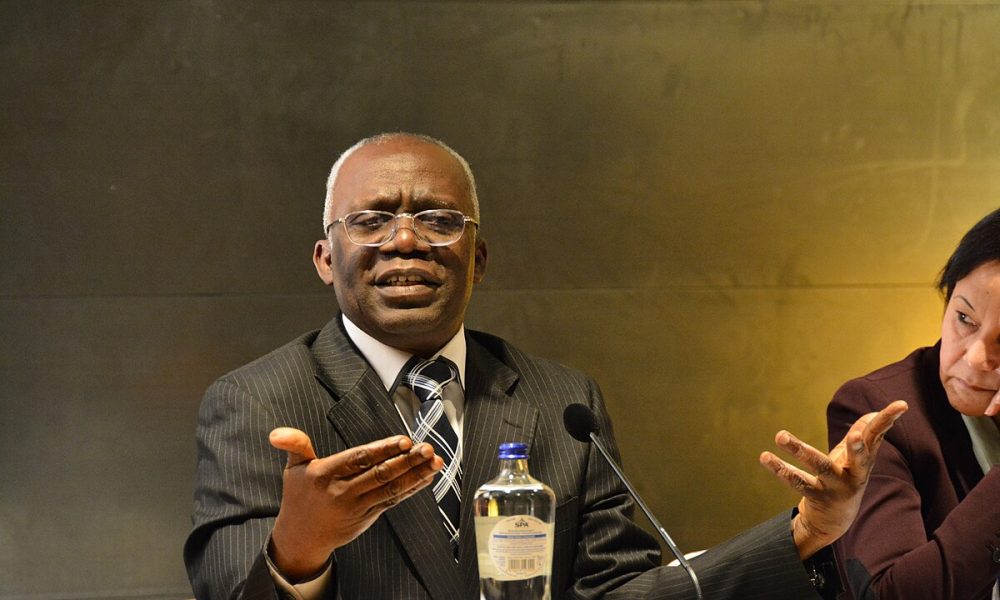
Human rights lawyer and Senior Advocate of Nigeria, Femi Falana, has blamed the persistence of political violence in Nigeria on the failure to prosecute electoral offenders, warning that continued impunity could undermine the credibility and security of the 2027 general elections.
Falana made the remarks on Channels Television’s Politics Today on Monday while reacting to the deadly attack on a political campaign gathering in Uduere community, Ughelli North Local Government Area of Delta State.
The attack occurred during a campaign visit by former Deputy Senate President Ovie Omo-Agege, who is seeking election to represent Delta Central Senatorial District in 2027 on the platform of the Nigeria Democratic Congress (NDC).
Falana described the killings as tragic and avoidable, arguing that perpetrators of political violence are emboldened when previous incidents are not followed by effective investigations and prosecutions.
He said political actors and their supporters would be less likely to resort to violence if they knew that the law would be enforced against those responsible.
“Nobody would have thought they were going to kill people in a rally if they knew that the law would catch up with them,” Falana said.
He expressed concern that investigations into violent incidents often fail to produce meaningful consequences, creating a climate in which attacks on political opponents and supporters can recur.
The lawyer challenged the Nigerian Bar Association (NBA), human rights organisations and civil society groups to take a more active role in addressing electoral violence rather than leaving the responsibility solely to politicians and security agencies.
He specifically urged the NBA to mobilise lawyers to support the Independent National Electoral Commission (INEC) in prosecuting electoral offenders.
According to Falana, INEC is already burdened with pre-election and post-election litigation, limiting its capacity to handle the prosecution of electoral offences effectively without additional legal support.
He said similar collaboration between lawyers and the electoral commission had taken place during previous elections, including those held in 2011, 2015, 2020 and 2023, and called for the arrangement to be revived.
Falana also criticised the National Assembly for failing to establish a dedicated Electoral Offences Commission, despite recommendations by electoral reform panels.
He argued that leaving the responsibility for prosecuting electoral offences largely with INEC had weakened accountability, particularly when the commission must also manage extensive election-related litigation.
Falana urged security agencies, particularly the police and the Department of State Services, to ensure that political candidates and voters could participate in electoral activities without intimidation or violence.
He warned that failure to address insecurity and electoral malpractice before the 2027 polls could result in further loss of lives.
The senior lawyer also called for improvements in the electoral process, including a credible voters’ register, accountability by electoral officials and transparent transmission of election results.
He cautioned that delays and weaknesses in the electoral process could create tension at polling units and provide opportunities for violence.
Beyond electoral security, Falana urged political parties and candidates to make governance issues the focus of their campaigns rather than relying on ethnic and religious divisions.
He identified employment, poverty, education, healthcare, fuel subsidy policies, crude oil-backed loans and the rehabilitation of government-owned refineries as issues that should receive greater attention during political debates.
He also called for greater scrutiny of unutilised basic education funds allocated to states and the implementation of laws on compulsory health insurance and child rights.
Despite his concerns, Falana said Nigeria was not beyond redemption, arguing that existing laws could address many of the country’s challenges if properly enforced.
He maintained that citizens, the media and civil society organisations must demand accountability from political leaders and insist that electoral offences and political violence carry legal consequences.
His comments come amid renewed concerns about political security following the deadly Delta campaign attack, underscoring calls for authorities to ensure that those responsible are identified and prosecuted before the next general elections.