

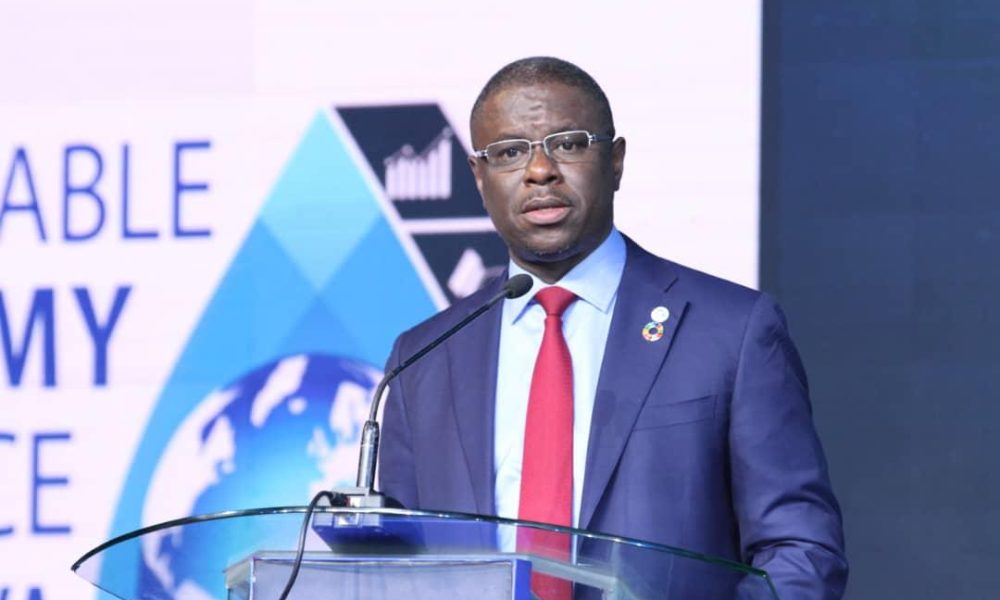
Leadership and public policy expert, Dr. Dakuku Peterside, has identified weak institutions, poor management and inconsistent policy implementation as major reasons Nigeria has struggled to convert its vast natural and human resources into broad-based prosperity.
Peterside stated this while delivering the keynote address at the 65th Annual National Management Conference of the Nigerian Institute of Management (NIM), where he argued that Nigeria’s fundamental development challenge was not a lack of resources but the quality of institutions managing them.
He urged the country to urgently move “from resource wealth to institutional wealth,” stressing that oil revenues should be invested in productive sectors such as education, infrastructure, technology, research, manufacturing, agriculture, logistics and human capital development.
According to him, “Development occurs when natural wealth is converted into institutional wealth.”
He explained that institutional wealth encompasses capable people, credible systems, reliable laws, efficient public agencies, transparent processes and productive enterprises.
Peterside cited the contrasting experiences of Nigeria, Botswana and South Korea to demonstrate that natural resources alone do not determine a country’s prosperity.
READ ALSO; Dakuku Peterside distance self from Wike, declares support for Amaechi
He said Botswana had leveraged its diamond resources through strong institutions, political stability, secure property rights and prudent public financial management, while South Korea achieved rapid economic transformation through institutional capacity, industrial coordination, infrastructure development, export-oriented policies and sustained investment in education.
He also referenced historical per-capita income comparisons involving Nigeria, China and Malaysia, noting that Nigeria had once been ahead on the cited measure but was later overtaken as the other countries recorded faster and more consistent growth.
“Potential is not destiny. History does not reward potential; it rewards organised potential,” he said.
Peterside warned that excessive dependence on oil could promote rent-seeking, fiscal instability and distorted economic incentives. He said the critical question was whether oil revenues would finance national transformation or merely sustain consumption.
He called on Nigerian managers and policymakers to prioritise merit, accountability, measurable performance, institutional memory and professional public management.
“Institutions become strong not because they occupy impressive buildings, but because they deliver predictable outcomes,” he said, stressing that national transformation ultimately depends on capable institutions led by competent people who are committed to implementation.
Earlier, the Alara of Ilara Kingdom, His Majesty Oba Dr. Olufolarin Olukayode Ogunsanwo, said Nigeria’s challenges were fundamentally linked to its failure to build strong institutions.
The monarch called for deliberate efforts to develop competent and people-oriented leaders with integrity, describing leadership development as critical to national transformation.
Also speaking, NIM President and Chairman of Council, Commodore Abimbola Ayuba, said Nigeria could not make meaningful progress without breaking from the past.
“The operating environment must be conducive and peaceful for the nation to excel,” Ayuba said.
He urged professional managers to serve as leading lights and change agents in their respective fields and contribute actively to strengthening Nigeria’s institutions, systems and management practices.