

Politics
By Anthony Isibor
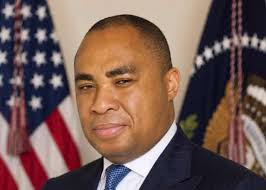
THE United States President Donald Trump has reportedly appointed Karl Von Batten, managing partner of Washington-based lobbying firm, Von Batten-Montague-York, L.C., to serve as a commissioner on a White House presidential commission.
The firm announced the development on its official X account, describing the appointment as an honour reflecting Von Batten’s commitment to public service, leadership and the United States.
The announcement, however, has attracted particular attention in Nigeria because Von Batten and his firm have, in recent months, become prominent actors in the controversy surrounding U.S. records relating to President Bola Ahmed Tinubu.
The firm has also been retained by former Vice-President Atiku Abubakar, one of Tinubu’s principal political opponents ahead of the 2027 presidential election.
Von Batten-Montague-York said in its announcement that Von Batten was “deeply grateful” to Trump for the appointment and looked forward to serving the President and the country.
The statement did not identify the specific presidential commission, its mandate or the other members.
As of September 3, there was also no independent confirmation of the appointment from the White House or Federal Register, with available reports noting that the announcement originated from Von Batten’s firm.
The appointment comes months after Atiku engaged Von Batten-Montague-York under a $1.2 million, 12-month government affairs and strategic advisory agreement.
U.S. Department of Justice records filed under the Foreign Agents Registration Act, FARA, show that the agreement became effective in February 2026 and covered strategic advice, congressional and executive-branch engagement, reputational management and efforts to counterbalance narratives advanced by the Nigerian government.
The filing does not describe the $1.2 million as payment for obtaining confidential FBI records. Rather, it outlines lobbying and government-affairs services, including outreach to members of Congress and executive-branch officials and assistance with Atiku’s policy positioning and reputation in Washington.
Following the engagement, the firm became increasingly vocal on Nigerian political issues, criticising the Tinubu administration over insecurity, alleged political intimidation and electoral integrity.
In April, it said it was briefing officials in Trump’s administration about developments in Nigeria and warned that continued concerns over insecurity and the integrity of the 2027 elections could lead to pressure for sanctions. The statements were made by the lobbying firm and were not official statements of the U.S. government.
The firm has also placed itself at the centre of an ongoing U.S. Freedom of Information Act dispute over historical records concerning Tinubu.
The litigation arose from FOIA requests by American transparency activist Aaron Greenspan and Nigerian journalist David Hundeyin seeking records held by U.S. agencies concerning Tinubu and other individuals linked to a 1990s investigation involving a Chicago heroin-distribution ring.
The requests covered records from the FBI, Drug Enforcement Administration, U.S. attorneys’ offices and other agencies.
The controversy dates back to 1993, when the U.S. government filed a civil forfeiture action involving bank accounts held in Tinubu’s name.
A 1993 U.S. court decree ordered the forfeiture of $460,000 from an account at First Heritage Bank in Tinubu’s name. The decree stated that the money represented proceeds of narcotics trafficking or property involved in financial transactions prohibited under U.S. money-laundering laws.
Importantly, the proceeding was a civil forfeiture case, not a criminal prosecution of Tinubu. There was no criminal conviction against him arising from that proceeding.
The distinction has become central to the current political dispute.
The Tinubu camp has consistently maintained that the President was never charged with a drug offence, never convicted and that the forfeiture did not constitute a criminal punishment against him. The Presidency reiterated this position this week, describing the current U.S. litigation as a civil FOIA records-disclosure dispute rather than a criminal case.
The controversy was revived after Judge Beryl Howell of the U.S. District Court for the District of Columbia ruled in an earlier stage of the FOIA litigation that the FBI and DEA could no longer simply rely on a so-called Glomar response—a refusal to confirm or deny whether responsive records existed.
The agencies were subsequently required to deal with the requests and disclose non-exempt material.
More recently, the FBI asked the court for permission to submit sensitive material privately for an in-camera review. Von Batten-Montague-York publicised the development and has continued pressing for disclosure.
The firm has portrayed the documents as evidence of a historic criminal investigation involving Tinubu. But the existence of an investigation or investigative records does not, by itself, establish that the person investigated committed the alleged offence.
The latest dispute has also involved a 2003 letter purportedly issued by the U.S. Consulate in Lagos.
The February 4, 2003 letter, signed by then Legal Attaché Michael H. Bonner, said an FBI National Crime Information Center check produced no criminal arrest records, wants or warrants for Tinubu. The document was issued in response to an inquiry by then Inspector-General of Police Tafa Balogun.
Former presidential aide Reno Omokri recently circulated the document.
Von Batten-Montague-York subsequently questioned its authenticity, pointing to several spelling and grammatical errors in the document. The firm highlighted errors including “czheck” instead of “check” and “maitatins” instead of “maintains.”
The firm has not established through the public evidence cited that the document is fraudulent; it has raised questions about its authenticity.
The controversy took another turn this week when Von Batten-Montague-York alleged that its founder had been offered $3 million and invited to a confidential meeting in London in exchange for abandoning its campaign concerning the Tinubu records.
The firm said the approach came from an individual it had been told was connected to Tinubu.
It said Von Batten rejected the offer, preserved the communications and reported the matter to U.S. authorities.
That allegation, however, remains unproven. There is no independently verified evidence establishing that the alleged intermediary was connected to Tinubu or that the Nigerian President or his administration authorised such an offer. A recent fact-check also concluded that the claim could not be independently established from the available evidence.
The Presidency has meanwhile accused the firm of using its relationship with Atiku to pursue a politically motivated campaign against Tinubu ahead of the 2027 election.
Special Adviser to the President on Media and Public Communications, Sunday Dare, described Von Batten as a commercial lobbyist rather than a U.S. government official and warned against treating his statements as positions of the Trump administration.
The Presidency has also questioned suggestions that Von Batten possesses unusual influence over Trump or the U.S. judicial process.
That distinction has become particularly significant following the announcement of the reported White House appointment.
There is currently no evidence that Trump’s reported appointment of Von Batten was made because of Atiku, the Tinubu controversy or the lobbying firm’s activities concerning Nigeria. Nor does the reported appointment, by itself, establish that Trump or the U.S. government has adopted the firm’s allegations concerning Tinubu.
What it does do is place a new spotlight on a Washington lobbying operation that has become deeply entangled in Nigeria’s 2027 political contest—and in one of the most contentious unresolved disputes over Tinubu’s records in the United States.
A.I
Sept. 4, 2026
Tags: David Hundeyin President Bola Ahmed Tinubu President Donald Trump Von Batten-Montague-York