

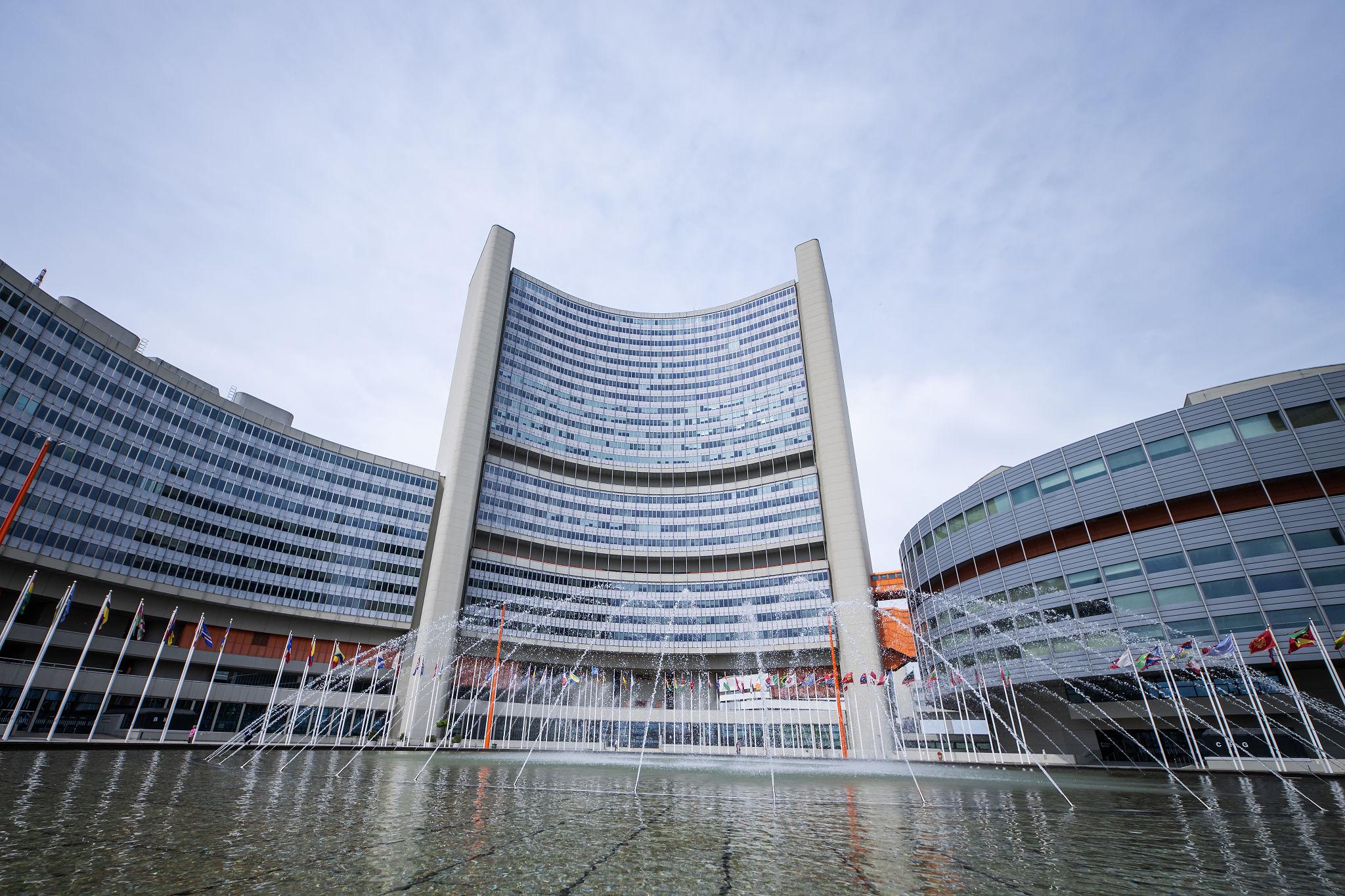
Iran has accused the United States of blocking its nuclear chief, Mohammad Eslami, from attending an annual meeting of the UN nuclear watchdog in Vienna after he was reportedly refused entry into Austria.
Iranian state television reported that Eslami and members of his delegation travelled to Vienna on Saturday but were unable to attend the International Atomic Energy Agency’s (IAEA) annual general conference.
The broadcaster attributed the development to what it described as US obstruction and said Eslami had since returned to Tehran.
“Mohammad Eslami and his delegation took a regular flight to Vienna on Saturday, but were blocked on the way because of obstructions by the United States,” Iranian state television reported.
Eslami was scheduled to represent Iran at the IAEA’s annual general conference, which began in Vienna on Monday and is expected to run until Friday.
The Iranian nuclear chief attended the previous edition of the conference and delivered a speech on behalf of Iran, which is an IAEA member state.
Tehran Summons Austrian Diplomat
Following the incident, Iran summoned Austria’s chargé d’affaires in Tehran to protest the decision affecting its delegation.
Iranian Foreign Ministry spokesperson Esmail Baghaei described Austria’s refusal to allow the delegation into the country as unjustified.
“The Austrian government’s refusal to issue visas to the delegation of the Islamic Republic of Iran is a completely unjustified decision,” Baghaei said at a press conference attended by AFP.
Baghaei alleged that the decision was made under pressure from Washington but maintained that Austria remained responsible for the refusal.
“It is clear to us that this incident occurred under American pressure, but that does not absolve the Austrian government of responsibility,” he said.
.
advertisement
A diplomatic source in Vienna, who spoke anonymously, also told AFP that Eslami was refused entry because of US pressure.
The reported dispute has added another diplomatic complication to Iran’s relationship with Western countries as international concerns over its nuclear programme continue.
Dispute Over Iran’s Nuclear Programme
Western governments have for decades expressed concerns that Iran could be seeking to develop nuclear weapons.
Tehran has consistently rejected the accusation and maintains that its nuclear programme is intended for peaceful purposes.
The latest development comes against the backdrop of heightened tensions between Iran, the United States and Israel.
The United States and Israel launched military action against Iran on February 28, saying Iran’s nuclear programme posed a threat.
The IAEA conference in Vienna provides a key diplomatic forum for member states to discuss nuclear issues, making the absence of Iran’s nuclear chief a significant development for Tehran’s participation in the meeting.
ALSO READ: Beijing Denies Iran Received Satellite Intel Before Strike That Killed 3 US Soldiers