

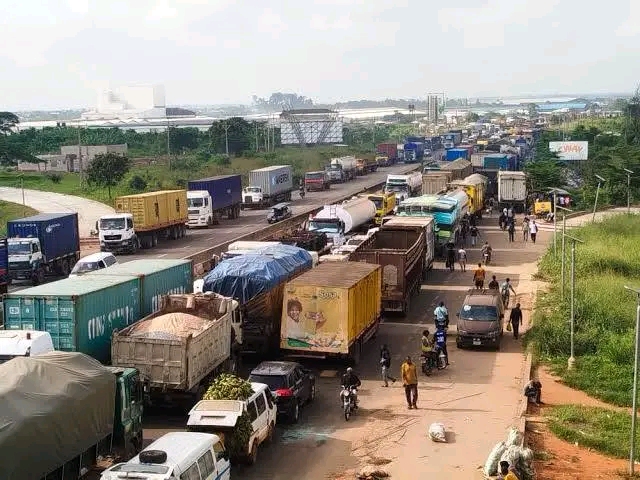
The fear of Kara Bridge is the beginning of wisdom for motorists and commuters, especially business owners who always have one reason or another to travel to Lagos, as the ongoing rehabilitation of the bridge has resulted in severe gridlock around Kara, disrupting movement and business activities.
The repairs have particularly affected commuters travelling between Ojodu Berger, Akute, Alagbole, Gbenro Isashi and surrounding communities, with the congestion extending to areas including Ogba, Ikeja, Maryland, Anthony and Ojota, among others.
The rehabilitation, which is expected to last two weeks, has disrupted the daily operations of businesses and made it increasingly difficult for workers to get to their offices, resulting in missed appointments, delayed engagements and, in some cases, commuters turning back home after spending hours on the road.
The prolonged gridlock has also affected businesses whose operations depend on the movement of workers, customers, goods and services, along that route with some companies reportedly recording financial losses as normal business activities remain disrupted.
For workers commuting from communities such as Mowe and Ibafo into Lagos island, Lekki, others , the situation has made the journey to work particularly difficult, with some spending several hours on the road before reaching their workplaces.
The disruption has also affected job seekers and professionals with scheduled engagements, as some commuters have reportedly missed job interviews, business meetings and appointments because of the difficulty of navigating the corridor.
An observation by The Guild showed that some commuters were forced to abandon their journeys after realising they could not reach their destinations on time.
Some workers, unable to make it to their offices, reportedly contacted their employers to request permission to work from home, while others returned home after spending hours in the gridlock.
The situation became more severe on Tuesday following a reported accident along the corridor, which further compounded the traffic situation around the ongoing bridge rehabilitation.
One commuter who pleaded anonymity told The Guild correspondent that many people who initially attempted to continue their journeys eventually turned back because of the worsening traffic.
“Most people also turned back that they are going back home. They don’t think they can make it, so they started reaching out to their company that they would love to work from home.”
The commuter said residents and workers around Ojodu Berger, Akute, Alagbole, Gbenro Ishashi and neighbouring communities have been particularly affected by the disruption.
“In fact, most people had to walk down from Ogba to Berger yesterday. So people had to trek down from Ikeja because there was no bus at all.
The traffic is serious and since they are currently constructing the bridge, it might take days for this thing to go down,” the commuter said.
The impact has extended beyond individual commuters, with workers travelling from Mowe and Ibafo also finding it difficult to get to their workplaces in Lagos.
The prolonged disruption has effectively placed several economic and social activities on hold, as commuters spend a significant portion of their working day trapped in traffic or unable to reach their destinations.
Businesses that rely on regular customer visits, staff attendance, scheduled appointments and the movement of goods have also been affected by the situation.
Meanwhile, the Lagos and Ogun State governments have deployed additional traffic officers to ease congestion and improve movement along the Lagos-Ibadan Expressway.
The governments also appealed to motorists and commuters to exercise patience, obey traffic regulations and cooperate with traffic management personnel deployed to affected areas.
The Lagos State Traffic Management Authority (LASTMA) and the Ogun State Traffic Compliance and Enforcement Corps (TRACE) were deployed to complement existing traffic management efforts and improve the flow of vehicles around the affected corridor.
The intervention followed growing concerns over the worsening gridlock caused by the ongoing rehabilitation works and incidents along the expressway.
However, with the rehabilitation expected to continue for another several days, commuters and businesses operating around the corridor continue to face uncertainty over how long it will take for traffic conditions to return to normal.