

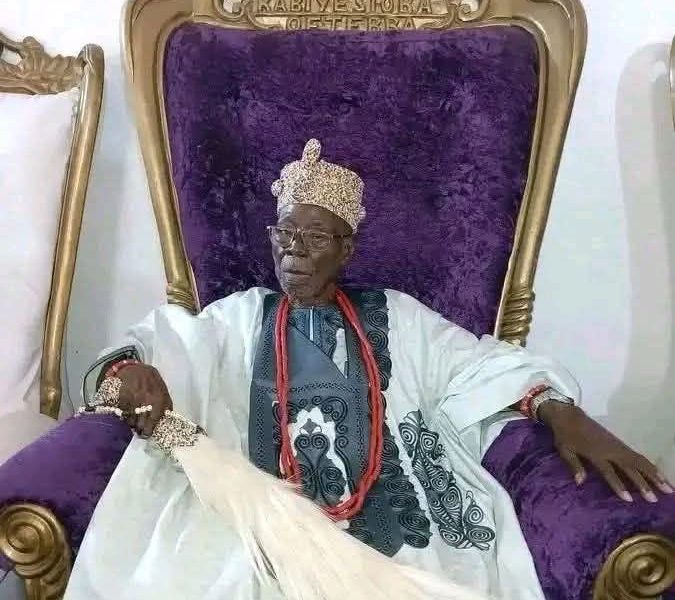
A long-running dispute involving the traditional ruler of Jebba, Oba Kadir Adebara, has renewed questions about the status of traditional institutions, ethnic identity and the relationship between Yoruba monarchs and the emirate system in Kwara State.
Oba Adebara is reported to have consistently identified himself as a Yoruba traditional ruler rather than an emir under the Ilorin Emirate structure.
He is also said to have declined to pay homage to the Emir of Ilorin, maintaining that Jebba’s traditional institution has its own historical identity and should not be subordinated to another traditional authority.
The most contentious aspect of the dispute is an allegation that the state government stopped paying the monarch’s official salary in 2003.
The claim has circulated among advocates of the Jebba traditional institution, but the precise administrative reason for the alleged stoppage, the legal status of the monarch’s remuneration and the government’s position require documentary clarification.
The controversy also touches on the broader history of Ilorin and the transformation of traditional authority in parts of present-day Kwara.
Supporters of Oba Adebara argue that Jebba has deep historical connections with the old Oyo political system and that its traditional institution should therefore be viewed within the wider history of Yoruba kingdoms rather than solely through the lens of the Ilorin Emirate.
They contend that the monarch’s refusal to submit to the authority of the Emir of Ilorin represents an attempt to preserve the autonomy and historical identity of the Jebba throne.
However, historians and constitutional experts caution against reducing the dispute to a simple Yoruba-versus-Fulani confrontation.
Bandits abduct Kwara monarch, residents in fresh attack on Igbesi community
The political history of the region involves migration, warfare, changing alliances, colonial administrative arrangements and the subsequent recognition of traditional institutions by successive governments.
A key question is whether the present-day classification and remuneration of the Jebba monarch are governed by formal government gazettes, traditional-ruler laws, historical recognition or administrative decisions.
Another issue requiring investigation is whether the monarch’s refusal to recognise the authority of the Ilorin Emirate has any direct connection with the alleged withdrawal of his salary.
If such a connection exists, the government would need to explain the legal or administrative basis for the decision. Conversely, if the salary was withheld for another reason, the state authorities should make the relevant records public to settle the controversy.
The dispute has attracted calls for prominent Yoruba traditional rulers, including the Alaafin of Oyo, Ooni of Ife, Olubadan of Ibadan, Oba of Lagos and other leading monarchs, to engage with the situation and examine Jebba’s historical and traditional claims.
Such intervention, however, would need to be based on historical records and the applicable legal framework rather than ethnic affiliation.
The controversy ultimately raises a broader question: how should Nigeria reconcile the historical identities of traditional institutions with modern state-recognition systems?
For Jebba, resolving that question may require an independent review of historical records, government recognition documents, remuneration records and the legal status of the traditional institution.
Until those records are examined and the Kwara State Government formally responds to the allegations, claims surrounding the 2003 salary stoppage and its alleged connection to the monarch’s position remain matters requiring further investigation.