
Breaking West Africa’s $3.5B Rice Import Trap: Inside Liberia’s $908M Blueprint Unveiled at Kigali Deal Room

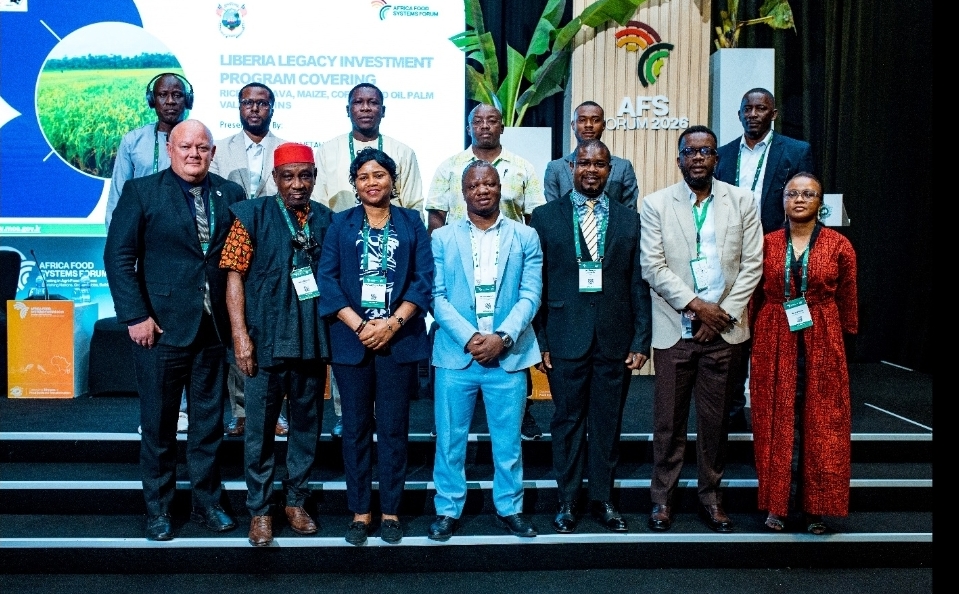
KIGALI, RWANDA — Across West Africa, a single crop has come to embody both macroeconomic vulnerability and the urgent fight for food sovereignty: rice. While the ECOWAS sub-region bleeds more than US$3.5 billion annually on foreign grain imports, the Republic of Liberia took center stage at the Africa Food Systems Forum (AFSF) 2026 Deal Room to present a comprehensive, market-driven plan to halt that capital flight and produce its own food.
Pitched under the national “Liberians Feed Yourselves Agenda,” the Government of Liberia unveiled an ambitious US$907.75 million legacy investment program spanning five priority commercial value chains: rice, cassava, maize, oil palm, and coffee (Coffea liberica). Designed to bring 123,000 hectares under intensive, modern cultivation, the portfolio is projected to generate over 337,000 direct rural jobs.
At the heart of the investment case is rice, which commands the largest single allocation at US$287.95 million targeting 50,000 hectares and 86,589 direct jobs.
Presenting on behalf of Minister of Agriculture Dr. J. Alexander Nuetah, Assistant Minister for Planning, Policy and Development Hon. Francis F.B. Mulbah laid bare the economic urgency confronting the nation. With per-capita rice consumption at 114 kg per year, Liberia holds the unenviable position of incurring the second-highest per-capita rice import expenditure in West Africa at US$44 per person.
“Liberia consumes between 650,000 and 750,000 metric tonnes of rice annually, yet domestic production languishes at just 322,000 metric tonnes,” Mulbah told an audience of development finance institutions, commercial lenders, and private equity investors.
“To close that structural supply gap, our nation spends over US$242.9 million each year importing foreign rice, which represents nearly half of our market supply. This exposure to volatile international commodity shocks is unsustainable, and our mission in Kigali is to establish the private-sector partnerships that will finally allow Liberia to feed itself.”
The macroeconomic paradox highlighted in the Deal Room is that Liberia’s dependency is not driven by land scarcity. The country boasts over 464,814 hectares of highly suitable, prime rice ecology and expansive surface water covering 15% of its landmass. However, productivity remains stifled by three systemic barriers: an irrigation rate of just 2.3%, post-harvest grain losses reaching 40%, and near-zero mechanization across rural production belts, forcing 84% of farm operations to rely on manual labor and pushing domestic production costs far above imported grain.
To systematically deconstruct these barriers, Liberia’s blueprint—developed with strategic technical backing from AGRA—shifts away from fragmented subsistence grants toward structured Rice Block Farms and anchor processing ecosystems.
Under this model, commercial millers and processors act as central anchor firms, contracting outgrower farmer cooperatives. The anchor coordinates input delivery, digital extension, mechanization hubs, and irrigation infrastructure on credit, recovering investments through guaranteed farmgate paddy purchase agreements.
To assure investor returns, the Liberian government introduced a robust de-risking package built on three strategic pillars.
First, aggressive fiscal relief provides a complete 0% import duty on agricultural machinery, equipment, fertilizers, and certified seeds, paired with a 50% duty exemption on spare parts and a three-year holiday on both corporate income tax and GST.
Second, dedicated agro-corridors anchor production and supply chains through a 210-hectare Special Agro-Processing Zone (SAPZ) linked directly to seaport logistics for export and domestic distribution. This is reinforced by more than US$50 million in direct public investment via the Legacy Economic Corridor Project, funding essential infrastructure such as feeder roads, bridges, water supply, and power grid connections.
Third, a concessionary financing architecture was codified through the legislative passage of the Agricultural Enterprise Development Bank, creating a dedicated credit window designed to provide long-term, low-interest liquidity to local agricultural SMEs and outgrowers.
The commercial viability of this midstream approach was demonstrated on stage by Mohamed Kamara, President of the National Rice Federation of Liberia and CEO of the Agriculture Infrastructure Investment Company (AIIC). Pitching an investment-ready US$1.675 million capital expansion, Kamara demonstrated how targeted capital deployed into a 300 kW independent solar array, Wageningen-validated seed laboratories, and mechanical dryers enables a 32 MT/day commercial mill to scale from 25% to 100% capacity.
The intervention projects a 79.3% three-year ROI and a 26.4% annualized return, while expanding captive outgrower contracts from 500 to 4,000 smallholders, doubling their crop yields (+94%), and replacing expensive diesel power with 100% renewable energy.
Liberia’s aggressive strategy directly reinforces AGRA’s wider regional push across West Africa. With AGRA and continental partners mobilizing targeted blended finance mechanisms—such as the US$500 million West Africa Rice Investment Vehicle championed at AFSF—the goal is to move the ECOWAS trade corridor from import vulnerability to regional self-sufficiency.
As African agriculture ministers align national investment compacts with the post-Malabo Comprehensive Africa Agriculture Development Programme (CAADP) 2026–2035 Strategy and Action Plan, Liberia’s legacy portfolio signals a decisive break from aid dependency. By pairing public infrastructure de-risking with bankable private-sector anchor off-takers, the country is demonstrating how West Africa can finally convert its multi-billion-dollar food import drain into domestic industrial growth.