

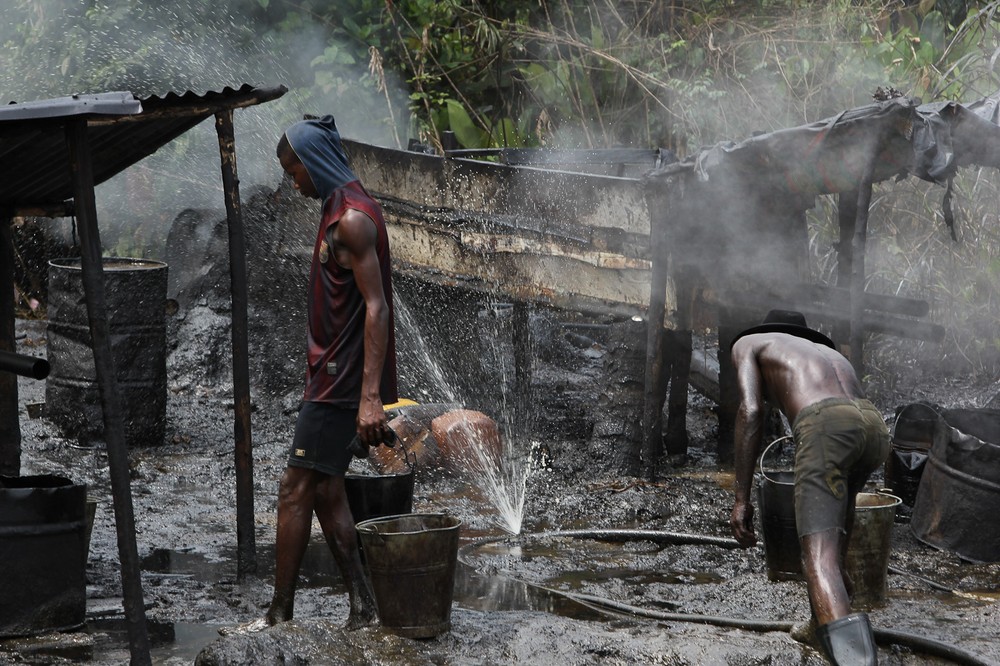
At least 37 people have reportedly died after inhaling toxic fumes during an alleged illegal oil-loading operation at Okari Jetty in Okrika Local Government Area of Rivers State.
The incident occurred in the early hours of Thursday, September 3, when more than 100 people from Okrika and neighbouring communities reportedly gathered at the jetty in locally made boats to siphon petroleum products from an illegally tapped point.
A vessel was also anchored at the location and was reportedly loading petroleum products for export when a strong smell suddenly spread through the area.
Several people reportedly collapsed after inhaling the fumes, while others fell into the river. Survivors were said to have suffered serious respiratory problems and were taken to hospitals for treatment.
The Youths and Environmental Advocacy Centre, YEAC-Nigeria, said its network of volunteers and human rights defenders in the Niger Delta had reported no fewer than 37 deaths.
YEAC Executive Director, Fyneface Dumnamene, said the victims were allegedly involved in siphoning petroleum products from an illegal tapping point while the vessel was loading.
He called for an immediate investigation into the circumstances surrounding the deaths and urged authorities to strengthen protection around oil infrastructure.
The Rivers State Police Command has confirmed that deaths occurred but has not independently confirmed the reported figure of 37.
Police spokesperson Blessing Agabe said the victims were reportedly attempting to steal crude oil and that an investigation had commenced to establish what happened.
The police position means the 37-person figure remains a reported casualty figure rather than an officially established death toll.
Community sources have also said several other people may still be missing.
Daily Trust reported that local accounts put the possible number of casualties higher than 37, although 37 deaths had been confirmed by the newspaper at the time of its report.
The circumstances have also generated differing accounts of what happened at the jetty. While police described the victims as people allegedly attempting to steal crude oil, a Civilian Joint Task Force commander in Okrika said many of those affected had gone to collect petroleum products floating on the water and were overwhelmed by fumes from a vessel operating nearby.
The tragedy has once again drawn attention to the complex relationship between oil wealth, poverty and illegal oil activities in the Niger Delta.
Nigeria is one of Africa’s major oil producers, yet many communities in the oil-producing region continue to face unemployment, poverty, environmental degradation and limited economic opportunities.
For some young people in communities surrounding oil-producing facilities, illegal oil bunkering and artisanal refining have become sources of income despite the significant risks involved.
The Okrika incident illustrates the dangers associated with accessing petroleum products through unauthorised connections, particularly where high-pressure pipelines, volatile products and toxic fumes are involved.
The Nigerian government has repeatedly intensified efforts to combat crude-oil theft, which authorities say causes significant economic losses and undermines production.
However, enforcement alone has struggled to eliminate the practice, with poverty and limited alternative livelihoods remaining among the factors frequently cited in discussions about illegal oil activities in the Niger Delta.
Following the Okrika deaths, community representatives and environmental advocates have called for more than arrests and enforcement operations.
The Civilian JTF commander urged the government, local authorities and community leaders to create legitimate employment opportunities for young people, arguing that dangerous activities can become attractive when people have few alternatives for earning a living.
Environmental advocate Nnimmo Bassey has also called for an independent investigation into the incident and for authorities to address the wider environmental and safety risks associated with oil infrastructure in the region.
The investigation by the Rivers State Police Command is expected to establish the circumstances surrounding the deaths, the nature of the petroleum product involved and the number of people ultimately affected.
For now, the tragedy has left Okrika communities mourning while raising a familiar and difficult question: how can a region sitting on enormous oil resources continue to see young people risk — and sometimes lose — their lives in the search for income from the same resource?