

The unnecessary war with Iran continues to drag on, with no end in sight, more than five months after it started. There are many reasons for this quagmire, but a significant part of the explanation is President Donald Trump’s schizophrenic approach. He veers between conciliation and confrontation, alternatingly praising Iranian leaders as “very rational people” and denouncing them as “scum” — with metronomic regularity.
At least seven times since the start of the war, Trump has vowed to launch devastating attacks before announcing that he was instead giving talks another chance. Most recently, on Aug. 1, he wrote on social media that “the U.S.A. is locked and loaded and ready to go against the Islamic Republic of Iran, at levels of Military Terror, Strength, and Power not seen since World War II,” but that he would “hold off any attack” because “the perimeters of a deal has been agreed to.” (Presumably he meant “parameters.”)
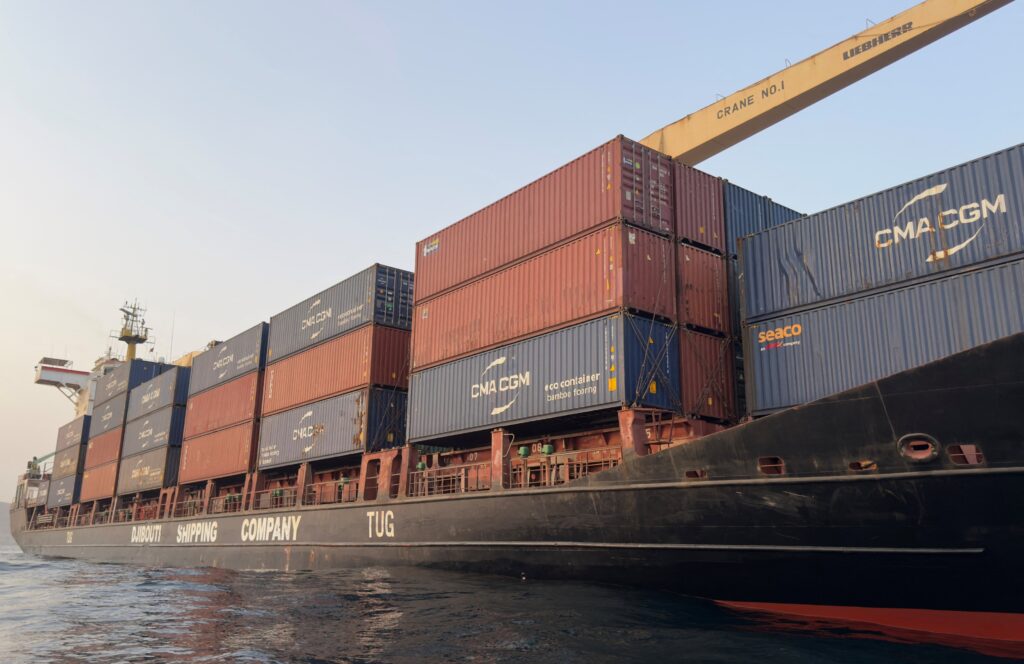
That post appears to have been referring to the tentative agreement between Iran and Oman to reopen the Strait of Hormuz by having inbound traffic go through Iranian territorial waters and outbound traffic through Omani waters. A senior Iranian official on Saturday complicated negotiations by demanding that, in return for reopening the strait, the United States lift economic sanctions on Iran, unfreeze Iranian assets and end the blockade on Iranian shipping.
If the U.S. were to agree to Iranian demands, which echo the June Memorandum of Understanding between the two countries, that would likely increase the number of ships transiting the strait. But it’s unlikely to bring lasting peace, and not only because it does nothing to address Iran’s nuclear program (the ostensible justification for the conflict). It also does not resolve the underlying dispute over whether Iran will be allowed to control the previously open international waterway indefinitely and charge tolls disguised as “user fees.”
The previous memorandum of understanding between the U.S. and Iran broke down on this very issue, with Iran convinced that the accord forced all ships to pass through its checkpoints and the U.S. convinced that ships could instead go through Omani waters. Iran attacked ships going the Omani route, leading to a renewed conflict that included a deadly Iranian attack on a U.S. base in Jordan and the U.S. bombing Iran in retaliation.
The fundamental problem is that both Iran and the U.S. have a divided leadership that is uncertain of its objectives. In Iran there is a split between the Islamic Revolutionary Guard hard-liners, who want to keep fighting, and more pragmatic leaders, who see the imperative to end the U.S. blockade and U.S. sanctions to allow the Iranian economy to recover. Normally the supreme leader would adjudicate these disputes. But Israel killed the previous one, and his son and successor, Ayatollah Mojtaba Khamenei, appears to be in hiding and is difficult to reach.
In the U.S., the supreme leader — President Trump — has unchallenged control of foreign policy, but he is yo-yoing between dealmaking and warmaking in ways that undercut his chances of success in either endeavor. The Iranians no longer seem to fear him because he has made so many threats he has not carried out. Remember when on July 22 he vowed to “bomb and destroy ONE BRIDGE OR POWER PLANT” for every cargo ship that Iran attacked in the Strait of Hormuz? At least three ships have been attacked since then without the U.S. retaliating.
While the Iranians don’t fear Trump, they also don’t trust him to make a deal, because he reverses himself so often — and not just on dealing with Tehran. On July 22, for example, the Trump administration announced a nuclear-power deal with Saudi Arabia, only to have Trump add major conditions the next day that Saudi negotiators had not agreed to. The president’s after-the-fact conditions appeared to be a reaction to criticism of the deal from Republican hawks. Likewise, every time Trump veers toward a deal with Iran, he pulls back because of criticism from the same set of hard-liners.
In the war with Iran, Trump is his own worst enemy. He needs to decide on a single approach — either confrontation or conciliation — and stick with it consistently for a few months.
The conciliatory approach, which builds on the earlier memorandum of understanding, is the smarter option right now despite the difficulty of reaching a deal with Iran’s divided leadership. That would most likely involve a humiliating recognition of some degree of Iranian control over the Strait of Hormuz. But Trump lacks the political support at home to escalate the war or to suffer the economic shocks from a prolonged closure of the Strait of Hormuz and possibly the Bab el-Mandeb Strait, too. A recent CNN poll found that only 28 percent of Americans approve of Trump’s handling of the Iran war. Imagine how much lower support would go if the U.S., which has already lost 18 service members, suffers more casualties. Moreover, the Defense Department is running critically short of the missiles it needs to fight Iran — or any other adversary.
Still, there is a legitimate argument to be made for the hard-line approach: blockading Iranian shipping indefinitely in the hope that Iran’s growing economic woes will make its leaders more malleable. That is likely to prove more effective than simply bombing more targets in Iran. But it requires convincing voters, with midterm elections approaching, to endure higher oil prices and higher inflation.
The one approach that is guaranteed to fail is the one that Trump is now pursuing: zigzagging between war and peace, threats and negotiations, bombastic rhetoric and unctuous outreach. He may think it’s the “art of the deal,” but in fact, as the past five months have shown, it’s simply a formula for an endless and inconclusive conflict — a “forever war.”