

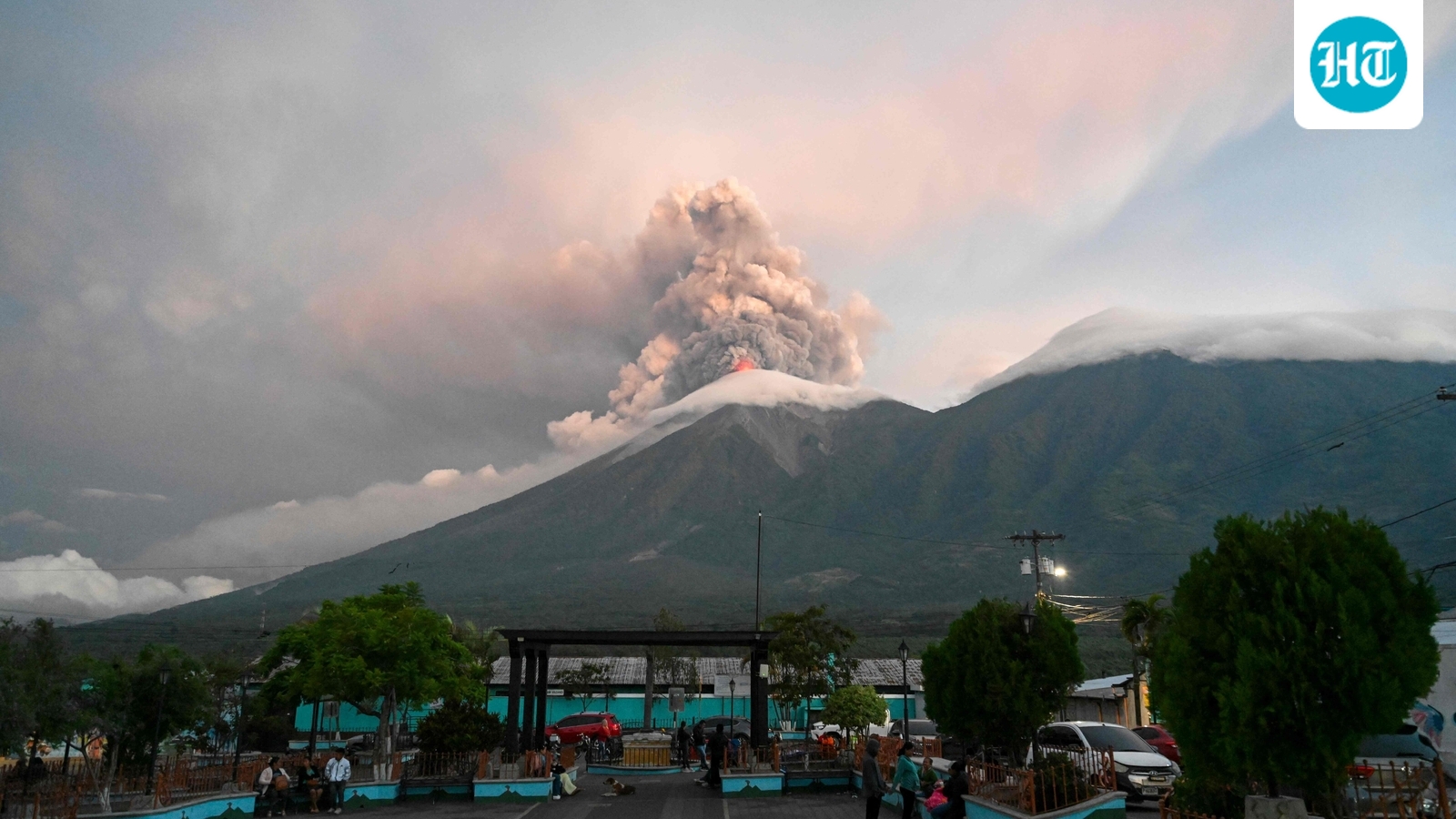
As Volcano Fuego continues to erupt and spew ash, Guatemala remains on high alert and has begun evacuating people. As per the country’s disaster management agency Conred, about 1,700 people have been relocated to shelters as the volcano continues to erupt.
Fuego, which is one of Central America’s most active volcanoes, erupted on August 3. Following the eruption, Conred issued an orange alert, which is the second-highest emergency alert.
However, as per AP, the alert was raised to red on Wednesday in several districts. As per the Guatemalan disaster agency, a red alert is active for Sacatepéquez, Escuintla and Chimaltenango, where about 29,000 people are affected by ashfall and schools remain closed.
Also Read | Guatemala on nationwide alert after Volcano Fuego erupts
Emergency services director Claudine Ogaldes has also called on at-risk families to come to shelters voluntarily.
“In those spaces, you will find care, support and safe conditions while the volcanic activity continues,” she wrote on X.
‘Rivers of lava’
Citing local reports, news agency AFP also stated that rivers of lava streamed down the 3,763-meter (12,346-foot) volcano and the sky turned red due to the volcanic ash.
With the red alert in place, hundreds of people have fled their homes. Fire authorities have said at least 500 residents of the El Porvenir and Las Lajitas villages were relocated to the eastward San Juan Alotenango municipality.
Watch | Fuego Volcano spews massive ash clouds, thosands forced to evacuate
Fuego has been erupting for over 24 hours. As per INSIVUMEH, the intensity was easing slightly, but the risk remains.
Authorities have also stated that the next 72 hours remain critical as mudflows up to 7 kilometres (4.3 miles) long continue descending from the volcano. Furthermore, with a rain forecast, officials are expecting an increase in the risk of additional volcanic mudflows.
(With inputs from AFP, AP and Reuters)