

Stocks in the United States neared a record high on Tuesday, on investors’ hope that a lull in fighting in the Middle East would hold and that corporate earnings would remain robust.
Markets have been lashed between geopolitics — disruptions in the Strait of Hormuz have throttled global oil supplies for more than five months — and anxiety about payoffs from massive investments in artificial intelligence. A recent rally has been driven by strong earnings from large tech companies, including Amazon, Microsoft and Palantir.
For several days, there has been talk of a possible agreement to reopen the strait, and President Trump on Monday said a deal could be close. But nothing has emerged yet and oil prices rose on Tuesday.
Oil prices rise.
The price of Brent crude, the global benchmark for oil, rose 1 percent to between $84 and $85 a barrel.
West Texas Intermediate crude, the U.S. benchmark, was up slightly to about $81 a barrel.
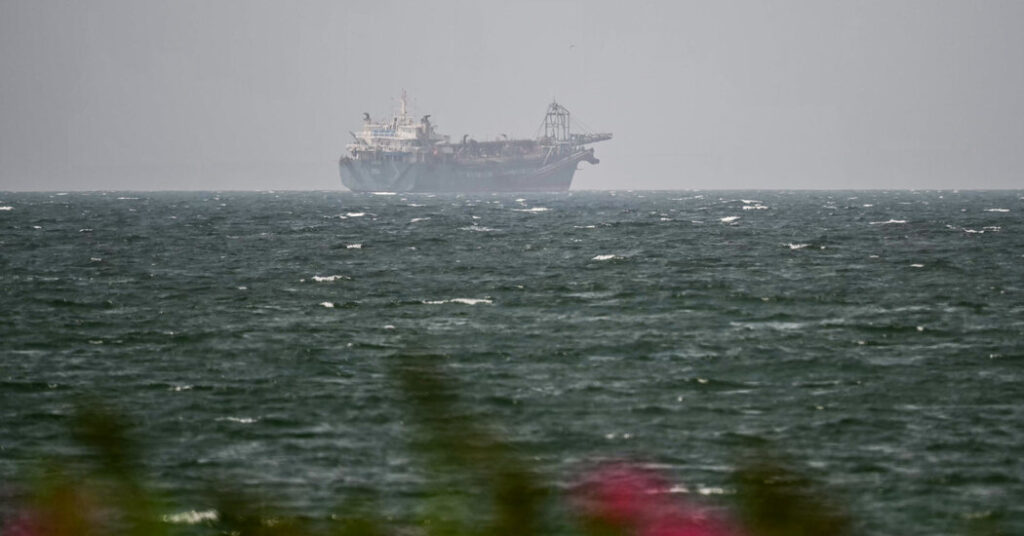
Investors and analysts are focused on the continued disruption to shipping in the Strait of Hormuz, the narrow waterway between Iran and Oman that is a vital trading route for oil and natural gas that normally carries as much as one-fifth of the world’s oil supply. In addition, the market is closely watching efforts by the Iranian-backed Houthi militia in Yemen to restrict traffic in the Bab al-Mandab Strait at the southern end of the Red Sea, which Saudi Arabia has used as an alternative to the Strait of Hormuz.
Global stocks mostly gain.
Futures on the S&P 500 pointed to an increase when stocks resume trading in the United States on Tuesday, taking the index close to beating the record high it set in early June.
In Europe, the Stoxx 600, a broad index that tracks the region’s largest companies, rose 0.6 percent.
Stocks in Asia were mostly higher, with the Nikkei 225 in Japan adding 0.3 percent and KOSPI in South Korea jumping 1.6 percent. Indexes in Hong Kong and Taiwan closed lower.
Gasoline prices tick lower.
Gas prices fell one cent on Tuesday to a national average of $4.09 a gallon, according to the AAA motor club. The cost for drivers has gone up about 37 percent since the war began.
Gas prices don’t move in lock step with crude, usually trailing increases or drops by a few days.
The national average price of diesel rose one cent to $5.37 a gallon on Tuesday, up 43 percent since the start of the war.