

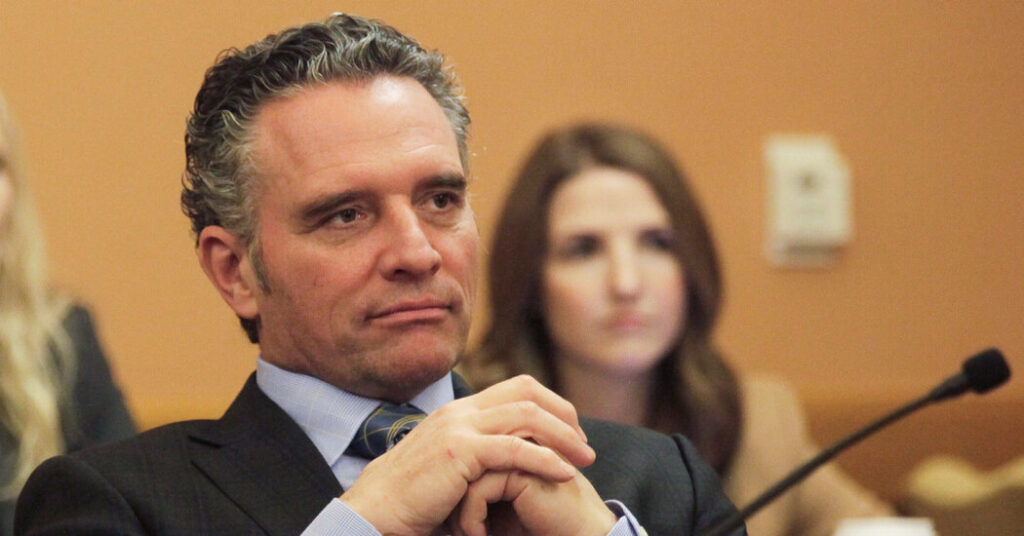
Republican voters selected Ty Masterson, the influential leader of the Kansas Senate, as their nominee for governor on Tuesday, The Associated Press said.
Mr. Masterson, who was endorsed by President Trump, will have perhaps the best chance of any Republican nationally to flip a Democratic-held governorship in November. Gov. Laura Kelly, a Democrat with a unique political brand, is barred by law from seeking a third term.
Ms. Kelly’s power in Topeka has long been a point of frustration for Republicans, who otherwise dominate Kansas politics. President Trump carried Kansas by 16 percentage points two years ago, and Republicans have used their legislative supermajorities to override Ms. Kelly’s vetoes on a range of conservative priorities.
Even though the party out of power in Washington often performs well in midterm elections, Republicans have high expectations for the open seat in Kansas in November. Democrats, however, have maintained that they have a path to holding the governorship.
Mr. Masterson emerged from a large Republican primary field that included the businessman Philip Sarnecki, Insurance Commissioner Vicki Schmidt and Secretary of State Scott Schwab. Former Gov. Jeff Colyer dropped out of the primary after Mr. Trump endorsed Mr. Masterson.
Though Ms. Schmidt staked out a moderate lane in the primary, the other candidates shared similar views on many policy issues.
Mr. Masterson, Mr. Sarnecki and Mr. Schwab all said they opposed legalizing marijuana. And all of them voiced frustration with the sharp increase in abortions in Kansas since voters declined to change the State Constitution to allow for an abortion ban.
The candidates disagreed about how to regulate data centers and about the merits of a deal that wooed the Kansas City Chiefs, now based in Missouri, to build a new stadium in Kansas.
Mr. Masterson, who was introducing himself to many voters after a career as a Wichita-based legislator, made the president’s support a centerpiece of his campaign.
“As much as I want to make President Trump proud, I want to make you more proud in what I do as a governor,” Mr. Masterson told voters during a recent debate moderated by the Fox affiliate in Kansas City.
Mr. Sarnecki, who gained traction in the race as a newcomer to politics with a long career in private industry, criticized Mr. Masterson as being part of the state’s establishment.
“The contrast could not be more stark,” Mr. Sarnecki said at the debate. “You have the ultimate insider, 20-year career politician, and the outside business leader and job creator.”
Ms. Kelly won her first term eight years ago in another midterm election with Mr. Trump in the White House. But some of the political dynamics that helped lift her to that victory, including unpopular tax policies passed by Republicans and a Republican nominee whom many voters found unpalatable, might not be major factors in this year’s race.
Though not a household name in much of the state, Mr. Masterson has amassed political power during nearly two decades in the Kansas Capitol. During his tenure as president of the State Senate, lawmakers overrode Ms. Kelly’s vetoes of dozens of bills, including ones that placed restrictions on transgender people, overhauled election procedures and limited officials’ ability to impose restrictions during public health emergencies.
But with Ms. Kelly in office, Mr. Masterson’s power was sometimes limited. Though he and other legislative Republicans wanted to redraw the state’s congressional map last year, he would have needed near-unanimous Republican support to overcome a veto from the governor. That plan unraveled when several Republicans voiced opposition, leaving in place a single Democratic-leaning U.S. House district.