

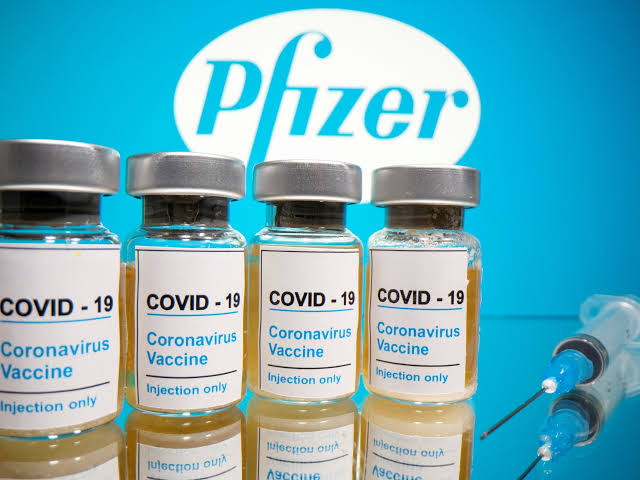
A confidential COVID-19 vaccine procurement agreement between Pfizer and the South African government contains an unusually direct acknowledgement that, at the time the deal was signed, the vaccine’s long-term effects, efficacy and some potential adverse effects were not yet known.
The disclosure raises a difficult question about the balance between emergency public-health action and informed consent: How much of the uncertainty known to government and recorded in the procurement contract was communicated to the public when citizens were being encouraged—and in some cases pressured—to receive the vaccine?
The agreement, dated March 30, 2021, was between Pfizer Laboratories Proprietary Limited and the South African government through the National Department of Health.
It remained confidential until the Health Justice Initiative (HJI) successfully challenged the government’s refusal to release COVID-19 vaccine procurement agreements.
In August 2023, the Pretoria High Court ordered the government to provide access to the contracts. HJI subsequently published the Pfizer agreement together with contracts involving other vaccine suppliers.
That distinction is central to understanding the controversy.
The warning buried in Section 5.5
The most striking provision appears on page 21 of the agreement under the heading “Purchaser Acknowledgement.”
The clause records the purchaser’s acknowledgement that the vaccine and related materials were being rapidly developed because of the emergency circumstances of the pandemic and would continue to be studied after they were supplied.
More significantly, the purchaser acknowledged that the vaccine’s long-term effects and efficacy were not currently known and that there could be adverse effects that were not currently known.
READ ALSO; HHS moves to create COVID-19 injury table as US Court pauses lawsuit
The same section also states that, where applicable, the product would be supplied without serialization.
This is the portion of the contract that deserves particular scrutiny.
It does not say that Pfizer knew the vaccine was harmful. It does, however, demonstrate that the parties entered the agreement while acknowledging that some important questions could not yet be answered.
In other words, uncertainty was not merely something discovered years later. It was expressly contemplated in the procurement agreement itself.
The safety issue was real—but the evidence is more complicated
The existence of unknown long-term effects in 2021 should not be confused with evidence that serious long-term harm was subsequently established.
COVID-19 vaccines were developed and authorised during an extraordinary emergency, and safety monitoring continued after rollout. As more people received the vaccines, previously rare adverse events could be identified through pharmacovigilance systems.
One important example is myocarditis and pericarditis, particularly following mRNA vaccination.
The US Centers for Disease Control and Prevention (CDC) acknowledges a causal association between mRNA COVID-19 vaccines, including Pfizer-BioNTech, and myocarditis and pericarditis.
The events are rare and occur most frequently among adolescent and young adult males, particularly after the second dose.
The World Health Organization likewise identifies myocarditis, pericarditis and anaphylaxis as important adverse events associated with mRNA vaccines, while describing myocarditis and pericarditis as very rare.
These findings are important precisely because they demonstrate how the safety profile of a new vaccine can evolve after mass deployment.
What was known in March 2021?
When the Pfizer-South Africa agreement took effect, the vaccine had already undergone clinical testing and regulatory review.
South Africa’s own government vaccine communication materials described Pfizer-BioNTech as having emergency-use authorisation and reported efficacy of more than 90 per cent based on the evidence available at the time.
READ ALSO; Fauci’s personal diaries fuel renewed scrutiny of COVID-19 vaccine safety
But regulatory authorisation during an emergency was not equivalent to having decades of safety data.
The contract itself acknowledged that distinction.
The purchaser agreed that the vaccine was still being studied and that its long-term effects and some possible adverse effects were unknown. That is entirely consistent with the reality that a product introduced in late 2020 could not have accumulated many years of post-market data by March 2021.
The investigative issue, therefore, is not whether the vaccine had any safety evidence. It clearly did.
HJI began seeking access to vaccine procurement agreements under South Africa’s access-to-information law after the government declined to provide them.
HJI said the agreements remained secret even though billions of rand in public money were involved. The organisation noted that the 2021 national budget had allocated R10 billion for COVID-19 vaccines.
On August 17, 2023, the Pretoria High Court ruled in HJI’s favour and ordered disclosure of the COVID-19 vaccine contracts and related negotiation documents. The government subsequently confirmed that it would comply with the judgment rather than appeal.
HJI’s analysis of the released agreements concluded that the contracts were overwhelmingly favourable to multinational pharmaceutical companies and imposed significant conditions on governments, including limited transparency and limited leverage over supply and pricing.
Later negotiation records released following the litigation provided additional insight into the bargaining process between South Africa and vaccine manufacturers. HJI said the records showed pharmaceutical companies exerting significant pressure during negotiations.
A confidential commercial contract is not itself a patient information sheet. Governments routinely enter commercial agreements containing technical provisions that are not communicated verbatim to every citizen.
Nevertheless, when the government is simultaneously encouraging millions of people to accept a new medical product, the public-interest question becomes whether material uncertainties were adequately disclosed through public-health communications.
The dangers that emerged after rollout
The strongest evidence-based case for continued scrutiny comes from adverse-event surveillance rather than from the contract alone.
Among the recognised serious or potentially serious adverse events associated with COVID-19 vaccination are:
Myocarditis and pericarditis, rare inflammatory conditions associated with mRNA vaccines, particularly among young males.
Anaphylaxis, a rare but potentially life-threatening allergic reaction.
Other suspected adverse events that have been investigated through national and international pharmacovigilance systems.
The CDC says COVID-19 vaccines underwent extensive safety monitoring and that surveillance systems identified serious adverse events including anaphylaxis and myocarditis/pericarditis.
The bigger unanswered questions
The Pfizer-South Africa agreement leaves several questions that deserve answers from government records rather than speculation.
READ ALSO; US Senate probe obtains Fauci’s phone in expanding COVID-19 investigation
What did South African officials understand by “long-term effects” when they signed the contract?
What adverse events did officials consider sufficiently plausible to require continued monitoring?
How many adverse events were subsequently reported among South African recipients?
How many were investigated as potentially vaccine-related?
How many were ultimately determined to be caused by vaccination?
The contract proves that South Africa’s government entered a vaccine procurement agreement in which it acknowledged that the product was rapidly developed, would continue to be studied after rollout, and that its long-term effects and some potential adverse effects were not yet known.
The documents also demonstrate that the procurement process was initially shielded from public scrutiny and that disclosure ultimately required litigation.
What they do not prove is that Pfizer knowingly supplied a dangerous vaccine, that the vaccine was deliberately designed to harm people, or that every reported injury following vaccination was caused by the vaccine.