
‘Shouldn’t be an exclusive club’: Pakistan defence minister bats for NATO-like Islamic alliance after Saudi pact

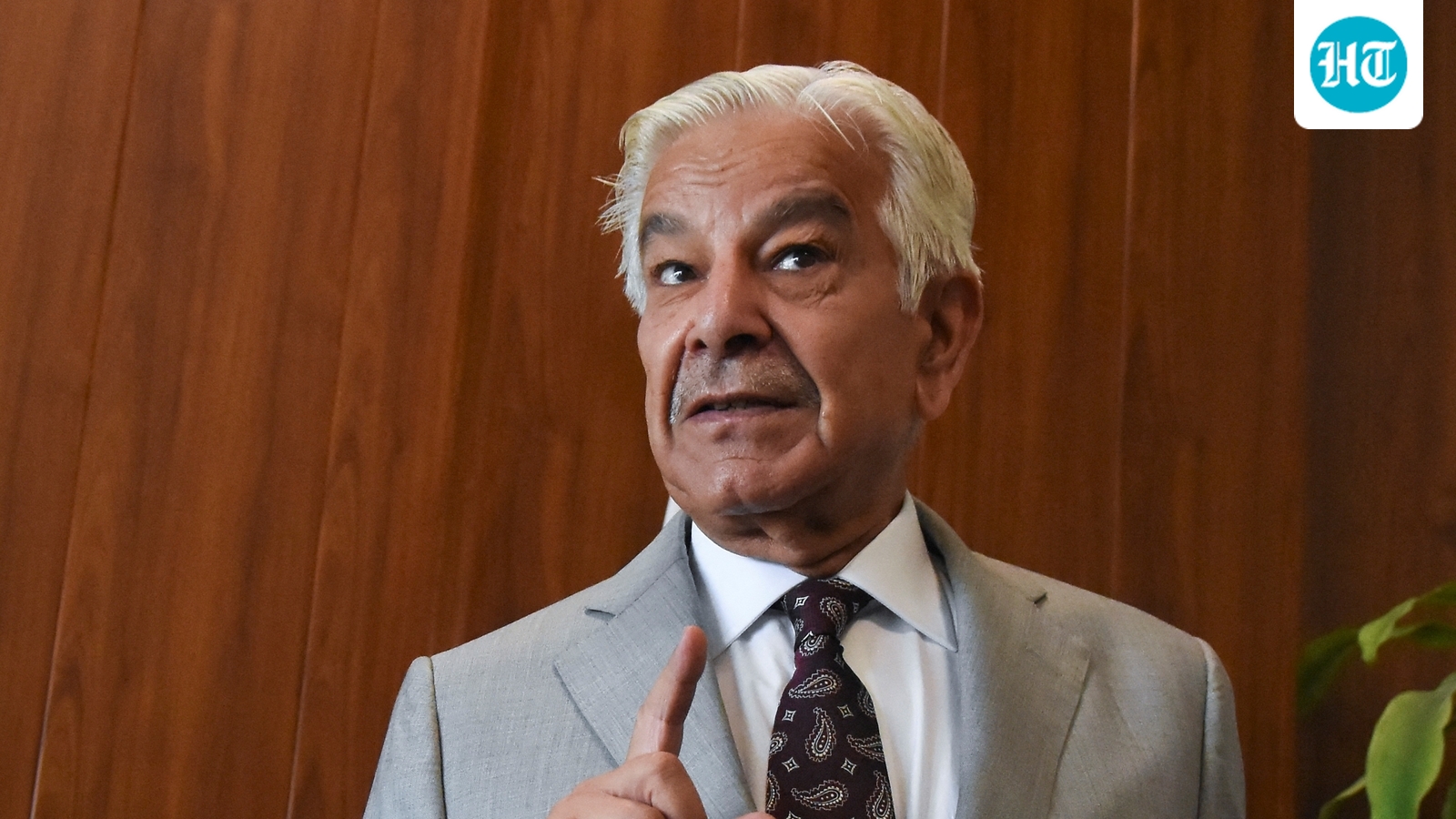
Pakistan’s defence minister, Khawaja Muhammad Asif, has urged Islamic countries worldwide to form a military alliance along the lines of NATO after Islamabad signed a defence pact with Turkey and Saudi Arabia.
Talking to Geo News, Asif said the pact’s doors cannot be closed to other countries. “See, we can’t close the doors for other countries. This shouldn’t be an exclusive club. This is my personal opinion. It should expand. I think Muslim countries should keep their differences, transactional or bilateral disputes aside, on the lines of NATO and stand together,” he told the news channel
The remarks came on the day Pakistan signed a defence pact with Turkey and Saudi Arabia in Mecca, in which “an attack on one” of the signatories will be considered “an attack on all three.”
The Pakistan-Turkey-Saudi defence pact
Saudi Crown Prince Mohammed bin Salman, Turkish President Recep Tayyip Erdogan and Pakistani Prime Minister Shehbaz Sharif put their signatures to a joint defence agreement at Al-Safa Palace in Mecca on Friday, after offering prayers together. The document has a name — the Mecca Joint Defence Agreement — and a headline commitment. An armed attack against any one of the three states will be regarded as an attack against them all, it said.
On Friday, the three countries released a joint statement announcing the agreement, not the text of the agreement. No full treaty document has been made public yet.
The statement commits to “collective deterrence against any act of aggression”, and, in its central clause, holds that “any armed attack against any one of the three States shall be regarded as an attack against them all”. Turkish officials, quoted by Bloomberg, added that the pact would extend to shared development of defensive capabilities, military exercises, and personnel training. Erdogan, in his own X post, said it was a mechanism for joint defence-industry projects and counter-terrorism cooperation.
Reuters, citing Turkish and Saudi officials, said the statement “did not give specifics on the commitments each had accepted, and it was not clear how far their agreement would bind them to any particular military action in each other’s defence”.
Turkey’s vice-president, Cevdet Yilmaz, and a Turkish government official, both quoted by Reuters, said the agreement was purely defensive and did not abrogate any of the three countries’ existing arrangements with other states.
King’s College London analyst Andreas Krieg told the news agency AFP that the war in Iran has shaken Riyadh’s confidence in relying on a single American umbrella for its security. With its oil infrastructure taking repeated hits and Washington’s protection looking less reliable than it once did, the kingdom is now working to build layered security rather than betting on the US alone to protect its interests.