

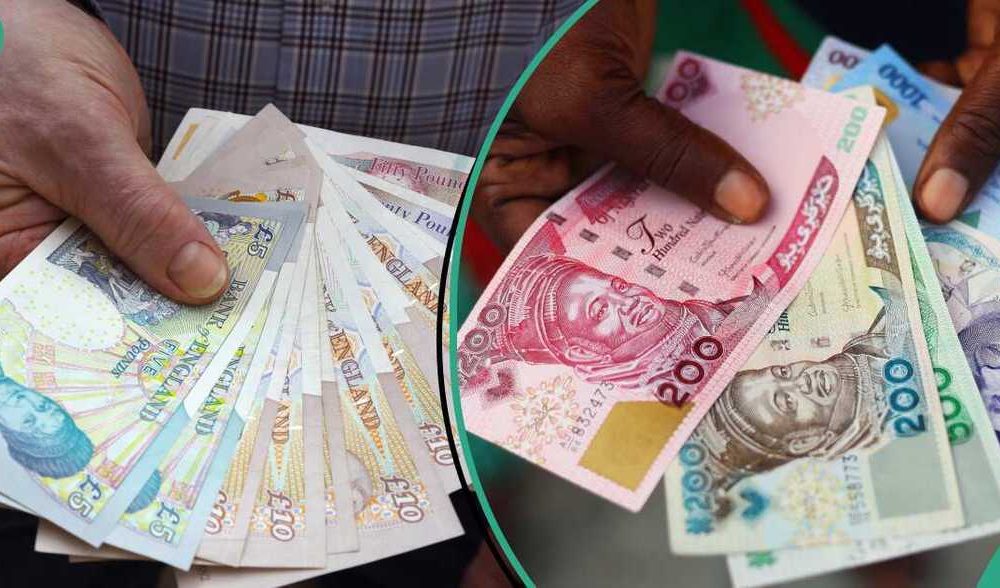
The British pound traded at N1,837/£1 against the naira at the start of trading on Thursday, reflecting sustained demand for the UK currency amid rising education, healthcare and trade-related foreign exchange needs.
Market data showed the pound has traded within a range of N1,813/£1 and N1,862/£1 so far this month, with analysts expecting near-term movements to remain anchored around the N1,840/£1 mark as buyers continue to dominate the market.
Foreign exchange dealers said demand for the British currency remains elevated as Nigerians continue to source pounds for tuition payments to UK institutions, medical tourism and other overseas obligations.
The sustained appetite for the currency has continued to exert pressure on the naira despite measures by the Central Bank of Nigeria (CBN) to stabilise the foreign exchange market through tight monetary policy and improved liquidity.
Analysts noted that buyer momentum is keeping the exchange rate above the N1,840 support level, with the pound expected to retest the month’s peak of around N1,850/£1 if demand persists.
They also observed that Nigeria’s structural foreign exchange requirements—including imports, external debt servicing and international trade settlements—continue to underpin medium- to long-term depreciation pressure on the naira against the pound.
However, stronger foreign exchange inflows, buoyed by improved crude oil receipts and higher external reserves, have helped cushion the pressure on the domestic currency by improving market liquidity.
The outlook for the pound has also been supported by monetary policy in the United Kingdom, where the Bank of England (BoE) has maintained its benchmark interest rate at 3.75 per cent amid persistent services inflation and wage growth.
The BoE’s cautious approach to cutting interest rates has kept UK assets attractive to investors, providing continued support for sterling in global currency markets.
READ ALSO; Naira opens week stable as gap between official and parallel dollar markets narrows
Meanwhile, the British pound weakened slightly against the US dollar during Thursday’s European trading session, hovering around $1.346, as renewed geopolitical uncertainty boosted demand for the greenback as a safe-haven currency.
Market sentiment remained influenced by conflicting signals from Washington and Tehran over possible diplomatic engagement with Iran.
US President Donald Trump said discussions with Iran had been productive, while Vice President JD Vance cautioned that any negotiations would likely be prolonged due to the complexity of Iran’s political structure.
Iranian Deputy Foreign Minister Kazem Gharibabadi, on his part, disclosed that talks involving the Sultanate of Oman on reopening sections of the Strait of Hormuz had recorded significant progress, although Iranian officials denied reports of direct negotiations with the United States.
Investors are also closely watching key US labour market indicators, with Initial Jobless Claims due later on Thursday and the closely monitored July Non-Farm Payrolls report scheduled for Friday.
Fresh data released by payroll processor ADP showed the US private sector added 44,000 jobs in July, significantly below economists’ expectations of 70,000 and down from 98,000 recorded in June.
The weaker-than-expected employment figures have fuelled expectations that the US Federal Reserve could adopt a less aggressive monetary policy stance if broader labour market data also disappoints.
Analysts said a softer US jobs report could weaken the dollar and provide support for the pound in global markets.
Attention is also shifting to the United Kingdom’s economic outlook, with investors awaiting the country’s preliminary second-quarter Gross Domestic Product (GDP) data due on August 13, which is expected to provide fresh direction for sterling in the coming weeks.
Until then, currency traders expect the pound to consolidate its recent gains while monitoring monetary policy signals, geopolitical developments and macroeconomic data from both the UK and the United States.