

The Pentagon is asking the U.S. defense industry to rapidly escalate the production and delivery of weapons, including munitions that are in extreme shortage due to the war with Iran, according to a Defense Department memo obtained by The Washington Post.
Deputy Defense Secretary Steve Feinberg wrote to industry leaders on Wednesday, saying they had no more than 21 days to submit plans to “drive significantly faster, more aggressive delivery schedules and/or increased production for critical capabilities,” according to the memo, which is previously unreported.
“Years-long development cycles are not acceptable,” Feinberg wrote. “We must dramatically accelerate our program schedules and expand our production capacity now.”
The directive comes as the weapons shortage has been a source of tension between President Donald Trump and the Defense Department. It is also the latest in a series of actions the Pentagon and the White House have taken to address an issue that may largely remain unsolved until a gridlocked Congress releases additional defense spending, according to industry experts.
Trump on Thursday said that the United States has “massive amounts” of munitions, posting on Truth Social that “large amounts are being manufactured and shipped to the U.S. as needed.”
Feinberg’s note comes after efforts by the White House to enlist the defense industry to unlock military funds.
In late July, legacy defense contractors and Silicon Valley weapons start-ups were summoned to the White House to meet with Trump’s chief of staff, Susie Wiles, Defense Secretary Pete Hegseth, Office of Management and Budget Director Russell Vought and White House Legislative Affairs Director James Braid, according to three people familiar with the event, who spoke on the condition of anonymity to discuss sensitive matters.
In the meeting — which included firms such as Lockheed Martin, Northrop Grumman, Boeing, autonomous weapons firm Anduril and data analytics company Palantir — company executives were asked to directly lobby lawmakers to increase defense spending through congressional reconciliation, the people said. Fox News earlier reported this meeting.
The Pentagon has in recent months announced several “framework agreements” with the largest U.S. defense contractors and emerging start-ups to increase its supply of both low-cost munitions and sophisticated air defense weapons, like the Terminal High Altitude Area Defense (THAAD) and Patriot missile interceptors.
These framework arrangements are legal, nonbinding contracts between the U.S. government and private sector partners that signal the Defense Department’s intent to purchase weapons but rely on congressional funding to become final, industry experts said.
“They are agreements to agree, and so they’re not contracts,” said Tom Karako, director of the Missile Defense Project at the think-tank Center for Strategic and International Studies (CSIS). “Almost nothing has been contracted, and that’s the problem.”
“Working directly with industry leaders to accelerate production is not new. It has been the clear intent of the President and this Secretary from the start,” Pentagon chief spokesman Sean Parnell said in a statement.
He added that the Feinberg memo “is real” and “will inform the fiscal year 2028 budget submitted to Congress for funding, and it is entirely consistent with our ongoing push to rebuild the defense industrial base.”
An empty arsenal
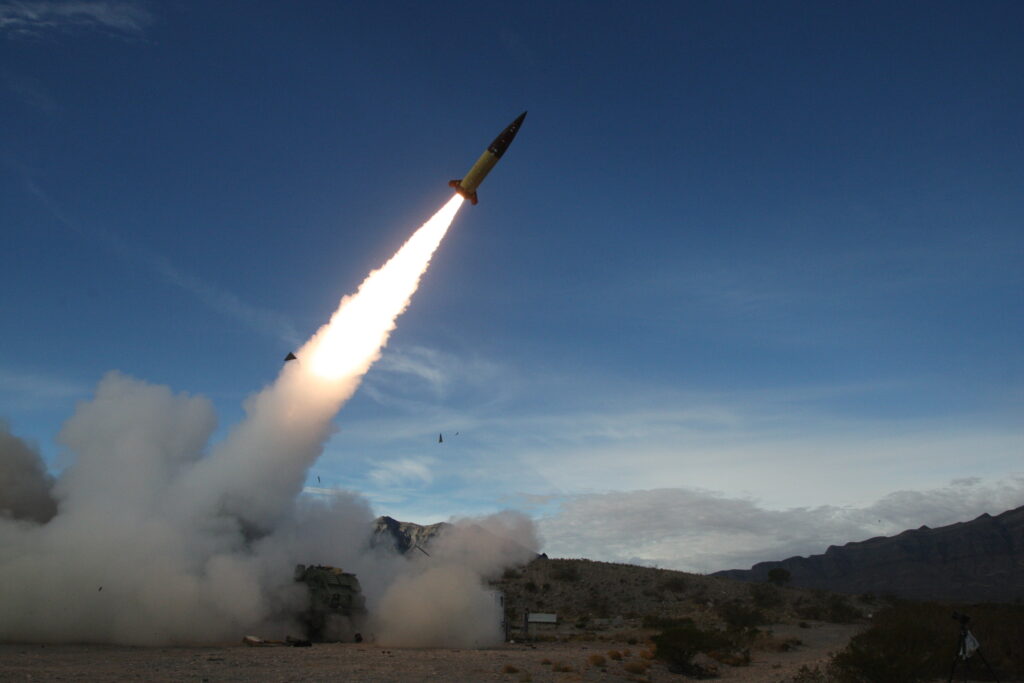
In the first month of the Iran war alone, the U.S. fired off more than 850 Tomahawk cruise missiles and more than 1,000 Patriot and THAAD interceptors, The Post previously reported. The U.S. also used more than 1,300 of the Army’s tactical ballistic missiles in the initial weeks of fighting.
As of last week, the global inventory of Patriot missiles has fallen from 2,200 before the war to fewer than 827, and THAAD missiles from 452 to fewer than 278, according to an analysis by CSIS.
The depleted U.S. stockpile of munitions and defense systems has increased the risk to U.S. service members and forced the White House to back away from escalating attacks, The Post previously reported.
The Pentagon has made efforts over the past few months to increase its weapons supply. On Monday, the Defense Department announced a framework agreement with Northrop Grumman and Lockheed Martin to increase production of the Patriot Advanced Capability-3 (PAC-3) and THAAD missiles. Last week, the Pentagon awarded Lockheed Martin a contract worth up to $58.6 billion to triple production of PAC-3s by 2030.
In May, the Pentagon announced several framework agreements with defense tech companies, including Anduril, Castelion, CoAspire, Leidos and Zone 5, to “aggressively expand” the U.S. military’s strike capabilities and purchase their low-cost missiles. The department in late June also hosted leaders from various Silicon Valley start-ups, indicating they will be crucial in resupplying the U.S. with weapons.
Speaking in November at the National War College in Washington, Hegseth outlined his vision to overhaul the Pentagon’s acquisition process in partnership with U.S. industry to ensure it can operate on a wartime footing.
“American industry and its innovative spirit are begging to be unleashed to solve our most complex and dangerous warfighting problems,” he said. “We need to get out of our own way, out of your way and enter into real partnership with you rather than overprescribe and decelerate your natural progress.”
‘The dilemma’
The Pentagon has brought in former Silicon Valley business leaders such as former Uber executive Emil Michael to serve as the Defense Department’s under secretary for research and engineering, and overhaul the defense innovation and procurement process.
But moving forward with the Pentagon’s framework agreements to purchase weaponry, crucial to Defense Department strategy to expedite acquisition, depend on congressional passage of a $1.15 trillion defense spending bill, which remains deadlocked as Democrats object to massive spending increases.
“That’s the dilemma, that’s the danger,” Karako said. “This really, really critical thing is in jeopardy because of congressional inability to appropriate.”
In the memo, Feinberg said the Defense Department is “fundamentally shifting how [it] develops, produces, and fields military capabilities to meet current and future challenges.”
Feinberg deemed several weapons programs critical and “under consideration for acceleration or increased procurement” during the 2028 fiscal year budget review. It included the “Next Generation Interceptor” missile defense program, the “National Advanced Surface-to-air Missile System,” a mobile air defense radar system, an advanced pilot training system and a space-based system for missile tracking.
The Feinberg memo tasked “industry leaders” to plan for “accelerated delivery” that would “provide the fastest production schedule to deliver projected orders and increase capacity.”
It also asked defense firms to “propose specific capital investments and facility expansions … to support the Department’s commitment to higher volume, sustained orders,” Feinberg added.
“Address how we will collaborate as partners and demonstrate your willingness to put skin in the game,” he wrote.
Karako said some defense contractors are spending their own money to fund production costs while Congress is in gridlock and framework agreements await approval. But he said that comes with a risk for industry.
“It’s a little bit of a gamble because they’re sticking their neck out,” he said. “They’re publicly traded companies, and you’re not supposed to really stick your neck out on a promise.”
Noah Robertson and Ellen Nakashima contributed to this report.