

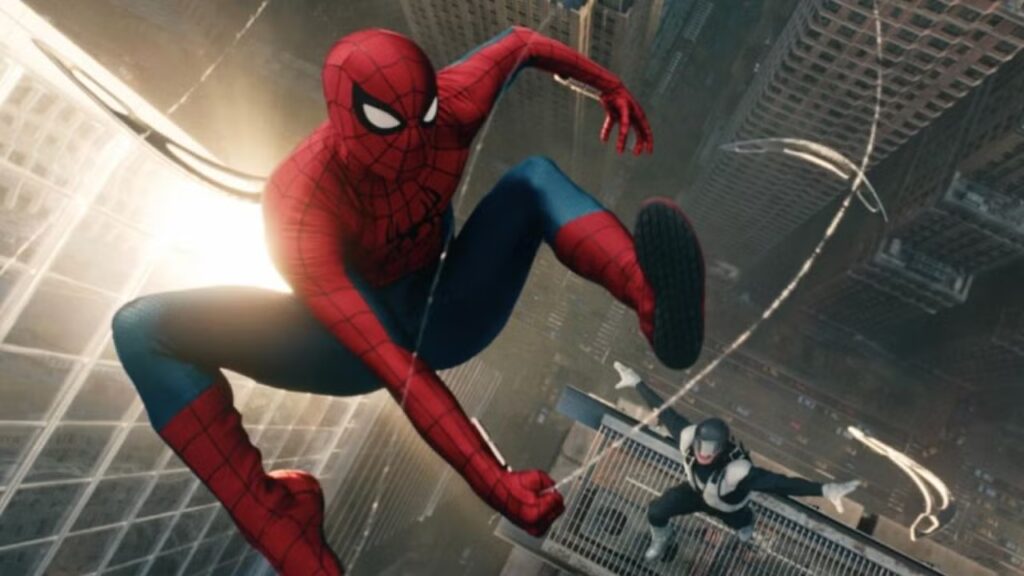
“Spider-Man: Brand New Day” is a worldwide sensation. The movie also feels like Spider-Man has been ripped right off the comic pages.
There are a lot of books referenced throughout Tom Holland and Destin Daniel Cretton’s “Brand New Day,” including classic Spidey tales, newer stories from the web-slinger and comics from the wider Marvel universe. If the fourth film in the MCU series has given you the Spider-Man bug, these stories should help tide you over until your next watch.
Here are 11 comics to read after “Spider-Man: Brand New Day.” But be warned: there are spoilers ahead (for the movie, not the books).
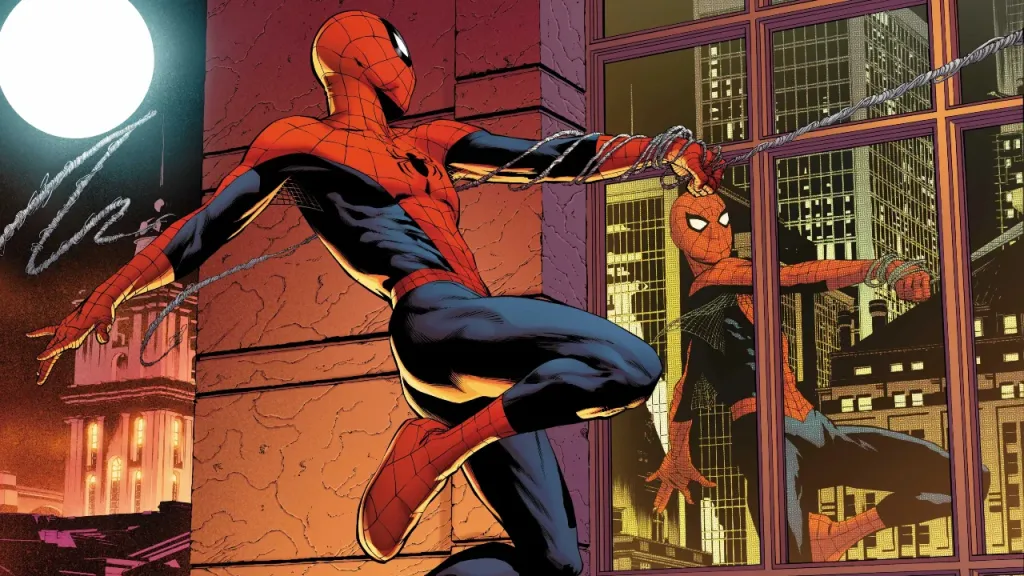
“Amazing Fantasy #1000”
Marvel celebrated the 60th anniversary of Spider-Man debuting in “Amazing Fantasy #15” with 2022’s “Amazing Fantasy #1000,” a giant-size issue with stories from some key writers and artists from Spidey’s career. One of these tales, titled “His Sinister 60th” by Dan Slott and Jim Cheung, shares several similarities with the end of “Brand New Day,” featuring a crowd of people gathering outside after a fight lands Spider-Man in the hospital (on his 60th birthday, no less).
The new “Ultimate Spider-Man” team of Jonathan Hickman and Marco Checchetto also team up for an excellent story about Peter meeting with multiversal Spider-Men using Reed Richards’ Bridge technology. The book is filled with strong stories celebrating everything that makes Spidey special.
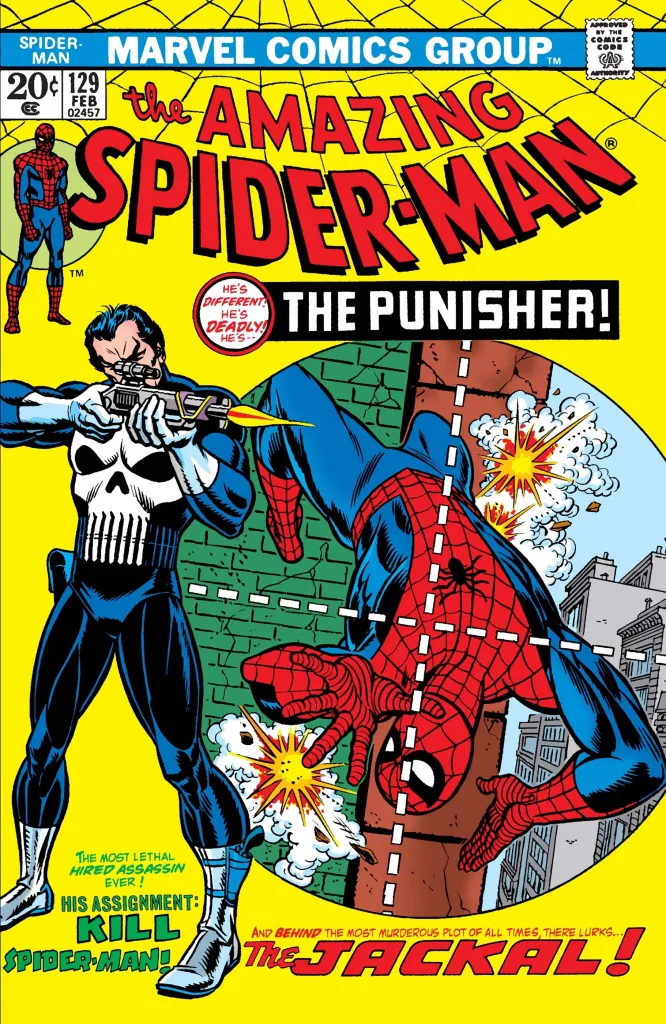
“The Amazing Spider-Man #129”
The late Gerry Conway was one of the most influential Spidey writers of all time, and his legacy can be deeply felt in “Brand New Day.” His whole initial run on the character (which started when he was only 19 years old) is worth the read, featuring key moments like “The Night Gwen Stacy Died.” If you were only going to pick one issue after “Brand New Day,” however, it should probably be the debut of The Punisher, which happened in Conway, John Romita Sr. and Ross Andru’s “The Amazing Spider-Man #129.”
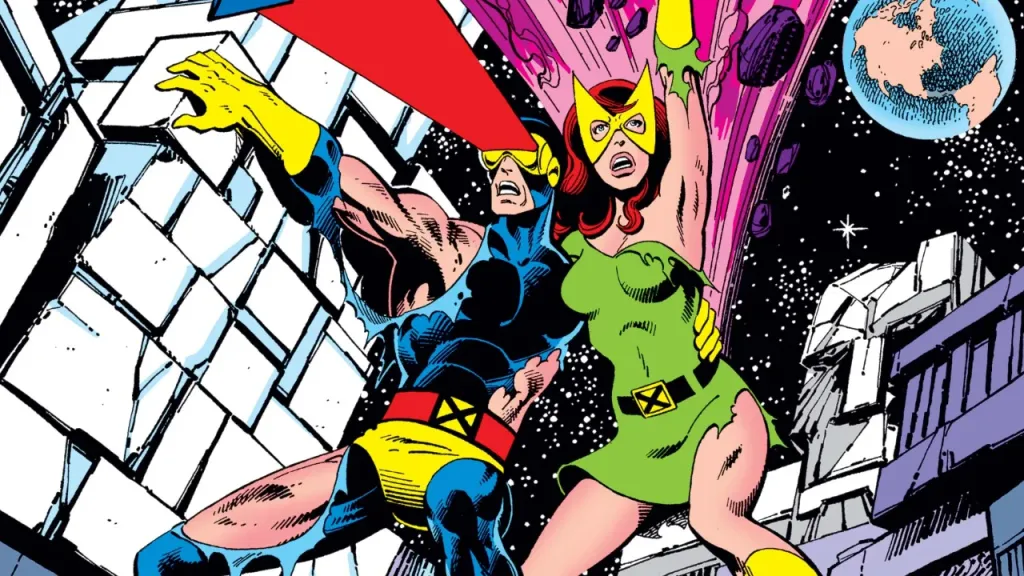
“The Dark Phoenix Saga”
There are a lot of “X-Men” books out there if Sadie Sink’s performance has you looking to dig deeper into Jean Grey. While there are several good places to start (such as Stan Lee and Jack Kirby’s original “The X-Men” run or Sean McKeever and Mike Mayhew’s “X-Men Origins: Jean Grey #1”), you should probably check out the foundational text that is the Dark Phoenix Saga. This dramatic story sees Jean confronting the immense power of the Phoenix Force after her near-death experience changes the X-Men forever.
While you could get away with just reading Chris Claremont and John Byrne’s classic “Dark Phoenix Saga” stretch of “X-Men #129-138,” I suggest starting with the “Phoenix Saga” and checking out “X-Men #101-108″ from Claremont, Byrne and Dave Cockrum. This “X-Men” run features some of the best Marvel comics of all time, so the more the better.
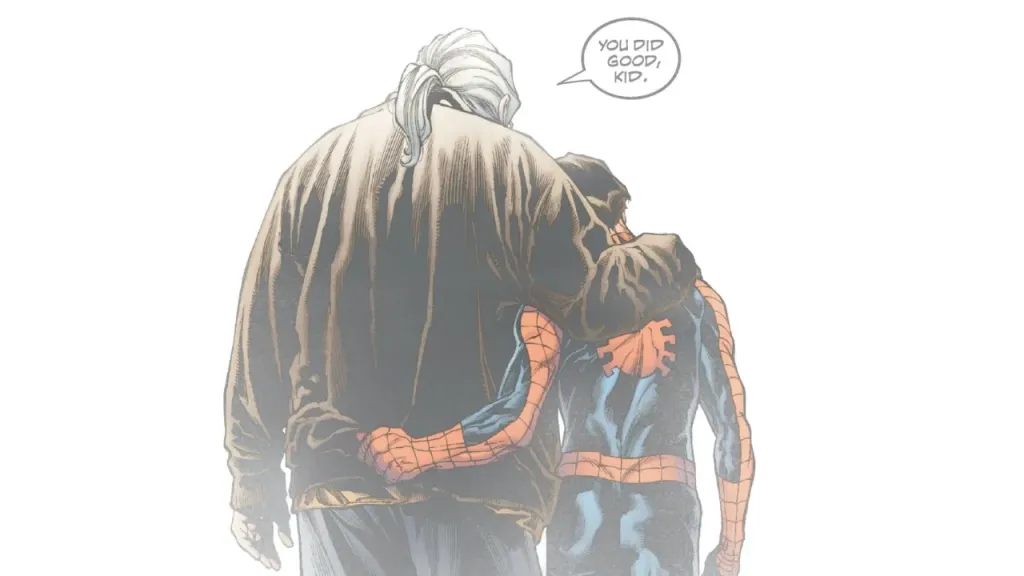
“Death of Spider-Man”
No, Spider-Man does not die in “Brand New Day” — but comics readers know he got pretty close. The “Death of Spider-Man” story from Marvel’s Ultimate universe (“Ultimate Spider-Man #156-160,” written by Brian Michael Bendis with art by Mark Bagley) sees Peter die at the hands of some of his greatest foes, including the Green Goblin, while defending his home and his family. It’s a fight Peter normally may have won outright, but he enters at a disadvantage, having previously entered a battle between the New Ultimates (led by Captain America) and the Avengers (led by Nick Fury). When the Punisher attempts to shoot Cap with a sniper, Spider-Man jumps in the way — much like he does at the end of “Brand New Day.”
But Jean Grey wasn’t around to keep him breathing this time. Thankfully, another superpowered hero by the name of Miles Morales was ready to take up the Spider-Man mantle after this story ended.
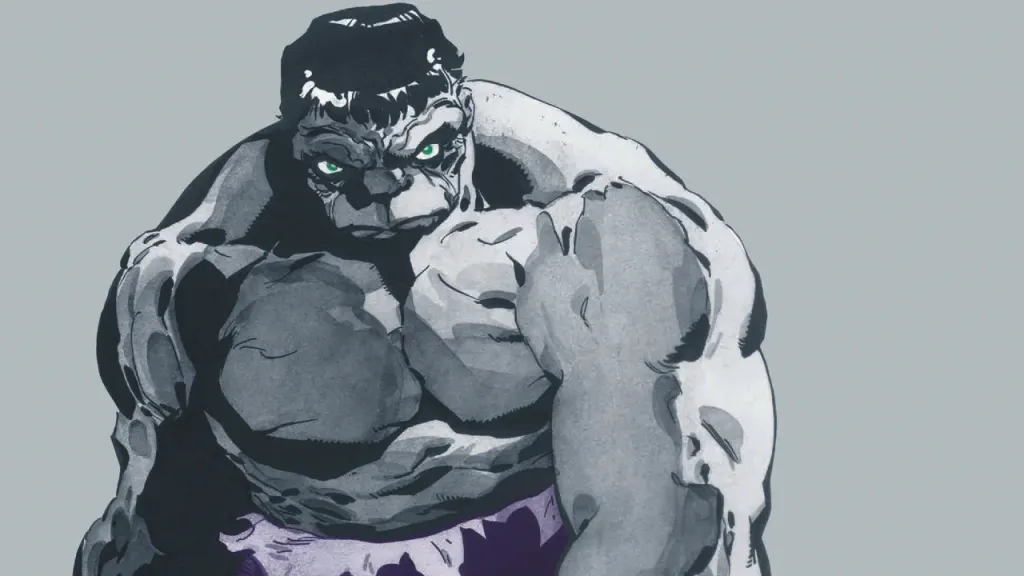
“Hulk: Gray”
There are a lot of great stories that play with the sadness and fear demonstrated by both Bruce Banner and the Hulk in “Brand New Day.” Jeph Loeb and Tim Sale’s miniseries “Hulk: Gray” is one of the best, a book that sells not just the Hulk’s rage, but also his profound loneliness.
Another modern classic to check out is Al Ewing and Joe Bennett’s “Immortal Hulk” saga. A one-shot spin-off, titled “Immortal Hulk: Great Power #1,” seemingly ties into “Brand New Day” in a big way. Written by Tom Taylor with art by Jorge Molina, this story reveals that the Hulk remembers Spider-Man’s identity despite a universal mind wipe — something that seems to possibly be true in the MCU as well.
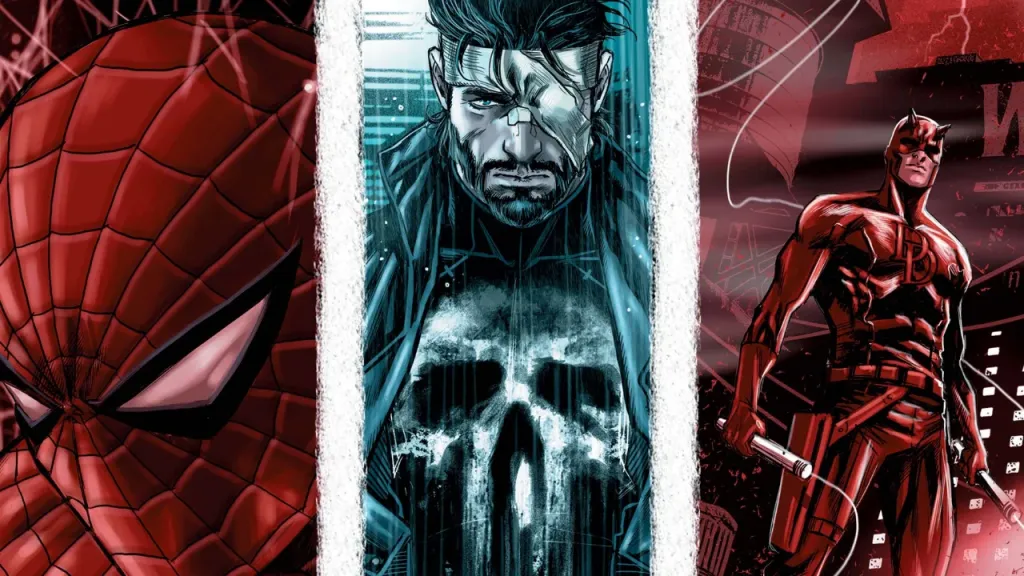
“The Omega Effect”
If you want more Spider-Man/Punisher banter (and don’t mind Daredevil being thrown into the mix), check out “The Omega Effect” by Mark Waid, Greg Rucka and Marco Checchetto, some of the best in the comic book biz. This story, which sees the trio team up to keep a dangerous drive out of enemy hands, has incredible chemistry between the main heroes. It also slots nicely into Waid’s sensational run on “Daredevil,” which is one of the best Marvel comics… ever?
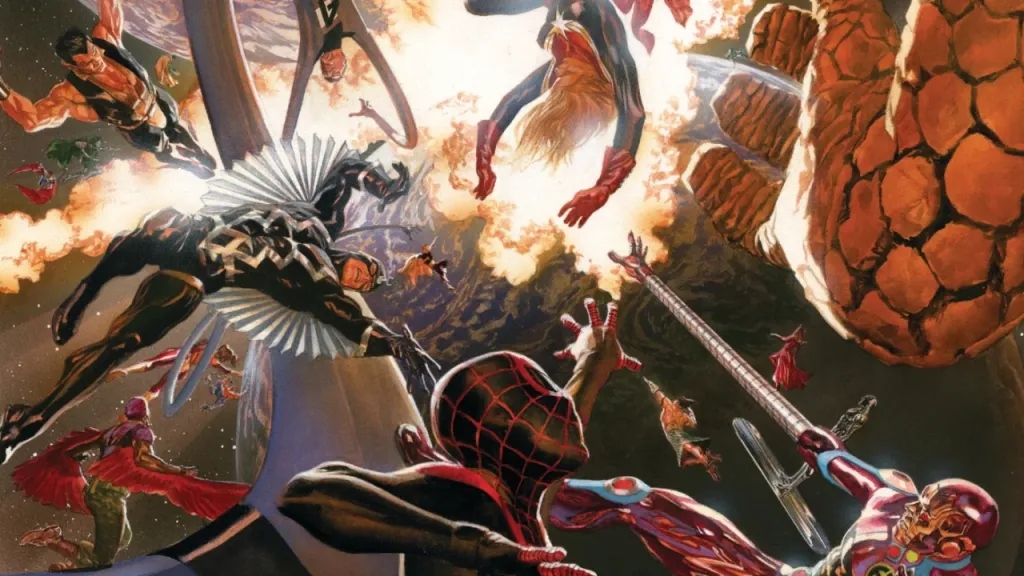
“Secret Wars” (2015)
My recommendation is to read Hickman’s “Avengers” (about a massive roster forming to protect the Earth) and “New Avengers” (about the Illuminati working together to combat incursions) before going on to this massive event. If you really want this to hit hard, check out Hickman’s “Fantastic Four” and “FF” as well before “Avengers” — it will only make the Reed Richards/Doctor Doom dynamic in “Secret Wars” more satisfying.
“Spider-Man: Long Way Home”
If you’re looking for something that you can pick up at your local comic book store today after watching “Brand New Day,” comics studios usually have some series in the chamber related to latest releases. With a character as big as Spider-Man, they often have a few: including “Spectacular Spider-Man: Brand New Day” (by Dan Slott, Marcus To and Alex Sinclair), “Punisher vs. Spider-Man” (by Dan Abnett, Matteo Della Fonte and Rachelle Rosenberg) and “Spider-Man / Hulk: Fire and Brimstone” (by Kevin Smith, Andy McElfresh and R. B. Silva, starting on Aug. 19) — not to mention your regularly scheduled Spidey titles like “The Amazing Spider-Man.”
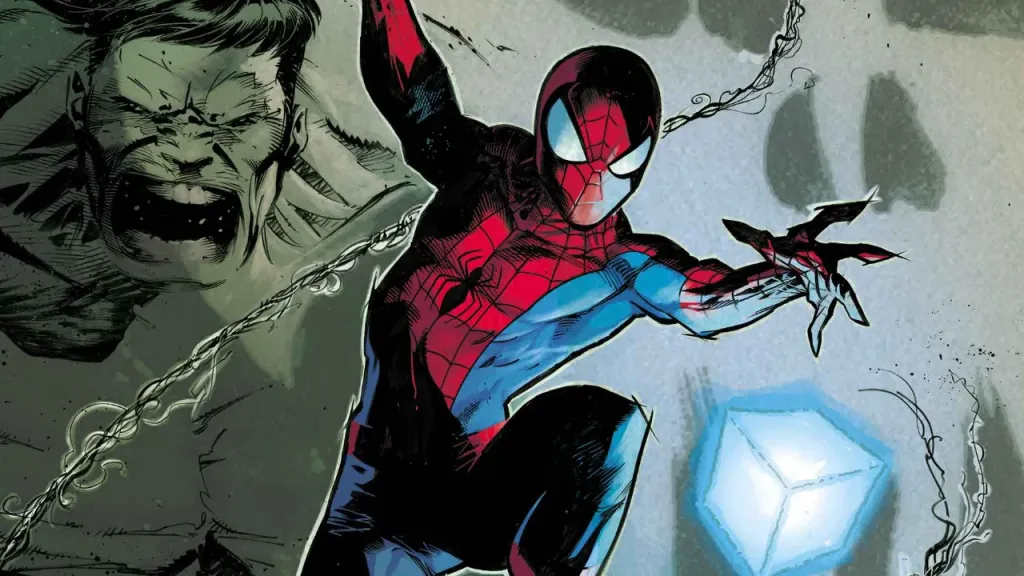
You also have “Spider-Man: Long Way Home,” a limited series where Spider-Man, the Punisher and the Hulk all fight to recover a Cosmic Cube from A.I.M. in a world that isn’t yet familiar with Frank Castle or Bruce Banner. The book is written by Jonathan Hickman with art by Adam Kubert — Marvel all-stars both. I can’t specifically vouch for the quality of this book, but almost anything from Hickman is worth at least a glance.
“Spider-Man: The Other”
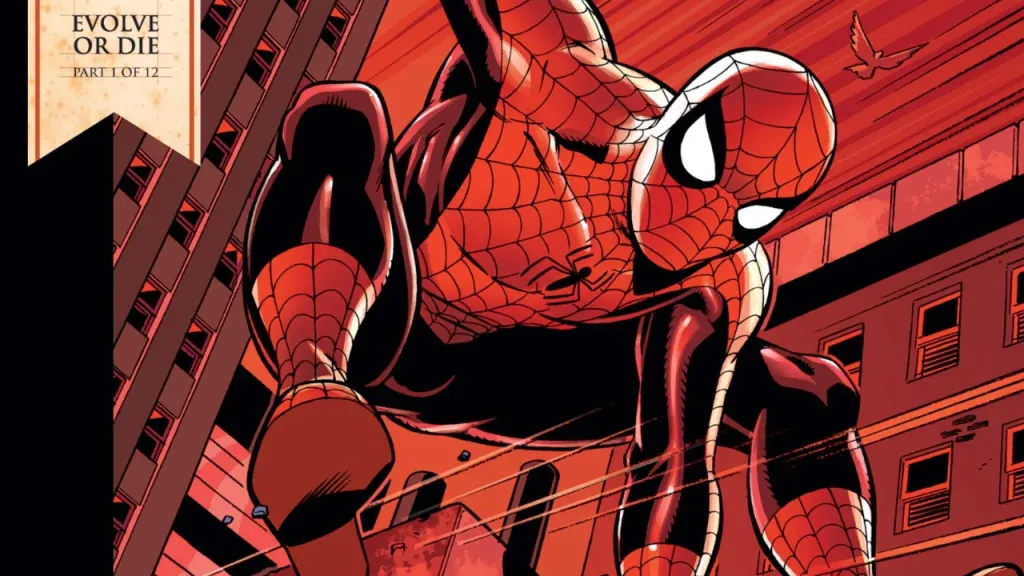
“The Other” is probably one of the most direct influences on “Brand New Day,” a story about Peter Parker going through physical changes as he becomes more spider than man. The story was written by Reginald Hudlin, Peter David and J. Michael Straczynski, with art alternating between Mike Wieringo, Pat Lee and Mike Deodato Jr.
This story also comes in the middle of Straczynski’s exceptional run on “Spider-Man,” which you should also be sure to check out if you’ve got Spidey fever. Despite a few duds, this is one of the best periods of “Spider-Man” history, with “Revelations” and “Happy Birthday” standing out as all-timer stories in particular.
“Ultimate Marvel Team-Up #6-8”
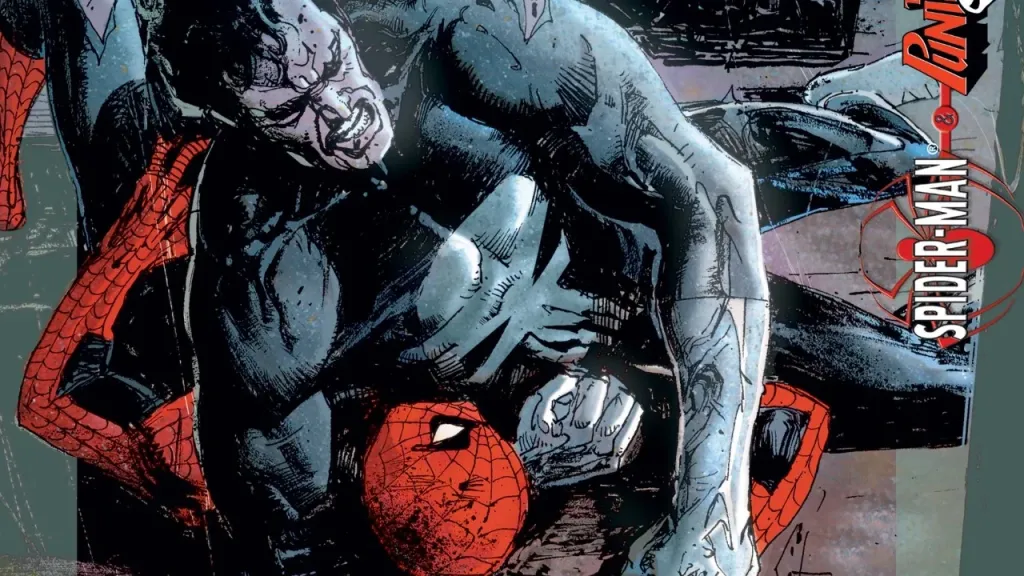
The original Ultimate Marvel universe has a lot of good, a lot of bad and a lot of weird. “Ultimate Marvel Team-Up,” one of the earliest titles, certainly falls into the weird camp, with Spidey jumping into a series of strange crossovers before the universe’s architects had really figured out what they wanted this canon to be.
That being said, the series has a few stellar stories, with #6-8 as the definite highlight. These issues, written by Brian Michael Bendis with art by Bill Sienkiewicz, see Spider-Man, Daredevil and the Punisher all going head-to-head-to-head for the first time in this universe. It’s a great story with gorgeous art, despite being one of Ultimate Marvel’s more forgotten titles.
“X-Men/Fantastic Four” (2020)
Remember how Peter Parker just kind of invented a device that can remove the powers of all enhanced people, notably including mutants, in the MCU going forward? That may come back to bite him.
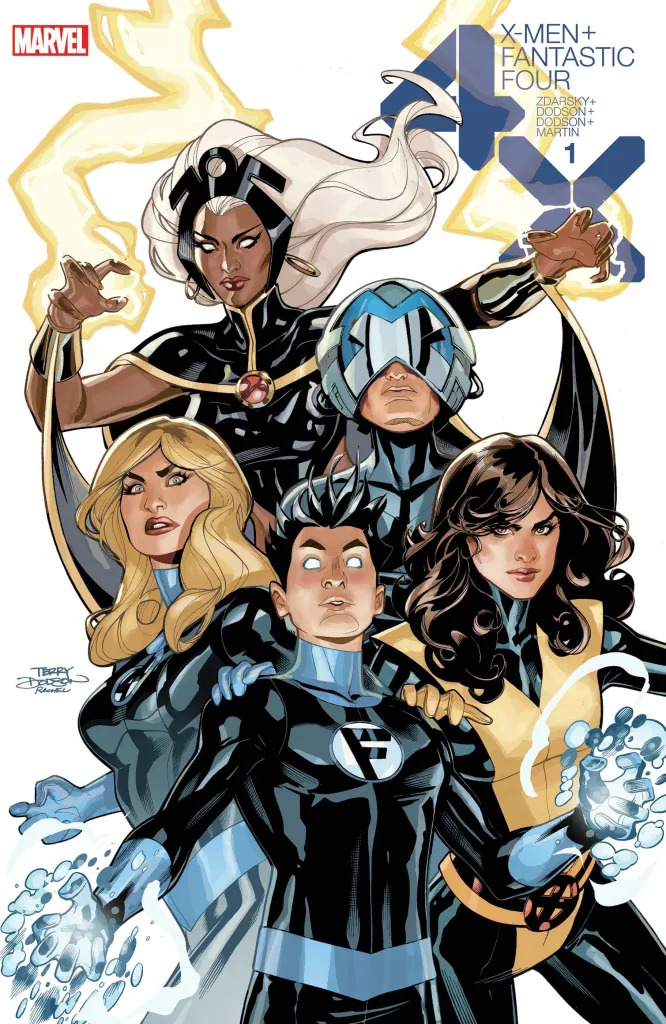
It certainly came back to bite Reed Richards, who developed a similar device to mask son Franklin’s powers in Chip Zdarsky and Terry Dodson’s “X-Men/Fantastic Four.” If you want to know how Professor X and Magneto felt about that little gadget (and how they may feel about Peter now), you’ll want to check this one out.