

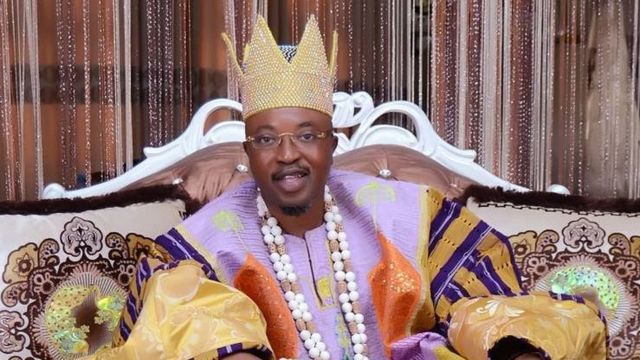
The Oluwo of Iwoland, Oba Abdulrosheed Adewale Akanbi, has announced a ban on Hennessy and other alcoholic beverages from his palace, citing health concerns and urging visitors to stop presenting such drinks as gifts during visits.
The monarch made the announcement in a video shared on his official Facebook page, where he declared that alcoholic drinks, including gin, schnapps and imported spirits, would no longer be accepted within the palace.
Monarch cites health concerns
According to the traditional ruler, alcoholic drinks commonly presented to kings and elders pose serious health risks and should not be regarded as appropriate gifts.
He argued that excessive consumption of alcohol could damage vital organs and negatively affect the wellbeing of elderly people. Oba Akanbi said he had recently learnt that some visitors brought bottles of Hennessy to the palace, stressing that such gestures were no longer welcome.
The monarch maintained that anyone bringing alcoholic drinks to the palace was exposing him to health risks, adding that he preferred not to consume such beverages.
Calls for change in palace gifts
The Oluwo encouraged visitors and well-wishers to consider alternative gifts instead of alcoholic beverages whenever they visited the palace.
He noted that alcohol should not be seen as a compulsory symbol of respect or honour for traditional rulers, insisting that there were more meaningful ways to appreciate elders without endangering their health.
The royal father also argued that alcohol was not an essential part of Yoruba ancestral traditions and questioned the continued practice of presenting expensive spirits to traditional institutions.
Criticism of traditional practices
Beyond the issue of alcohol, the Oluwo criticised some cultural practices that he described as outdated and harmful.
He condemned incidents in which masquerades allegedly flog or assault members of the public during festivals, saying such acts amount to violence and discourage public acceptance of traditional religion.
The monarch urged custodians of Yoruba culture to preserve traditions without encouraging practices that threaten public safety or violate people’s rights.
Restriction of movement questioned
Oba Akanbi also questioned the restriction of movement during some traditional festivals, including the Oro festival.
He argued that preventing residents, particularly women, from moving freely during such events raises constitutional concerns and should be reconsidered.
According to him, cultural practices should evolve in ways that respect the rights of citizens while preserving the values and identity of the Yoruba people.
Long-standing advocacy
Since ascending the throne in 2016, the Oluwo has repeatedly spoken against practices he believes require reform within traditional institutions.
His comments on cultural and religious issues have often generated public debate and attracted mixed reactions from traditional leaders and members of the public.
The monarch has maintained that preserving Yoruba heritage should go hand in hand with promoting public health, human rights and peaceful coexistence, insisting that customs should continue to evolve to meet the realities of modern society.