

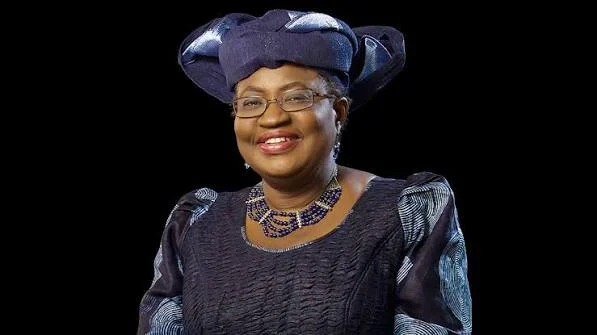
World Trade Organisation (WTO) Director-General, Ngozi Okonjo-Iweala, has urged Delta State to reduce its reliance on oil and gas by building a diversified economy driven by manufacturing, agriculture, trade, digital innovation and the blue economy.
Okonjo-Iweala said the state had the resources, human capital and strategic advantages needed to transform from a resource-dependent economy into a more resilient and competitive economic hub.
Speaking at the 2026 Delta State Economic and Investment Summit in Asaba on Monday, the WTO chief said Delta could benefit from changing global economic trends by positioning itself as a manufacturing destination for companies seeking new production locations amid the restructuring of global supply chains.
According to her, Delta possesses the resources and strategic advantages needed to emerge as one of Nigeria’s leading industrial centres but must focus on targeted investments in manufacturing, agriculture, the blue economy and digital infrastructure.
She identified the state’s natural gas reserves, coastline, seaports, fertile agricultural land, mineral resources and large population of young graduates as key assets that could drive sustainable economic growth.
“The true wealth of Delta State has never just been our oil and gas. It’s our people,” Okonjo-Iweala said, urging the state to harness both its human and natural resources to achieve economic transformation.
She stressed that the state must prioritise projects with the greatest economic impact rather than spreading limited resources across too many initiatives.
The WTO director-general recommended the development of Special Economic Zones (SEZs), supported by reliable electricity, roads, rail connectivity, water supply, digital infrastructure and simplified regulatory processes.
She described SEZs as important tools for accelerating industrialisation, attracting investment and creating jobs by concentrating infrastructure and business support services in designated areas.
Okonjo-Iweala encouraged Delta to draw lessons from successful industrial zones such as the Lekki Free Zone in Lagos and the Glo-Djigbé Industrial Zone in Benin Republic, where integrated infrastructure and efficient management have helped attract investors.
On agriculture, she urged the state to focus on selected high-value agricultural products where it has a comparative advantage and develop complete value chains from production to processing, quality assurance, financing, market access and exports.
She also identified the blue economy as another major growth opportunity for Delta, calling for investments in aquaculture parks, fish landing sites, cold-chain facilities, marine logistics, ship repair services, port infrastructure and export terminals.
According to her, Delta’s coastal advantage could help reduce Nigeria’s dependence on imported fish products while creating employment and positioning the state as a regional marine logistics hub.
While acknowledging the importance of oil and gas to the state’s economy, Okonjo-Iweala urged increased investment in gas infrastructure to support industries, electricity generation and mineral processing.
She also highlighted digital infrastructure and artificial intelligence as critical areas for future economic growth, urging the state to expand internet connectivity and digital services to enable businesses and young people participate in the digital economy.
Okonjo-Iweala said Delta stood at the intersection of three major opportunities, global supply chain shifts, Africa’s economic integration through the African Continental Free Trade Area (AfCFTA), and the increasing role of sub-national governments in driving economic development.
“This summit is about taking care of the gold in our backyard… demonstrating that Delta can and will compete for investment and become the industrial hub for Nigeria that I want it to be,” she said.