

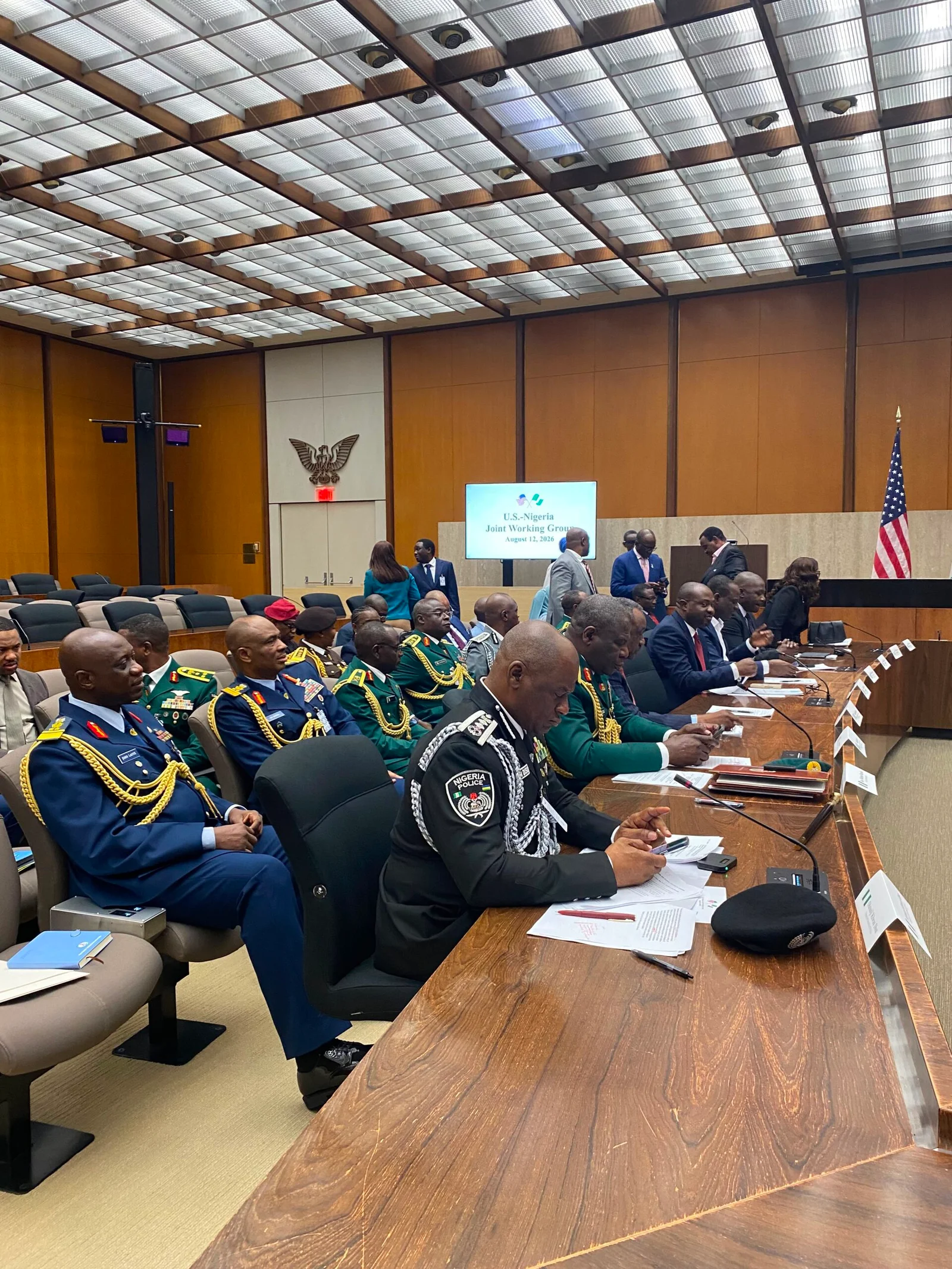
Determined to correct global perception, particularly in the United States, about Nigeria’s security status, the Federal Government delegation has met with the United States senior officials to remove Nigeria from lists of nations designated by President Donald Trump as Country of Particular Concern (CPC).
The federal government delegation, as gathered, was led by the National Security Adviser (NSA), Nuhu Ribadu, and presented to Trump’s team progress records on the security of Nigerians’ lives and property, as well as efforts by the President Bola Tinubu administration to achieve stability within the West African region.
During the meeting, also attended by the Minister of Interior, Olubunmi Tunji-Ojo, the Chief of Defense Staff, Olufemi Oluyede, and Inspector General of the Police (IGP), Tunji Disu, and other service chiefs, in the United States, the Nigerian delegation took turns to reel out successes recorded on security under President Bola Tinubu, and how the country’s military had continuously neutralised dozens of terrorists and forced others to either surrender or flee their comfort zones to avoid losing their lives.
The meeting on Wednesday was the height of the diplomatic efforts embarked upon by the Federal Government to secure the reversal of Nigeria from the CPCs after the Minister of Foreign Affairs, Bianca Odumegwu-Ojukwu, met with U.S Chargé d’Affaires, David Heffern, to state reasons President Trump should reverse the country’s inclusion on the CPC lists.
This engagement, led by Ribadu, came barely a year after President Trump designated Nigeria as a Country of Particular Concern, following what he described as the government’s inability to combat severe, systematic violations of religious freedom within the nooks and crannies of the country.
As gathered, this designation was primarily driven by the rising persecution of Christians and the government’s perceived inaction against violence from Boko Haram and Fulani militias in the North East and Middle Belt regions.
During the meeting, it was learnt that the Ribadu delegation informed the US team that the country’s military recorded a 213 per cent increase in the number of terrorists and associates who surrendered to troops in the North-East,
A senior government official, who spoke on anonymity, told The Guild correspondent that the delegation informed the US representatives that the statistics reflected a huge development compared to under the previous administration and reflected growing pressure on terrorist groups.
Affirming his claim with pictures of the meeting held abroad, he stated that the meeting afforded the senior military officers the opportunity to reel our their achievements recorded under the Tinubu administration before the US delegations who were expected to review the country’s continued inclusion among the CPC nations.
Another senior government official, who accompanied the team to present the country’s appeal before the US and was not permitted to grant interviews publicly, disclosed that the discussion assisted the Nigerian delegation to further enlighten its US counterpart on efforts being made to protect citizens irrespective of their faith.
Referring to the pictures that emanated from the meeting, he added that each of the senior military officers engaged the US delegations, intimating them on the ongoing efforts rid the country off terrorists and extend same to other West African nations.
Before the meeting, the Army, in a statement issued by Captain Mohammed Goni, Acting Military Information Officer, Headquarters Joint Task Force (North East), Operation Hadin Kai, attributed the Army’s successes to sustained military operations targeting terrorist positions, logistics networks and supply routes, as troops intensify efforts to weaken the groups’ operational capabilities and freedom of movement.
According to the statement, two high-profile members of terrorist groups also surrendered to troops, handing over arms, ammunition and other military equipment.
The Army said the recovery of the weapons further demonstrated the impact of sustained military pressure on the cohesion, morale and operational capacity of terrorist elements.
It added that the increasing number of surrenders pointed to a diminishing ability among the groups to retain fighters and sustain prolonged operations.
In a separate development, several terrorist members surrendered to troops of 202 Battalion in Bama following sustained military pressure and internal disagreements within their enclave.
The Army said the individuals were screened after surrendering, while mobile phones and other items were recovered before they were handed over for further action in line with established procedures.
It said the increasing frequency of surrenders was evidence of the impact of its multidimensional strategy, which combines ground offensives, precision engagements and disruption of terrorist logistics and supply networks.
According to the Army, restricting the terrorists’ ability to manoeuvre, regroup and replenish supplies was steadily undermining their capacity to sustain violent operations.
It described the rising surrender rate as more than a series of isolated decisions by individual fighters, saying it reflected the cumulative effect of sustained military pressure and the gradual erosion of terrorist capability and cohesion.